.300 Winchester Magnum ammo buying guide
.300 Winchester Magnum is a long-action cartridge with a load ladder that starts at 150 grains and does not stop. Pick the weight for the job, not the forum.
By TAS6 min read
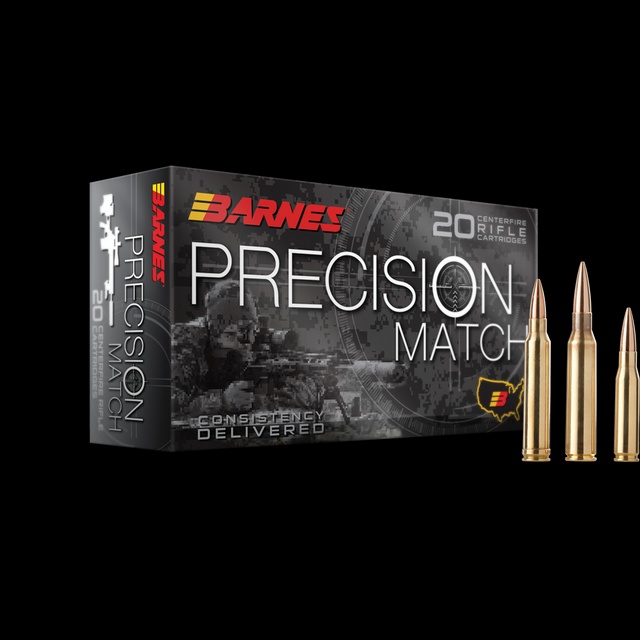
.300 Winchester Magnum arrived in 1963 as a belted magnum on the .375 H&H case, and sixty years later it is still the short-range answer to a long-range question: a 30-calibre magnum that fits a standard long action, feeds from a rifle-length magazine, and carries a factory load menu from 150-grain light-for-calibre to 220-grain heavies. The decisions that matter are which of those weights you actually need, and whether your rifle’s action length lets you seat them properly.
What the cartridge is for
Two roles dominate. The first is long-range hunting – elk, moose, mountain game at extended distance – where the .300 Win Mag keeps 180- and 190-grain bullets supersonic well past 800 yards and arrives with more energy than a .308 ever will. The second is long-range target work: military and civilian competitions adopted it specifically because heavy 30-calibre match bullets stabilise and hold velocity better than the older magnums allowed. If your hunting is inside 300 yards on deer-sized game, the cartridge is more gun than the job needs; the load menu below will still make sense, but so will a cheaper chambering.
The weights that matter
| Bullet | Velocity | Character | Best at |
|---|---|---|---|
| 180 gr | 2,900–3,000 fps | The hunting default | Elk, moose, mixed game |
| 190 gr | 2,850–2,950 fps | Match-grade BC | Long-range target, heavy game |
| 200–220 gr | 2,650–2,800 fps | Heavy, high sectional density | Deep penetration, wind |
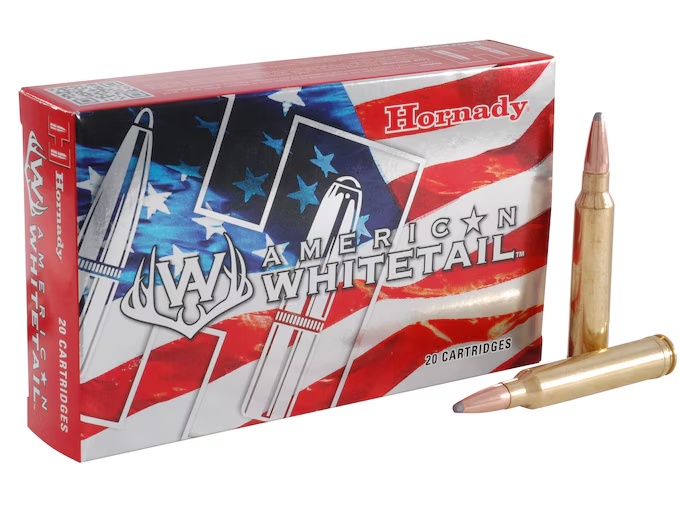
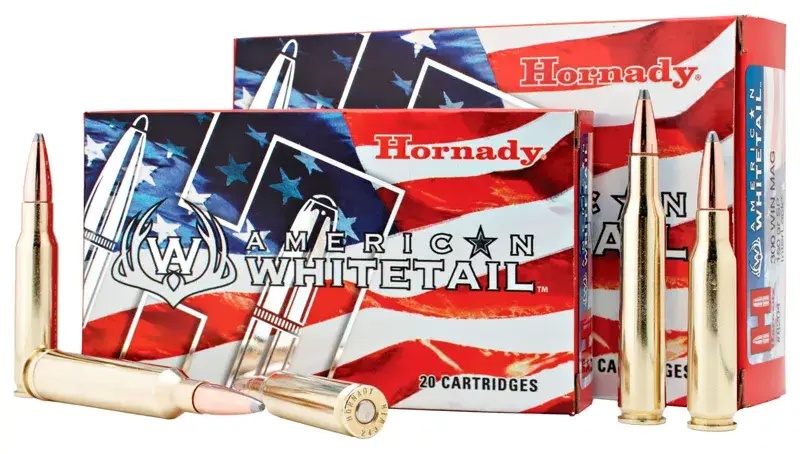
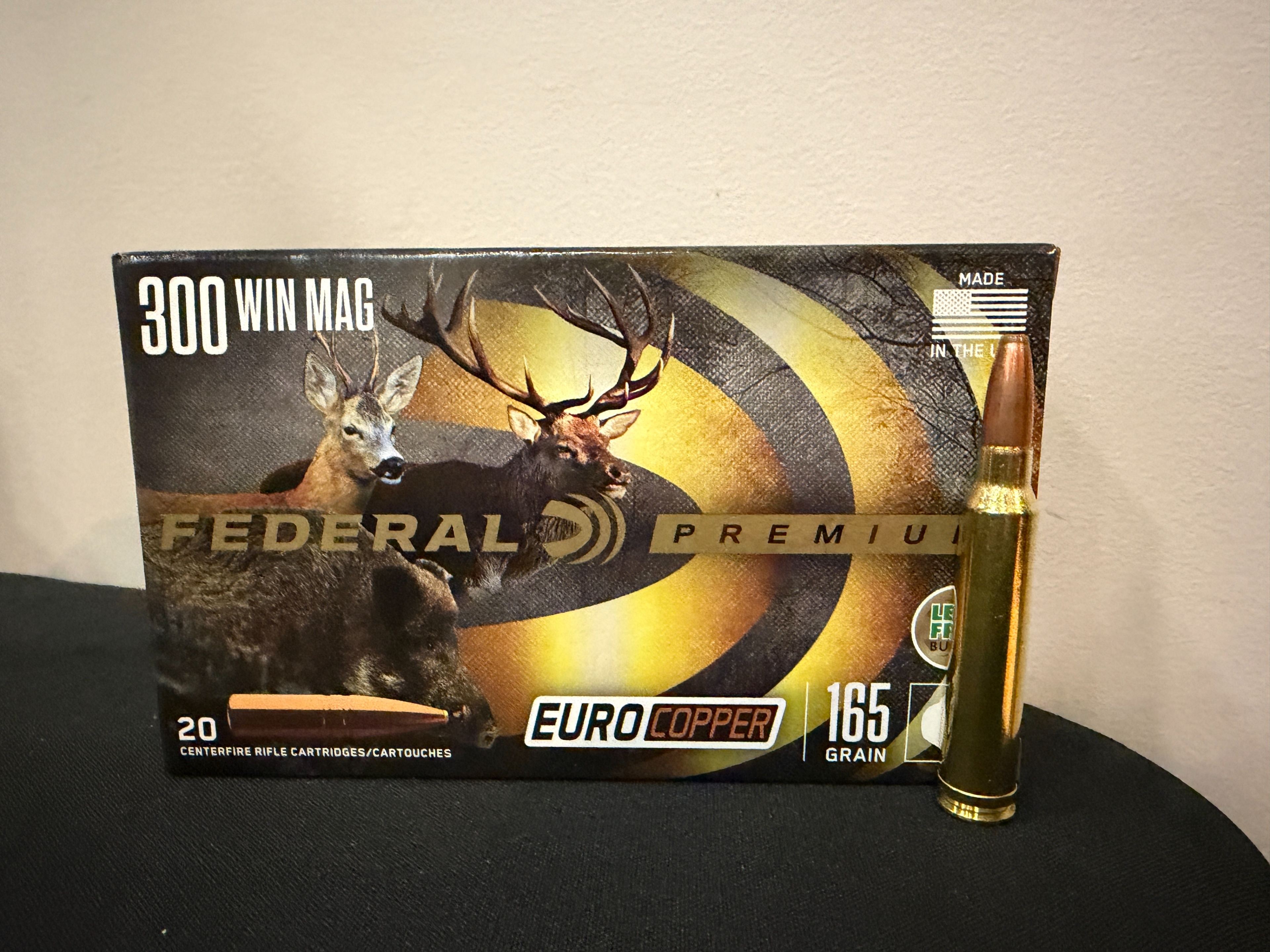
The 180-grain hunting load is the right first box for almost everyone. It leaves the muzzle near 3,000 fps in factory trim, carries a ballistic coefficient comfortably above 0.5, and is the weight every manufacturer loads to a consistent standard. Federal’s premium hunting lines, Hornady’s interlock and ELD-X loads, and Winchester’s Deer Season and Expedition lines all start here.
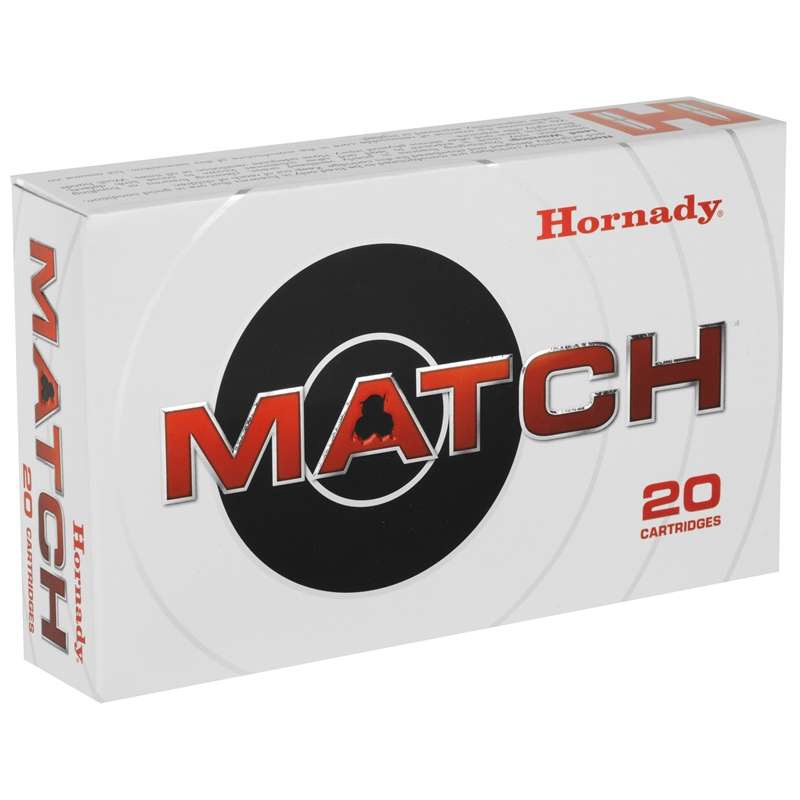
The 190-grain class is the match side of the house: Sierra MatchKings, Hornady ELD Match, Berger hybrids. The extra weight buys ballistic coefficient – which is what keeps a bullet supersonic at distance and keeps wind from moving it – and it is the load to choose if the rifle’s job is ringing steel at 600 yards and beyond. What that extra weight is worth in trajectory and wind is the same units problem every long-range rifleman solves; see minute of angle.
The 200-and-up class exists for penetration. A 200-grain controlled expansion bullet at 2,700+ fps is a moose load; the 220-grain loads are for heavy game or for shooters who simply prefer a heavier bullet in the wind. They also drop faster and punish poor shooting more visibly. If you have never chronographed one in your rifle, buy a box before a case.
The short-action seating trap
Here is the mistake that does not get written on the box. The .300 Win Mag is a long-action cartridge, but a large number of hunting rifles built on short actions chamber it. In a short action, magazine length limits how far the bullet can sit out of the case – and heavy, long 200-to-220-grain bullets are exactly the ones that want to be seated long. Seat them out to fit a short magazine and you push the bearing surface back into the powder column, reducing case capacity. Less capacity at the same pressure is less velocity, and sometimes a pressure spike you did not plan for.
What to practise with, what to hunt with
Practice means either cheaper 180-grain soft-point loads or military-surplus-style 147-to-150-grain ball if you can find it – both will shoot groups wide enough to diagnose your fundamentals rather than the ammunition. Match the weight to your hunting load if you want point of impact to carry over; a 150-grain practice zero and a 180-grain hunting zero are not the same at 300 yards.
Hunt with a bonded or controlled-expansion bullet built for the velocity you are actually running. Premium 180-grain loads from Federal, Hornady, and Nosler are the shortlist; the construction matters more than the brand on the box. Run one box through the rifle for function and zero, then load the magazine and stop rotating boxes.
Expect to pay for the caliber. The .300 Winchester Magnum caliber page carries the live shelf, and $1.78 a round at the cheap end is a real number to plan around – not a bargain-bin caliber, but not the most expensive magnum either. Compare case economics properly with price per round. For the grain-weight logic that applies to every hunting caliber, including this one, understanding grain weight is the longer treatment of the 180-versus-200 decision.
A sensible first order
- One box of 180-grain hunting loads for zero and function, the same construction you intend to hunt with.
- Two boxes of 180-grain practice soft points for range work, matched in weight so the zero carries over.
- One box of 190-grain match if the rifle has a long-range or steel-target role, or one box of 200-grain controlled expansion if it is a heavy-game gun.
That order gets you a verified hunting zero, enough practice to shoot the cartridge well, and one experiment with a heavier class before you commit to a case. The .300 Win Mag rewards shooters who pick a weight and stay with it; the load ladder is a feature, not a reason to keep second-guessing.
Shop this caliber
Live prices from the warehouses that have it on a shelf right now.