.45 Colt ammo buying guide
One chamber, one case, and a load ladder that spans from gentle cowboy action ammunition to hunting loads only a modern Ruger should see. Reading the box before the gun is the entire .45 Colt lesson.
By TAS6 min read
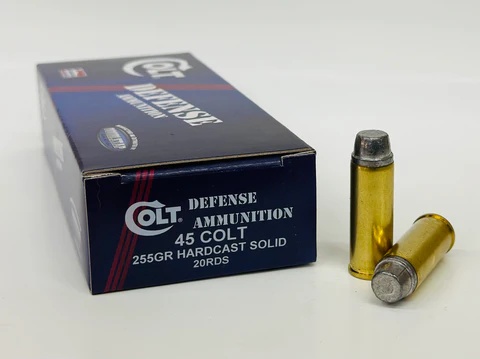
.45 Colt is the oldest cartridge in continuous mainstream production still carried by working shooters, and its load menu is the widest pressure range sold under one headstamp. A cowboy action box and a Ruger-only hunting box both say .45 Colt. They are not the same cartridge, they do not belong in the same revolver, and the only thing that separates them on the shelf is a label most buyers skim. Read the label. That is the buying guide in one sentence.
The load ladder
SAAMI maximum average pressure for standard .45 Colt is modest by modern revolver standards. The commercial menu runs from well under that ceiling to well over it, sorted by intended gun.
| Class | Bullet | Velocity | For |
|---|---|---|---|
| Cowboy action | 200–255 gr lead | ~600–750 fps | CAS, plinking, light practise |
| Standard factory | 225–255 gr | ~800–850 fps | Any sound .45 Colt revolver |
| Modern defensive JHP | 225–250 gr | ~830–900 fps | Duty-style revolvers, short barrels |
| Ruger-only / high pressure | 260–325 gr | ~1,200–1,350 fps | Modern Rugers and rated strong guns only |
The first three rows are interchangeable across a sound Colt-pattern revolver, a clone, or a modern double-action. The fourth row is not. Those loads are built for modern Ruger single-actions and a short list of other firearms the manufacturer has specifically rated; they are loaded far above SAAMI standard pressure, and the case is identical, so the gun is the only safety mechanism between you and a revolver that was never designed for the load.
What each class is actually for
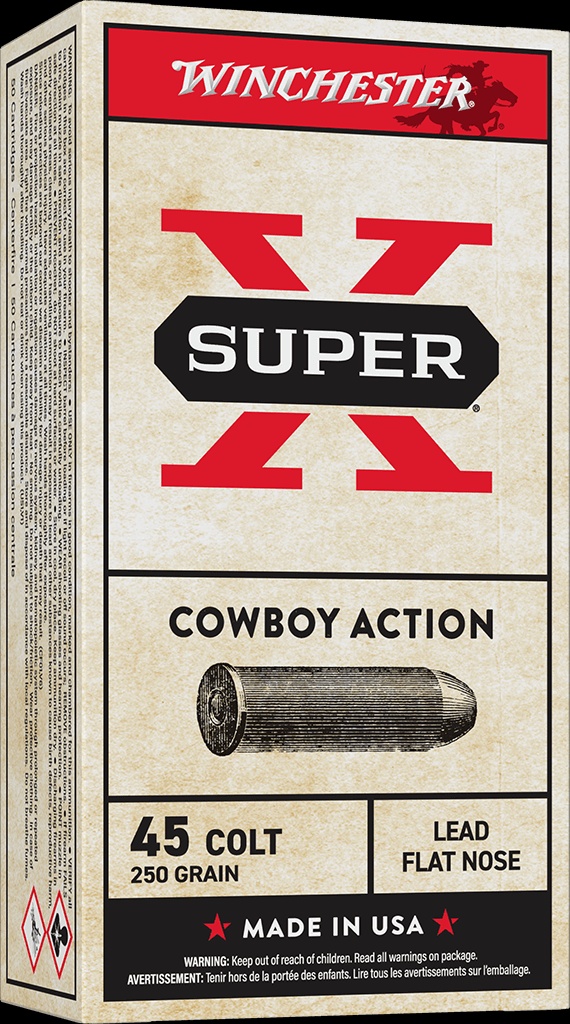
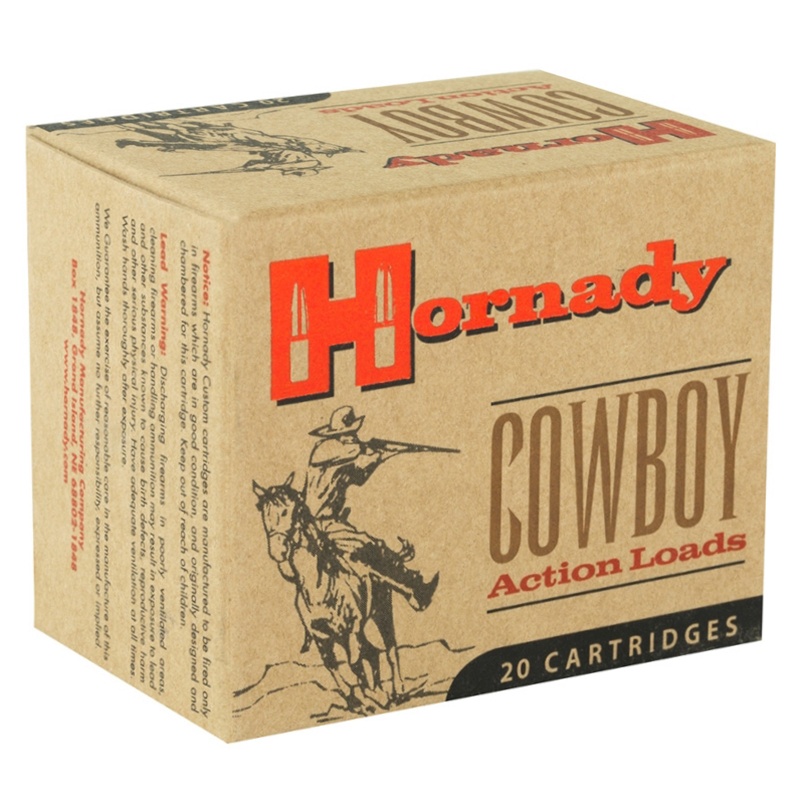
Cowboy action ammunition is downloaded on purpose: light lead bullets at modest velocity make the recoil manageable across a long stage and keep the brass inside the catch. Buy it by the flat if you shoot CAS; the per-round floor in this class is as low as the caliber gets, around $0.89 a round on cheap lead loads.
Standard factory is the do-everything box: a 250- or 255-grain lead semi-wadcutter or flat-nose at a bit over 800 fps. It is adequate for plinking, steel, and deer-sized game at revolver distances with placement. If you own one .45 Colt revolver and want one inventory, this is it.
Modern defensive hollow points are the serious carry option from a four-inch or longer barrel: Federal’s HST and similar bonded loads expand at these velocities, which is the whole point of the .45’s slow-and-heavy reputation. As with every defensive caliber, run a box through your revolver before the load goes into the holster — revolver feed is forgiving compared with a pistol, but cylinder timing and forcing-cone dimensions still matter.
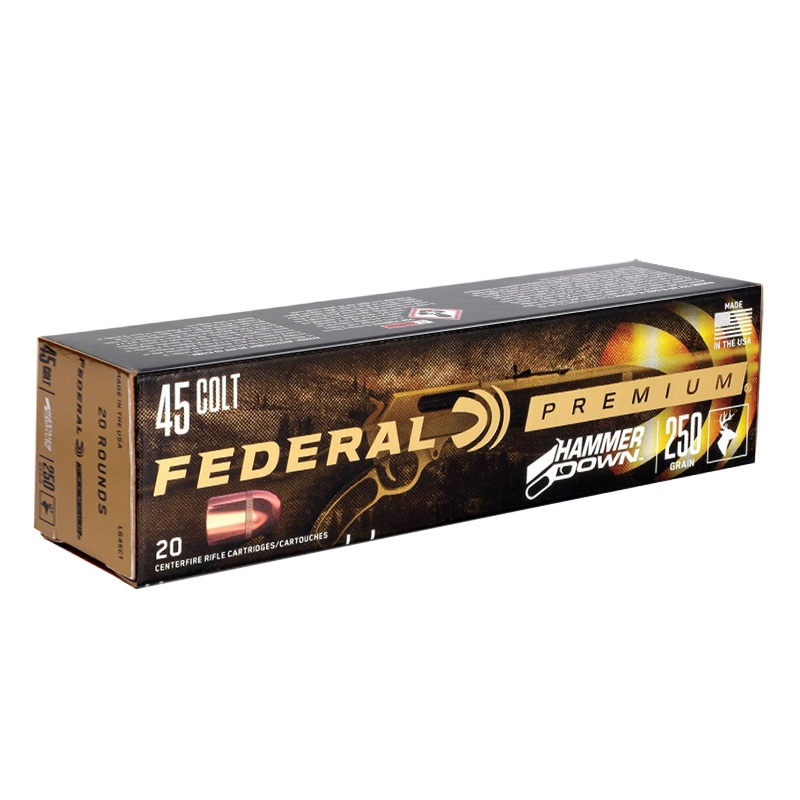
Ruger-only hunting loads turn the cartridge into something closer to a compact .44 Magnum: 300-grain bullets past 1,200 fps, suitable for large game at moderate range from a stout revolver or a single-shot. The owners who swear by these loads are usually the ones who also own the gun rated for them. If your .45 Colt is a family Single Action Army or a faithful replica, the conversation ends at standard pressure and it is not a negotiation.
The Judge cross-over
The Taurus Judge and similar .410 revolvers chamber .45 Colt as the primary caliber, and the practical answer is unambiguous: shoot .45 Colt, not .410 shot shells. A rifled two-inch barrel gives a .410 shot charge a pattern that is generous to describe, while a 250-grain .45 Colt behaves like a .45 Colt should. Standard-pressure loads only — the Judge is not a hunting single-action, and Ruger-only ammunition has no business in it. If you are choosing ammunition for a Judge, buy a box of standard 250-grain soft point or JHP and stop there.
Lever actions and tubular magazines
Marlin 1894-pattern and Henry lever guns in .45 Colt take advantage of flat-nose and round-nose bullets for tubular-magazine safety — a pointed bullet can ignite the primer ahead of it under recoil, which is why spitzer shapes are banned from these magazines by design, not by fashion. Cowboy flat-noses and semi-wadcutters are the natural load; modern hollow points work from a lever gun too, with the same feed-testing advice as from a revolver. Lever-action velocity runs close to revolver velocity for standard loads; the high-pressure conversation depends entirely on the specific rifle’s rating, and a lever gun in .45 Colt is almost always happiest in the standard or cowboy class anyway, where the trigger-pull cadence and the magazine shape both point to the same soft-shouldered inventory.
A sensible first order
- 100 rounds of cowboy or standard lead for zero and practice. The cheapest honest inventory in the caliber.
- Two boxes of defensive JHP if the gun is a carry or home-defence revolver; one box to verify, one to load.
- One box of high-pressure hunting load only if you have confirmed the gun is rated for it, in writing, from the manufacturer.
Everything in stock sits on the .45 Colt caliber page. For the middle magnum next door — scarcer, hotter, and with its own devotees — see the .41 Magnum guide. And when the ladder spans this wide, comparing box prices is a trap; compare price per round within a class, never across them.
Shop this caliber
Live prices from the warehouses that have it on a shelf right now.