.41 Magnum ammo buying guide
The .41 Magnum was designed to split the difference between a duty .357 and a hunting .44, and the market chose neither. What is actually on the shelf today, and the shooters who still swear by it.
By TAS6 min read
.41 Magnum arrived in 1964 as a joint answer to a police problem: a duty revolver more capable than the .357 Magnum without the recoil of a full-power .44. The ballistic compromise was good. The commercial one was not, and the cartridge lost the market war to the calibers on either side of it. Sixty years on it is still chambered in good revolvers, still loaded by serious manufacturers, and still defended by shooters who have shot all three options and prefer the middle. If you own one, or are curious enough to buy one, the ammunition question is a shelf-availability question more than a performance one.
What the cartridge does
Two standard factory weights define the menu, and they split by purpose rather than by prestige.
| Weight | Velocity | Character | Best at |
|---|---|---|---|
| 170 gr | ~1,350–1,400 fps | Flat, sharp, the original duty loading | Defence, silhouette, lighter game |
| 210 gr | ~1,250–1,300 fps | The general-purpose weight | Hunting deer-sized game, defence |
| 240 gr | ~1,150–1,250 fps | Boutique hunting loads only | Heavier game from a longer barrel |
The numbers sit where you would expect: meaningfully above a .357 Magnum in bullet weight and momentum, a little under a full-power .44 Magnum, with recoil that splits the difference in a way the arithmetic understates. A 210-grain .41 from an N-frame is a firm push where a 240-grain .44 is an argument. Shooters who dislike the .44’s snap but want more than the .357 offers are exactly the people this cartridge was engineered for, and they are still the people buying it.
The frame is part of the story. The .41 Magnum lives in Smith & Wesson N-frame revolvers — the same size class as the .44 Magnum — so the recoil advantage is a cartridge advantage, not a lightweight-gun advantage. That matters for the owners who swear by it: they are not comparing a featherweight .41 to a heavy .44, they are comparing two loads in similar iron and finding the middle one easier to shoot well, quickly, in strings. For duty-style revolver work, that is the entire pitch, and it was a good enough pitch that the cartridge has outlasted several attempts to replace it with something more popular.
The 170-grain load is worth knowing even if you never buy it: it was the police loading, it shoots flatter, and it is the reason some officers found the cartridge snappy in duty trim. Modern practice settles on 210 grains for almost everything: heavier bullets carry better through light cover, lighter ones shoot flatter, and the .41 sits at the point where both qualities remain usable.
The factory-load scarcity problem
This is the part that defines .41 Magnum ownership. The shelf is thin compared with .357 and .44, and it has been thin for decades. What you can generally find:
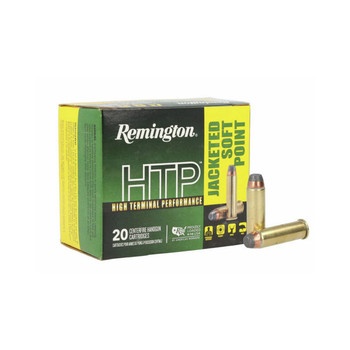
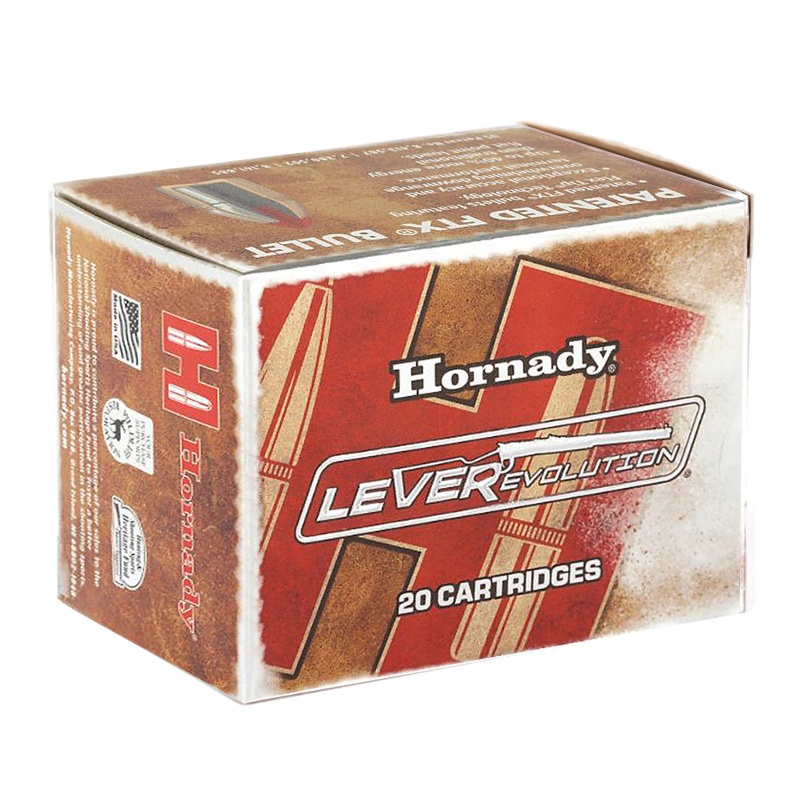
- A soft point or jacketed hollow point around 210 grains from Federal or Hornady when production runs land — the hunting and all-round load.
- A 170-grain jacketed hollow point occasionally, for the lighter-recoiling duty-flavoured option.
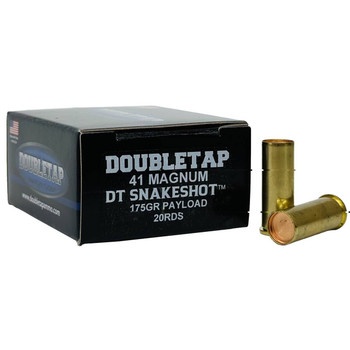
- Boutique full-power loads from the likes of Buffalo Bore and DoubleTap: heavier bullets, higher velocities, priced accordingly, and worth owning in ones and twos rather than cases.
What you will not find is a deep discount case-lot market, a surplus pipeline, or a cheap practice loading. When stock exists, cheapest in-caliber pricing runs around $1.31 a round — and when it does not, the price is simply the absence of options. Check the .41 Magnum caliber page before you plan a season around it.
Practice economics for a scarce caliber
The owners who keep a .41 Magnum in rotation are almost always handloaders, and the reason is economic rather than romantic. Once you are casting or buying 210-grain bullets and seating them in once-fired brass, the per-round cost drops to where a weekend of revolver practise stops being a luxury. If you are not a handloader, three habits keep the ownership viable:
- Practise deliberately, not voluminously. Fifty rounds from a ransom rest or a disciplined slow-fire session beat two hundred rounds of rapid fire you cannot call.
- Buy hunting and defensive ammunition in ones and twosso nothing ages; this is not a caliber where bulk storage pays.
- Verify your zero with the load you will carry, then stop buying. Recoil management, not ammunition selection, is where .41 Magnum accuracy is won or lost, and a revolver you shoot well is worth more than a shelf you admire.
A sensible first order
- Two boxes of 210-grain soft point or JHP — one to zero and practise with, one to carry or hunt.
- One box of the boutique heavy load if you already know the gun and want the upper end on hand.
- A brass-collecting habit if you ever think you might reload; once-fired .41 Magnum brass is not something you casually restock.
For the neighbouring option when the .41 is unavailable — and the load ladders that make each one distinct — see the .45 Colt guide. The long-range rifle that shares the magnum name but not the mission is covered in the .338 Winchester Magnum guide. If you end up handloading, the per-round comparison framework in price per round applies to components as well as factory boxes.
Shop this caliber
Live prices from the warehouses that have it on a shelf right now.