Soft point vs hollow point: hunting bullets explained
Both bullets are built to deform; they disagree about how fast. That single design choice decides which one reaches the vitals on a deer and which one dumps energy on a threat.
By TAS6 min read
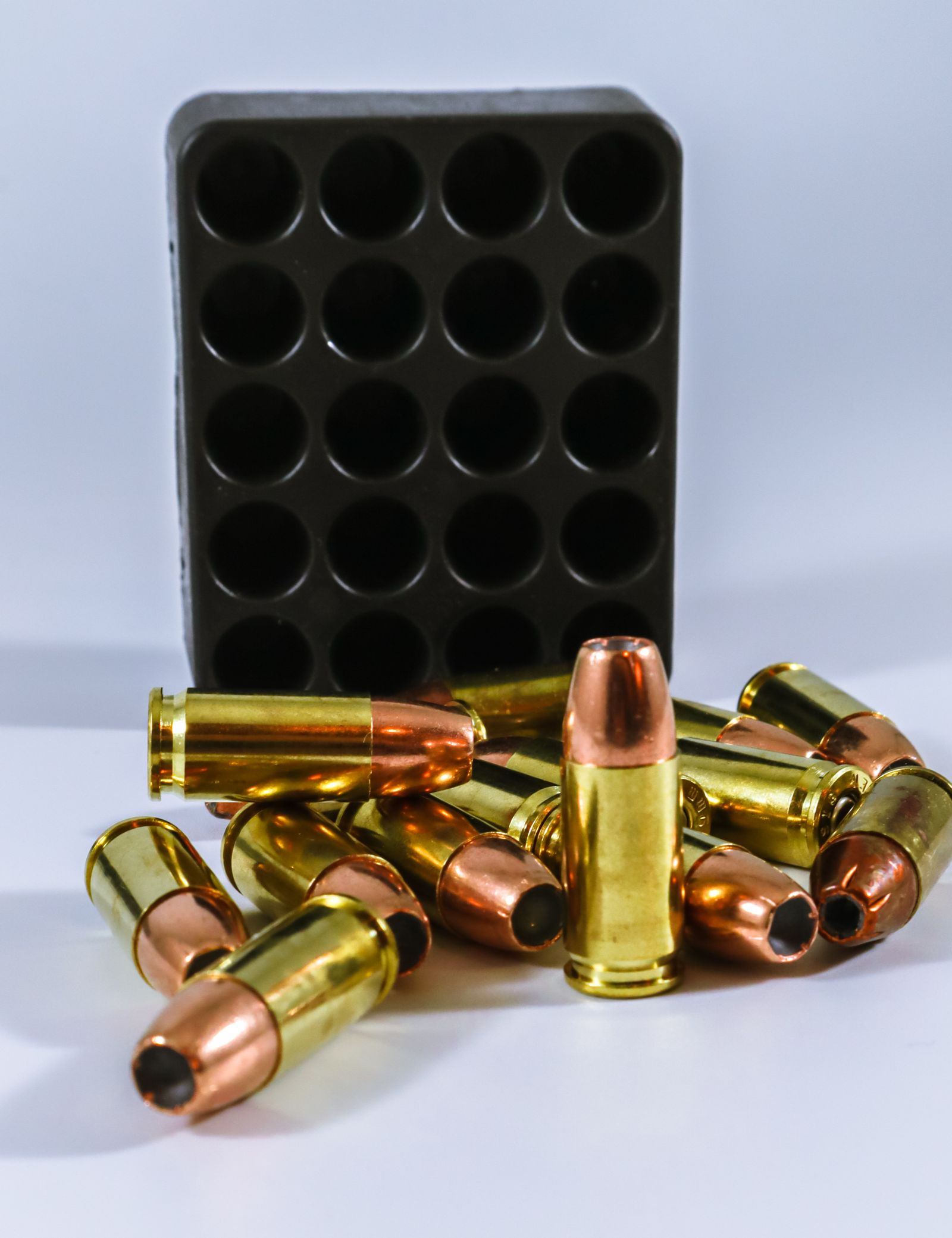
A soft point leaves lead exposed at the nose — the jacket stops short — so the bullet opens by peeling as it drives forward. A hollow point starts the same process from a cavity, so it opens earlier, faster and at lower impact velocity. Controlled expansion for game against rapid expansion for defence is the whole distinction, and the two designs swap roles badly because the speeds they are built for barely overlap.
Neither is a better bullet. They solve different physics: a hunting bullet must keep going after the shoulder; a defensive bullet must stop. Choose by what happens after the first three inches.
Soft point: peel, do not burst
The classic soft point is a lead core under a copper jacket that ends below the tip, leaving a nose of bare lead. On impact the nose mushrooms, the jacket follows, and the expanded shape digs in while the mass carries the bullet onward. The design intent is weight retention: a well-built soft point keeps somewhere around 60 to 90 per cent of its weight after the hide, because retained weight is what drives depth.
That makes it the default for deer-sized and larger game. The bullet has to reach the far-side vitals after crossing muscle and sometimes bone, and it has to do it while deformed. Hunting designs earn their reputation here: InterLock-style jackets that grip the core with a mechanical hook, partitioned bullets with two cores divided by a copper web so the front can collapse while the rear stays intact, and bonded constructions where jacket and core are fused and simply refuse to separate. The names on the shelf differ; the mechanism is always the same argument — expand, but hold together.
The soft point’s weakness is the other side of the coin. At low impact velocity it may not open much at all and will then behave somewhat like an FMJ, and on very light game a large, fast-expanding soft point can wreck more meat than the shot required. It is a compromise bullet, which is exactly why it is a general hunting bullet.
Hunting hollow point: start early, finish early
A hollow point hunting bullet has a small cavity in the nose. Impact pressures force material into and around that cavity, the walls yield outwards, and expansion begins almost immediately — at impact velocities where a soft point would still be thinking about it. The result is a wider permanent cavity earlier in the trajectory through tissue, with less depth of penetration than a soft point of the same weight would typically achieve.
For a police load fired into a threat, that is the design goal: energy deposited inside, minimal exit. For an elk at 200 yards it usually is not, because elk do not reliably stop at the depth a fast-opening hollow point reaches, and the bullet that stops in the off-side muscle has not done its job. Velocity windows govern this too — a hollow point tuned for pistol speeds will not behave the same way when a magnum drives it in at 2,400 feet per second, where thin jackets can fragment instead of opening.
Why the roles rarely swap
The two designs are optimised for impact conditions that do not overlap much:
- Hunting bullet used for defence. A 168 grain soft point from a rifle travelling at 2,700 feet per second may penetrate far past a bad situation’s backstop. Controlled expansion at hunting velocity is slow expansion relative to what a defensive encounter needs, and deep penetration through a wall or a second person is a liability, not a feature.
- Defensive hollow point used for game. Fired at deer, it either opens so fast that penetration falls short of the vitals or fragments on the shoulder. It was built for twelve to eighteen inches in gelatin, not for crossing an animal.
- Velocities, not labels. Pistol hollow points live around 900 to 1,300 feet per second at impact; rifle hunting bullets are usually asked to work from roughly 1,800 feet per second upward. Designs tuned for one end of that range misbehave at the other.
The middle ground — bonded hunting bullets and monolithic copper bullets — exists because both roles want the same virtues in different quantities: expansion you can predict, and mass that stays attached. Copper bullets offer near-total weight retention and are now required in some western hunting units that bar lead; they compensate for the softer nose by needing more velocity to open, which is the same trade again.
Choosing, by what you are shooting at
- Varmint or predators: rapid expansion — thin jacket or polymer-tipped hollow-point styles. You want energy out quickly, penetration depth is irrelevant, and meat damage is not a concern.
- Deer-sized game: a controlled-expansion soft point or a hunting hollow point rated for your cartridge’s impact velocity. This is the widest, best-served category on any shelf.
- Elk, moose, heavy bone: bonded or partitioned construction, heavier for caliber, retention first. See why heavier-for-caliber bullets behave differently and how barrel twist interacts with their length.
- Defence: a proven jacketed hollow point with a testing record — the duty-grade ammunition world, not the hunting aisle. TMJ vs FMJ vs JHP covers that construction in detail.
One last filter: whatever you pick, confirm it groups in your rifle and shoot a little of it before the season. A hunting load you have never verified is a rumour, and the most carefully engineered expansion mechanism in the world does not help a bullet that prints four inches from where the scope says it will. The flight path matters as much as the nose — ballistic coefficient is the part of that conversation which begins at the muzzle and ends with whether the bullet was ever where you aimed it.