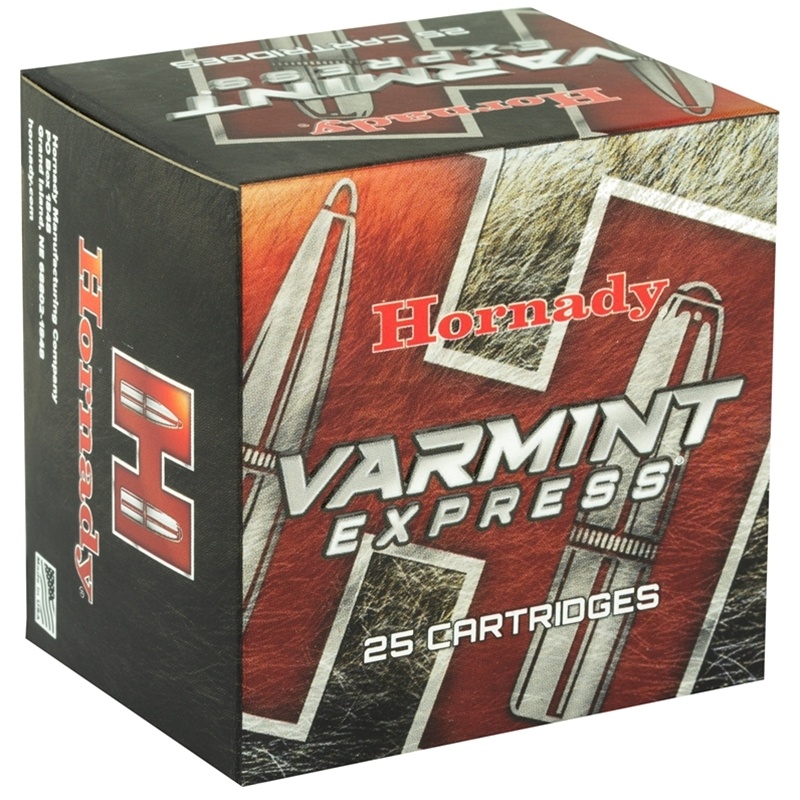
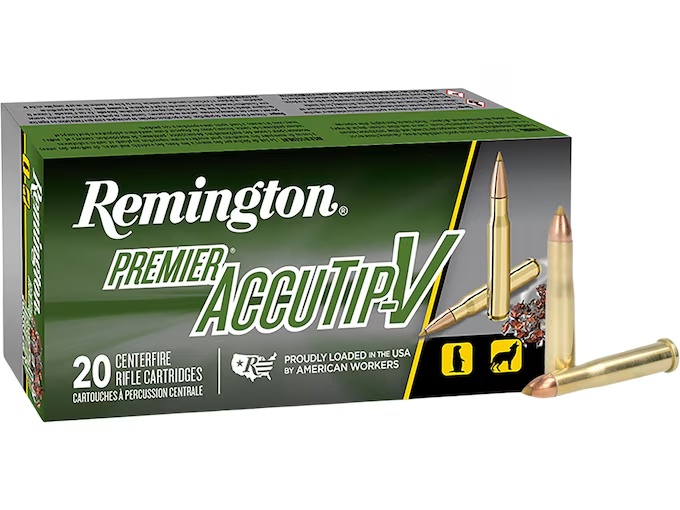
.22 Hornet ammo buying guide
.22 Hornet is an old, small, quiet centerfire varmint cartridge. The factory menu is thin, the niche is real, and the people who stay with it usually handload.
By TAS6 min read
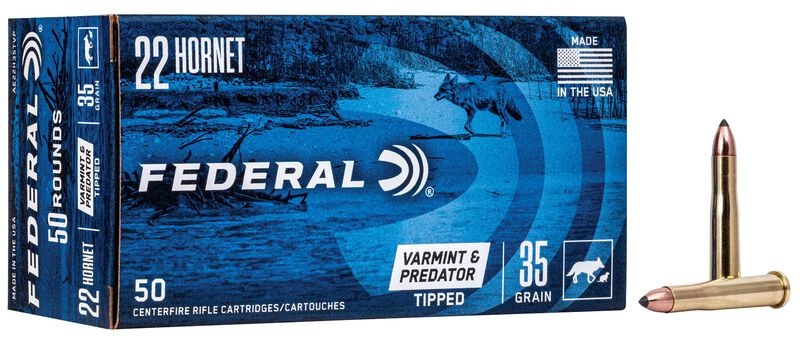
.22 Hornet sits between rimfire and .223 Remington, and it has been doing that job since before the Second World War. It is a small, relatively quiet centerfire for close-range varmint and farm work. The factory shelf is thinner than almost any modern cartridge you will buy; that is not a reason to avoid it, but it is a reason to know exactly what you are buying the ammunition for before you commit to a chambering.
What the cartridge is for
A 35–40-grain bullet typically leaves a 22–24-inch barrel at roughly 2,900–3,150 fps. That is far faster than .22 WMR and far slower than .223, which is exactly the point: enough velocity for clean work on groundhogs, prairie dogs and similar pests at a few hundred yards, with less report and blast than a .223 from a hide or a farm lane.
It is not a coyote-at-400-yards cartridge for most shooters, and it is not a defensive round. The people who still buy it are usually doing one of three things: pest control where noise matters, range work on a private lane where a smaller case is kinder to the backstop, or handloading for a classic rifle they already own and enjoy.
Factory availability
| Bullet | Weight | Typical velocity | Role |
|---|---|---|---|
| FMJ / full metal jacket | 35–40 gr | ~2,900–3,100 fps | Plinking, function, light pest work |
| Soft point | 35–40 gr | ~2,900–3,050 fps | Varmints and small game where expansion helps |
| Varmint / fragmenting | 35–40 gr | ~3,000–3,150 fps | Rapid upset on small targets |
CCI, Winchester and Federal are the usual commercial sources; when factory production thins, shelf space follows. Live pricing on the .22 Hornet page sits around $0.93 a round when stock is healthy. That is several times .22 LR and still well under most centerfire varmint cartridges — the cost is thin availability more than per-box price.
Handloading and the K-Hornet
A large share of serious .22 Hornet shooters reload. Brass is inexpensive to conserve, the case is gentle on components, and the wildcat “K-Hornet” — a fire-formed, improved version — is a common next step for anyone who wants a little more velocity and a better throat. Factory ammo still works in a standard Hornet chamber; K-Hornet ammunition does not work in a standard barrel, and standard should not be forced into a K chamber without care. Read the roll mark.
If you do not reload, buy what the factory offers, keep a buffer of boxes, and treat the cartridge as a specialist tool rather than a volume plinker. The volume economics argument for centerfire cases in general is in bulk ammo; the grain-weight basics are in understanding grain weight.
What to practise with
For a farm rifle or a quiet range gun, FMJ or soft point in 35–40 grains is enough. You are not building a long-range dope chart; you are confirming zero and learning where the gun prints at the distances you will actually shoot. Buy a modest buffer — two or three boxes beyond the season’s need — because factory runs come and go.
If the rifle is a classic with iron sights or a small scope, spend the money on a solid rest and a clear optic rather than on premium bullets you will not need at 100 yards. The practical shooting framework for range work is in minute of angle.
Where it still fits
- Farm and ranch pest control where a .223 is louder than you want and the shots are inside 200 yards.
- Private ranges with limited backstops that prefer a smaller case.
- Classic rifle ownership — the chambering is part of a collection that already exists.
- Handloaders who enjoy working a small case and do not mind a thinner factory market.
- Low-noise farm work near neighbours where a suppressed .22 LR is not enough authority and a .223 is more report than the situation allows.
If your real need is open-country varminting at longer range, step up to .223 and buy the deeper factory menu; if your need is rimfire-adjacent with more authority, .22 WMR is easier to keep on the shelf. The Hornet is for the middle, and the middle is still useful when you know you are in it.
Backstop discipline still applies. A smaller case is not a free pass for a poor rest or an uncertain impact area. Practise the same fundamentals you would on a larger centerfire, and treat every round as if it will travel farther than the target.
A sensible first order
- Three to five boxes of factory soft point or FMJ, not a case — availability, not price, is the constraint.
- One box of the best varmint load you can find for zero and confirmation on the animals you actually shoot.
- Plan a brass habit if you reload or might: these cases are worth keeping.
Check the live .22 Hornet shelf for what is actually in stock this week. For the classic first-deer cartridge that still keeps a deep factory ladder, see .243 Winchester.
Shop this caliber
Live prices from the warehouses that have it on a shelf right now.