.22 LR buying guide: bricks and what cycles
The cheapest .22 on the shelf and the .22 that will cycle your rifle are often two different boxes. That is not a quality problem: it is how rimfire works.
By TAS6 min read
.22 LR is the round most Americans fired first and the cheapest way to get genuinely better at shooting. It is also the only common cartridge where the ammunition you choose routinely decides whether the gun works at all. Both of those facts come from the same place: rimfire is built differently.
Why rimfire is not just small centerfire
A centerfire round has a separate primer pressed into a pocket in a thick case head. A rimfire round has its priming compound spun into the hollow rim of a thin drawn case, and the firing pin crushes that rim against the chamber face to set it off. There is no primer to inspect, and the heeled lead bullet is held by a light case-mouth crimp and friction rather than by a centerfire-style cannelure, usually with a wax lubricant on the outside.
That construction is why .22 is so cheap, and why its tolerances are looser than anything else you will buy. Priming compound distribution around the rim varies. Case rims vary in thickness. Bullets are soft lead. None of that matters when you are ringing steel at 25 yards; all of it matters when a blowback action is trying to extract, eject, and chamber the next round in a tenth of a second.
Why some .22 will not cycle a semi-auto
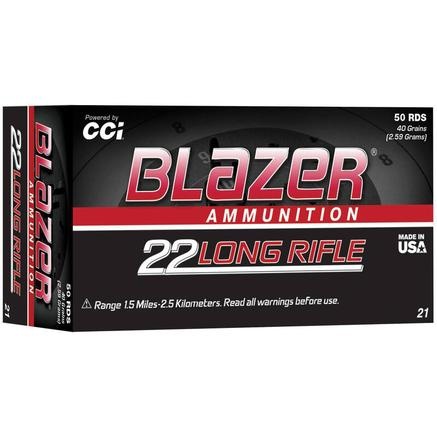
A .22 semi-auto is almost always a simple blowback: no gas system, no locking mechanism, just a bolt held forward by a spring and pushed back by the pressure of the fired case. The mass of that bolt and the strength of that spring are tuned by the manufacturer around a particular energy level. For most rifles and pistols, that level is high velocity ammunition, around 1,200 to 1,260 fps with a 36–40 grain bullet.
Standard velocity .22 leaves the muzzle at about 1,070 fps. It is more accurate, quieter and pleasant, and in a lot of semi-autos it does not move the bolt far enough back to pick up the next round. You get short strokes, failures to eject, and a rifle that feels broken but is not.
The other three common causes, in the order worth checking:
- A dirty chamber and bolt face. Rimfire wax and lead build up fast. A .22 that ran fine at round 300 and started choking at round 900 needs cleaning, not new ammunition.
- Magazine lips and followers. Rimfire magazines are the most common single point of failure, and they are cheap to replace.
- Lot variation. Bulk .22 varies between lots more than any other ammunition. A box that misfires twice in fifty is a lot problem, not necessarily a brand problem.
What to buy for what
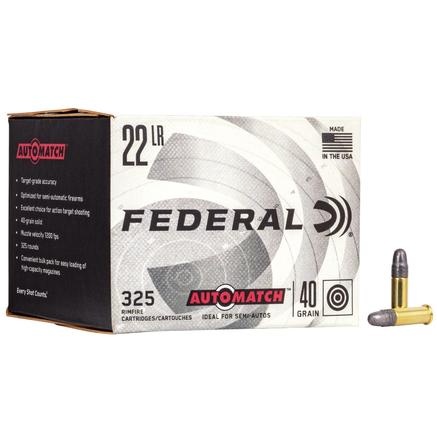
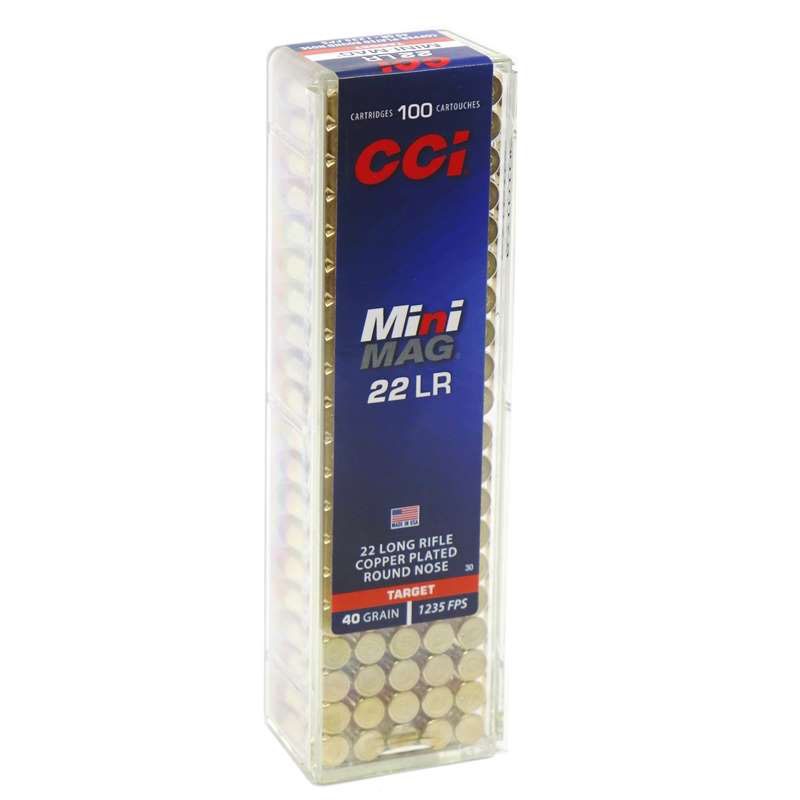
Semi-auto rifles and pistols. cci-mini-mag-22-lr at n/a a round is the reliability benchmark. federal-automatch-22-lr at n/a is the volume option and is specifically loaded to run in semi-autos rather than merely to be cheap. The distinction matters more than the few cents between them.
Bolt actions, single shots and revolvers. Nothing has to cycle, so buy for accuracy. cci-standard-velocity-22-lr at n/a is consistent enough that people shoot it in serious competition, and it is subsonic, which makes it markedly quieter, the reason it is the default choice behind a suppressor.
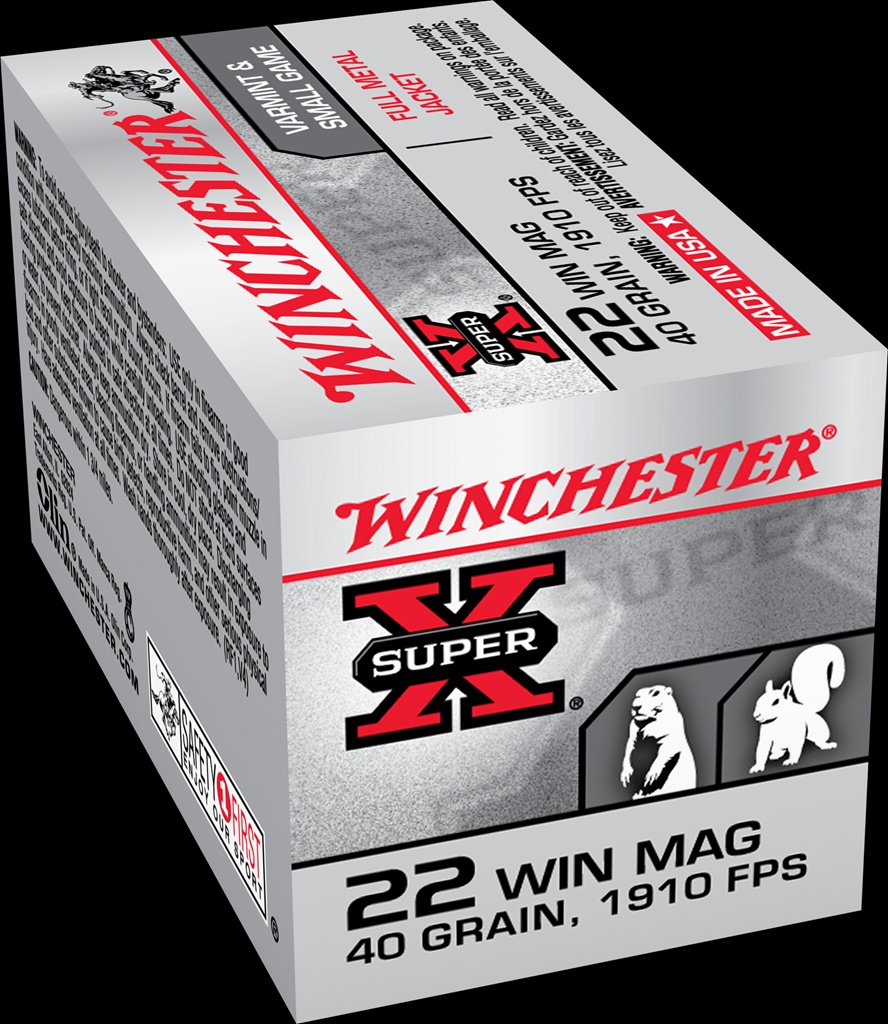
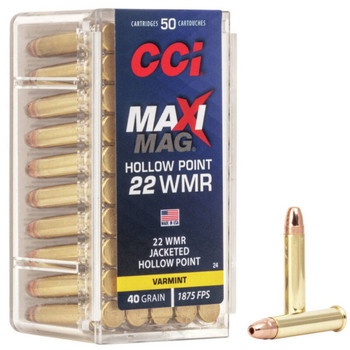
Small game. A copper-plated hollow point at high velocity. If you want more reach than .22 LR gives, .22 WMR roughly doubles the energy and shoots much flatter past 75 yards: winchester-super-x-22-wmr at n/a a round. It is a different cartridge in a different chamber, and it will not fit a .22 LR rifle. Never mix the two in one range bag.
Bricks, packs and cases
Rimfire packaging is its own vocabulary. A brick is traditionally ten 50-round boxes (500 rounds), though the word now gets applied to any bulk pack. A case might be 1,000, 3,250 or 5,000 rounds depending on the maker. Read the round count.
| Load | Pack | Price | Per round |
|---|---|---|---|
| CCI Standard Velocity | 100 | n/a | n/a |
| CCI Standard Velocity | 5,000 | n/a | n/a |
| Federal AutoMatch | 325 | n/a | n/a |
| CCI Mini-Mag | 1,000 | n/a | n/a |
The discount for going deep is proportionally similar to centerfire (roughly a fifth off, from the 100-round box to the 5,000-round case of CCI Standard Velocity), but the shape of the decision is different. That is around ninety dollars saved in exchange for owning five thousand rounds, which is several years of shooting for most people and a real storage commitment. Two 500-round packs bought twice a year is usually the better trade, which is not how the maths works out in buying centerfire by the case, where one case can be a year of shooting rather than five.
Storage, because rimfire is fussier
The exposed rim priming and the soft, waxed bullet make .22 more sensitive than centerfire to two things in particular. Oil and solvent wick into a rimfire case far more easily than into a sealed centerfire primer pocket: a box that lived in a cleaning kit drawer will produce misfires. Bulk packaging lets rounds rattle against each other, which knocks the wax lubricant off and can dent soft lead noses; if you are keeping a bulk pack for years, decant it into ammunition boxes rather than leaving it loose in a bag. The rest of the rules are the same as everything else and they are in storing ammunition properly.
The buying plan
- Buy a box each of two or three loads: one high velocity, one standard velocity, one bulk pack.
- Shoot 100 of each through the gun you care about. Count malfunctions. Look at the groups.
- Buy the brick or the case of whichever won, and keep one box of Mini-Mag as the control sample for the next time something goes wrong.
The whole shelf, with per-round prices side by side, is on the .22 LR page. At these prices a thousand rounds of deliberate practice costs less than one afternoon of centerfire, which is the actual argument for owning a .22.
Shop this caliber
Live prices for what is in stock right now.