.25 ACP ammo buying guide
.25 ACP is not a defensive powerhouse and was never meant to be. It is a reliability upgrade over rimfire in a pocket pistol, and the ammo menu is one load deep.
By TAS6 min read
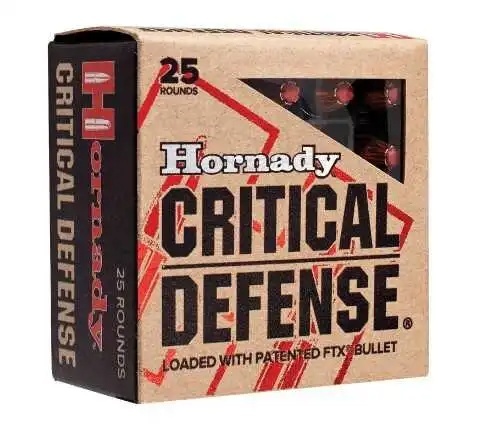
.25 ACP is the smallest centerfire handgun cartridge you will find on a normal shelf, and the honest conversation about it starts with what it is not. It is not a stopping-power answer, its hollow points mostly do not expand, and any modern .380 or 9mm pistol is a better defensive tool. What it is: a centerfire alternative to .22 LR for a backup pocket gun, where primer reliability matters more than terminal performance, and the menu is simple enough to buy without a spreadsheet.
What the cartridge is for
John Browning designed .25 ACP (6.35mm Browning) in 1905 for the tiny pocket pistols of the era, and the cartridge has not really changed since. A 50-grain full metal jacket leaves a 2½-inch barrel at roughly 800–900 fps and a longer barrel near 950, which works out to somewhere under 100 foot-pounds of muzzle energy. For comparison, a standard .380 load doubles that, and 9mm roughly triples it. The ballistics are what they are; no box of ammunition makes a .25 into a service caliber.
The case that remains is reliability. A centerfire primer will ignite after sitting in a pocket holster for months; a rimfire primer will not always do the same. For a gun whose entire job is to be available and to fire when it is needed, that is a real argument – and it is the argument for .25 over .22 LR, not against the caliber. Shooters who carry a deep-concealment piece that must work on the first trigger pull buy .25 for the primer, and for nothing else.
The load menu is one load deep
| Load | Bullet | Velocity | Role |
|---|---|---|---|
| FMJ | 50 gr copper-plated lead | 800–900 fps | Practice, and the defensive default |
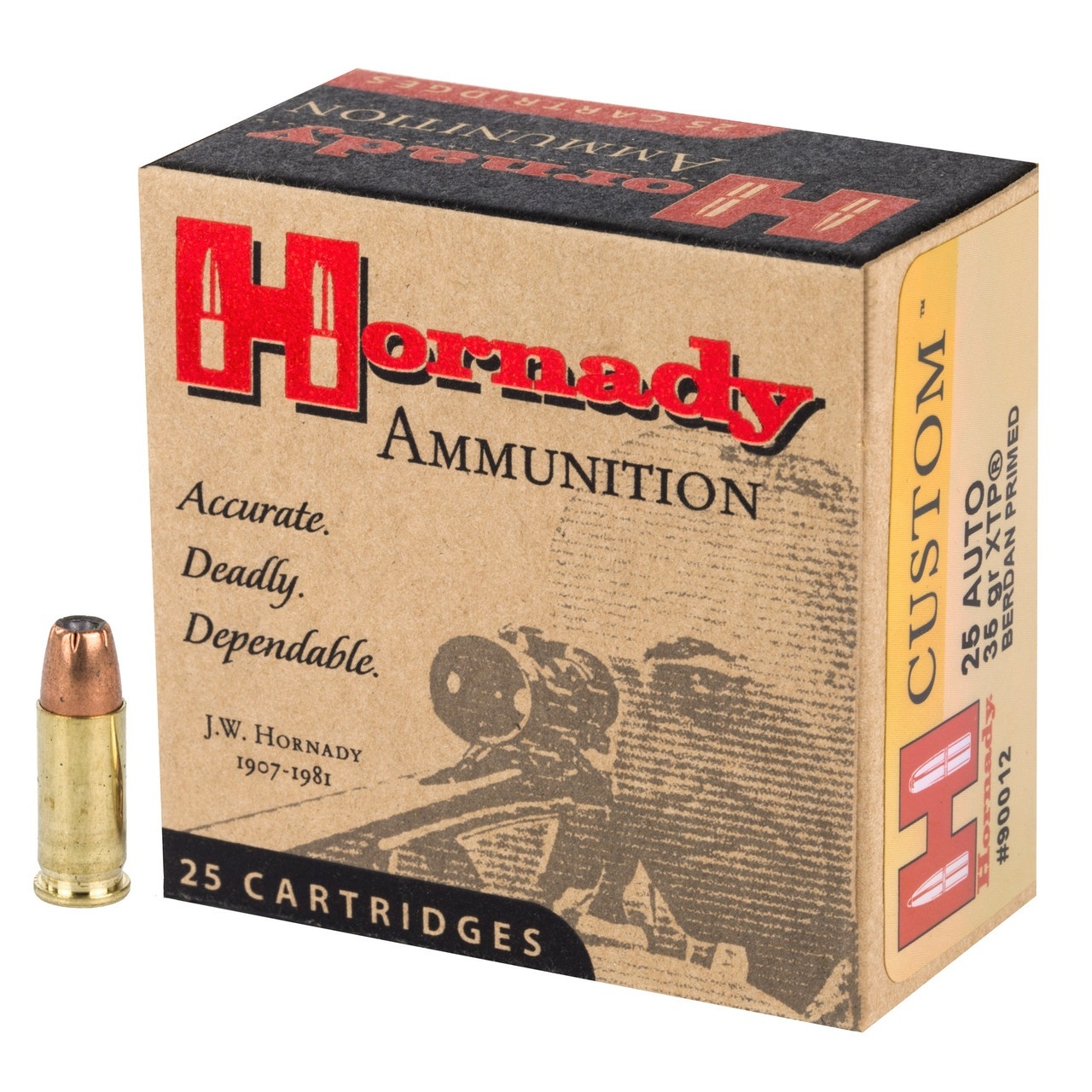
| JHP | 35–50 gr hollow point | 750–950 fps | Often fails to expand; a marketing load |
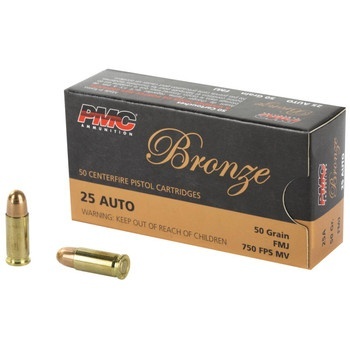
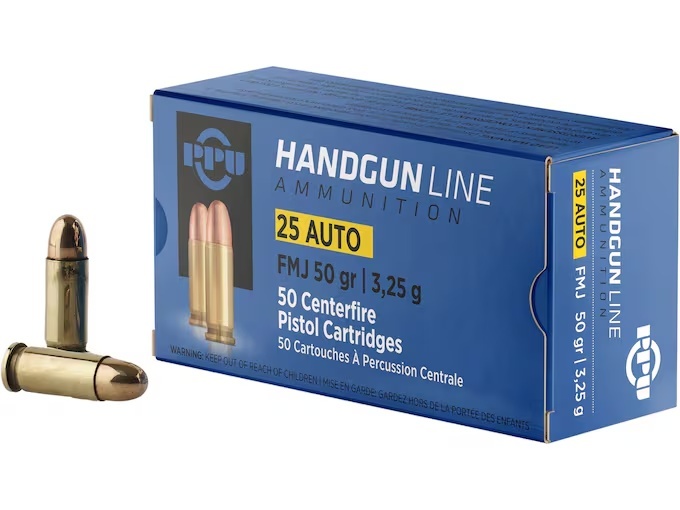
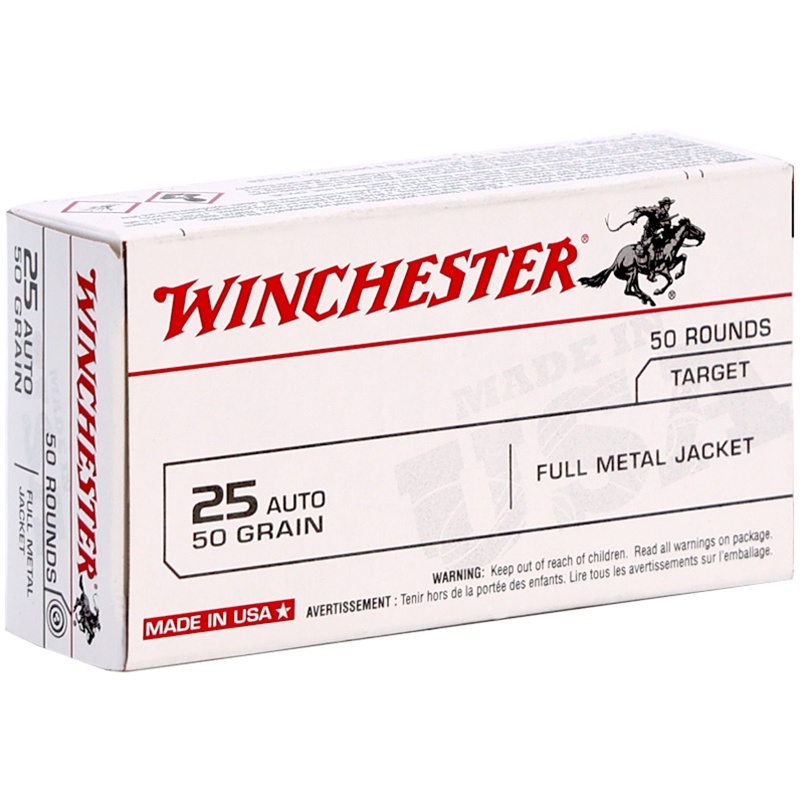
Federal American Eagle, Aguila, Fiocchi, and Prvi Partizan all load a 50-grain FMJ, and they are effectively interchangeable for this caliber. The FMJ is also the correct defensive choice: at .25 ACP velocities, most hollow points either fail to open or open into a useless petals, and the FMJ’s deeper penetration is the more predictable outcome. Buy FMJ, shoot FMJ, and do not pay a premium for a JHP that the velocity cannot justify.
The pistols themselves are part of the ammunition conversation. .25 ACP guns are almost exclusively small, straight-blowback designs with short barrels and tight actions; they are more sensitive to ammunition variation than a locked-breech 9mm, and a load that extracts cleanly in one pistol may leave empty cases in the chamber of another. Buy a couple of boxes of your chosen FMJ, run a full magazine through the gun, and treat a failure to extract as information about that pairing rather than a reason to keep shopping brands at random.
What to practise with
Practise with the same 50-grain FMJ you intend to carry. There is no cheaper practice tier in .25 ACP worth chasing, and the boxes are small enough that mixing brands does not teach you anything about the gun. The goal with this caliber is function and familiarity: does the pistol feed, does it extract, can you hit a man-sized target at seven yards with a trigger you did not choose. Those are the questions a box of FMJ answers.
The .25 ACP caliber page carries the live shelf, and $0.48 a round at the cheap end is still not cheaper than 9mm FMJ – the small production volume means .25 has never been an economy caliber either. If per-round cost is the binding constraint, compare the full economics with price per round, and for the honest pocket-pistol comparison against its nearest rivals, the mainstream duty-caliber argument in 9mm against .45 ACP shows how far the ballistics gap runs from this cartridge.
A sensible first order
There is no case quantity that makes sense here; .25 ACP is a box-at-a-time caliber for a gun that sees little live fire and a lot of carry time. Keep a round count so you know when the loaded magazine has been in the gun long enough to deserve a rotation, and buy fresh practice ammunition annually rather than in bulk.
- One or two boxes of 50-grain FMJ – enough to function-test the pistol and keep a loaded spare magazine rotating.
- No defensive specialty boxes until you have confirmed, with your own gun, that a given JHP feeds and does something useful. Most shooters never get there, and the FMJ stays the answer.
- A habit of rotating – pocket pistols live in lint and heat; a box a year keeps the supply fresh without stockpiling a caliber that does not improve with age.
.25 ACP is a specialist’s caliber in a world that has mostly moved on, and it still earns its shelf space for one job: a centerfire that will fire when it is needed, in a gun small enough to actually carry. Buy the FMJ, confirm it runs in your pistol, and keep the ballistics honest.
Shop this caliber
Live prices from the warehouses that have it on a shelf right now.