9mm vs .45 ACP: capacity, cost, and what the gel actually shows
The oldest argument in American handguns has almost no data left to settle it with. Capacity, cost, and modern hollow points have moved further than either camp admits.
By TAS6 min read
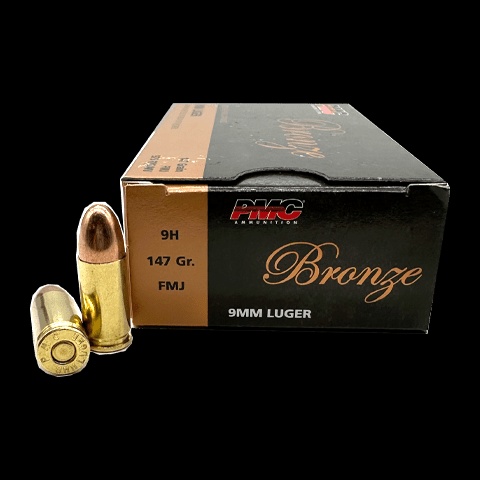
Ask ten shooters and you will get either “nine rounds of something beats five rounds of nothing” or “they don’t expand until they get there”, delivered with equal confidence. The useful version of this comparison is narrower: what each cartridge costs you in capacity and money, and how little the terminal difference remains once both sides are loaded with a modern bonded hollow point.
What each cartridge actually is
9mm Luger is a 9.19mm pistol cartridge developed in 1901, running 115 to 147 grain bullets at roughly 1,150 to 1,350 fps from a service-length barrel. .45 ACP, John Browning’s 1904 design for the pistol that replaced the .38 Long Colt, pushes a much larger 185 to 230 grain bullet at only about 830 to 1,000 fps. The .45 wins diameter; the 9mm wins velocity and pressure; both sit in short, straight-walled cases designed to feed reliably in semi-automatics.
| Cartridge | Bullet weights | Velocity | Recoil character | Typical capacity |
|---|---|---|---|---|
| 9mm | 115–147 gr | 1,150–1,350 fps | Quick snap, easy to shoot flat | 15–17+1 in a full-size |
| .45 ACP | 185–230 gr | 830–1,000 fps | Slow push, heavier gun required | 10–13+1 in a full-size |
The recoil stories are less decisive than they sound. A 230 grain .45 at 850 fps produces more total impulse than a 124 grain 9mm at 1,150 fps, but the .45 pushes rather than snaps, and the guns that shoot it well are almost always heavier. Many shooters who flinch at a loaded .45 in a polymer compact shoot the same cartridge calmly in a steel-framed 1911. Shoot the gun you would actually carry, with the load you would actually carry, before forming an opinion about the caliber.
Capacity: real, but smaller than the forum math
In comparable full-size frames the gap is usually three to five rounds: a Glock 17 holds 17+1, a Glock 21 holds 13+1. In subcompacts the gap can open further as manufacturers struggle to feed the larger round through short grips. That difference is real, and under stress people fire more rounds than they aim. It is also not infinite, and it only matters if those rounds hit: the terminal performance section below assumes hits, because caliber does not substitute for them.
Cost compounds the capacity argument every month you own the gun. 9mm currently starts at $0.27 a round, while .45 ACP starts at $0.43. On a thousand-round training year that spread is real money, and it is money you either spend on ammunition or do not shoot at all. How to work that comparison properly is in price per round.
What the gel actually shows
The old terminal argument was settled with 1990s ammunition: badly designed 9mm jacketed hollow points failed to expand, clogged with clothing, or shed their jackets, while a 230 grain .45 hollow point made a wide hole whether or not it expanded. That gap was real. It is also largely closed.
Modern duty hollow points from the manufacturers that sell to law enforcement (Federal HST, Speer Gold Dot, Hornady Critical Duty) expand reliably in both calibers, including after passing through clothing and automobile glass, and the FBI protocol testing that drove the 1990s conclusions was itself re-run on this generation of ammunition. The practical result: a 124 grain 9mm duty load and a 230 grain .45 duty load both produce expanded diameters in the neighbourhood of 0.55 to 0.70 inches with similar energy dumps. The .45 still wins expanded diameter by a few hundredths. The 9mm still wins by the extra rounds in the magazine and the extra boxes in the closet.
Where each one still wins outright
- 9mm wins capacity, cost, and availability. It is the deepest market in the world, the softest-shooting of the mainstream defensive calibers in comparable guns, and the default recommendation for a first handgun.
- .45 ACP wins if you already shoot it well, if you want a heavier-for-caliber bullet at subsonic velocity (useful suppressed, and the reason the cartridge never left the special operations community), or if you prefer a 1911 and accept the magazine and maintenance overhead that comes with one.
- Neither wins against the shooter who practises less because their ammunition costs more or their gun punishes them. That factor dominates the caliber choice for most people, and no gel block accounts for it.
The verdict, as a rule
If you are choosing one handgun to buy and carry: buy 9mm, buy a bonded or barrier-tested hollow point, and spend the money you saved on a case of practice ammunition and a training class. The extra capacity and the lower cost per round compound in your favour for the entire life of the gun.
If you already own and shoot a .45 well: keep shooting it. Shot placement with a cartridge you have practised with beats a cartridge you have not, and the capacity argument only matters if you notice the difference in your own groups. Check current .45 ACP pricing before you assume training with it is unaffordable; the market has not been as hostile to the cartridge as the internet suggests.
Either way, buy both calibers the same way: one defensive load you have verified through your own gun, and everything else as cheap consistent practice ammunition. The comparison that continues in the handgun world is in 9mm against .40 S&W and 9mm against 10mm, where the economics are less settled and more interesting.
Shop this caliber
Live prices from the warehouses that have it on a shelf right now.