.303 British ammo buying guide
Most .303 British sold in America still ends up in a Lee-Enfield. Whether it is decades-old military ball or a factory hunting load decides what you must check before the first shot.
By TAS6 min read
.303 British is the rimmed .30-caliber cartridge that armed the British Empire through two world wars, and in America it survives for one reason: the Lee-Enfield. The rifle is cheap, fast, and still capable; the ammunition market splits cleanly in two, and the split is the whole buying decision. Military surplus ball is the cheapest way to feed the rifle, and commercial soft points are the only thing you should put in front of an animal.
What military surplus actually is
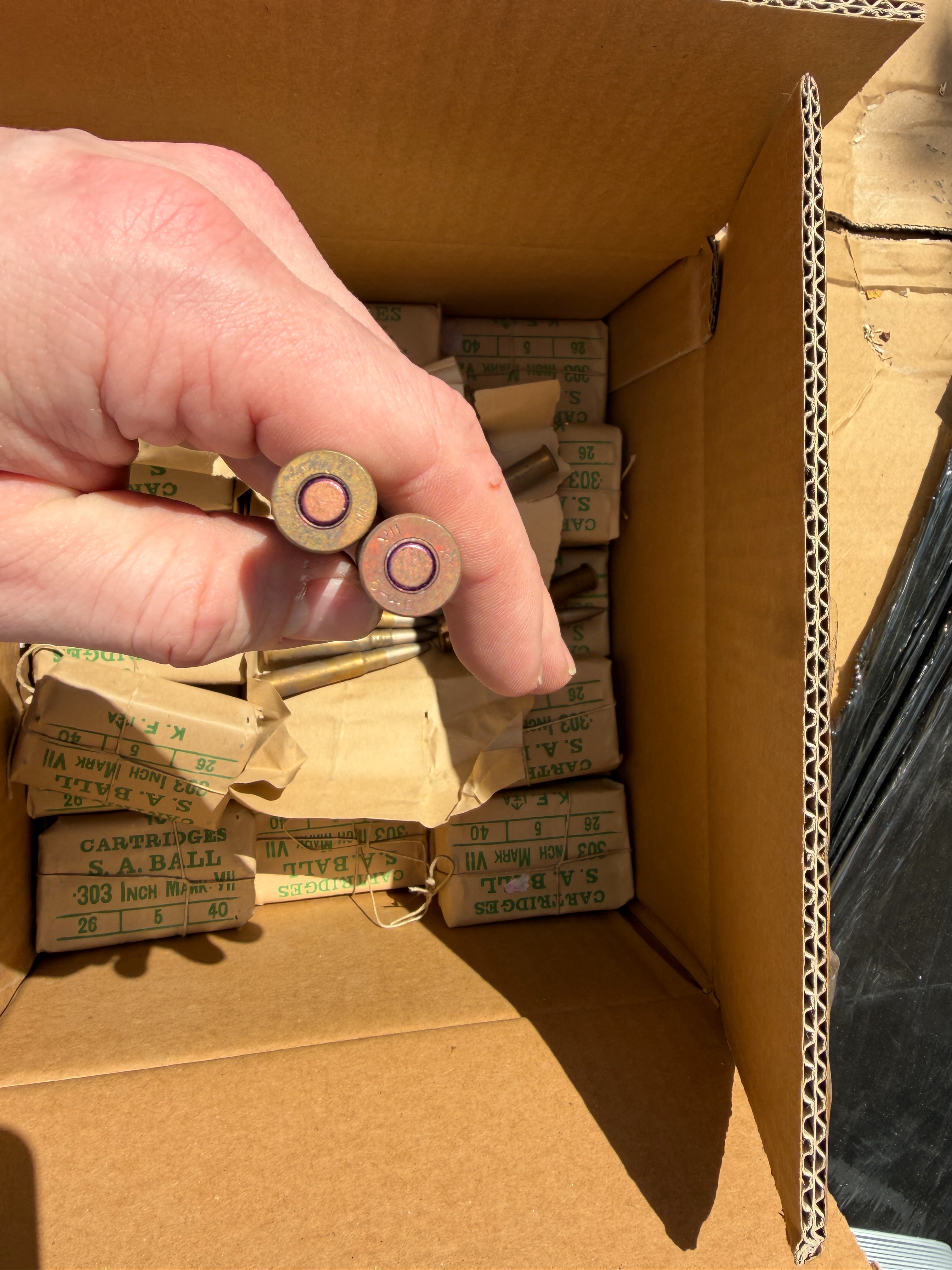
The classic surplus load is Mark VII ball: a 174-grain full metal jacket, cup-and-core, at roughly 2,400–2,500 fps from a 24-inch service barrel. It is adequate for paper and steel at sensible distances and wrong for hunting — an FMJ makes a narrow wound channel and expansion is luck rather than design.
Before any of that matters, three checks come first.
- Priming. Wartime and immediate post-war British ball is corrosive. The salts left in the bore after firing will hold moisture and pit steel if you treat the range day like non-corrosive practice. Assume corrosive until you know otherwise: flush the bore with a water-based solvent, then oil it.
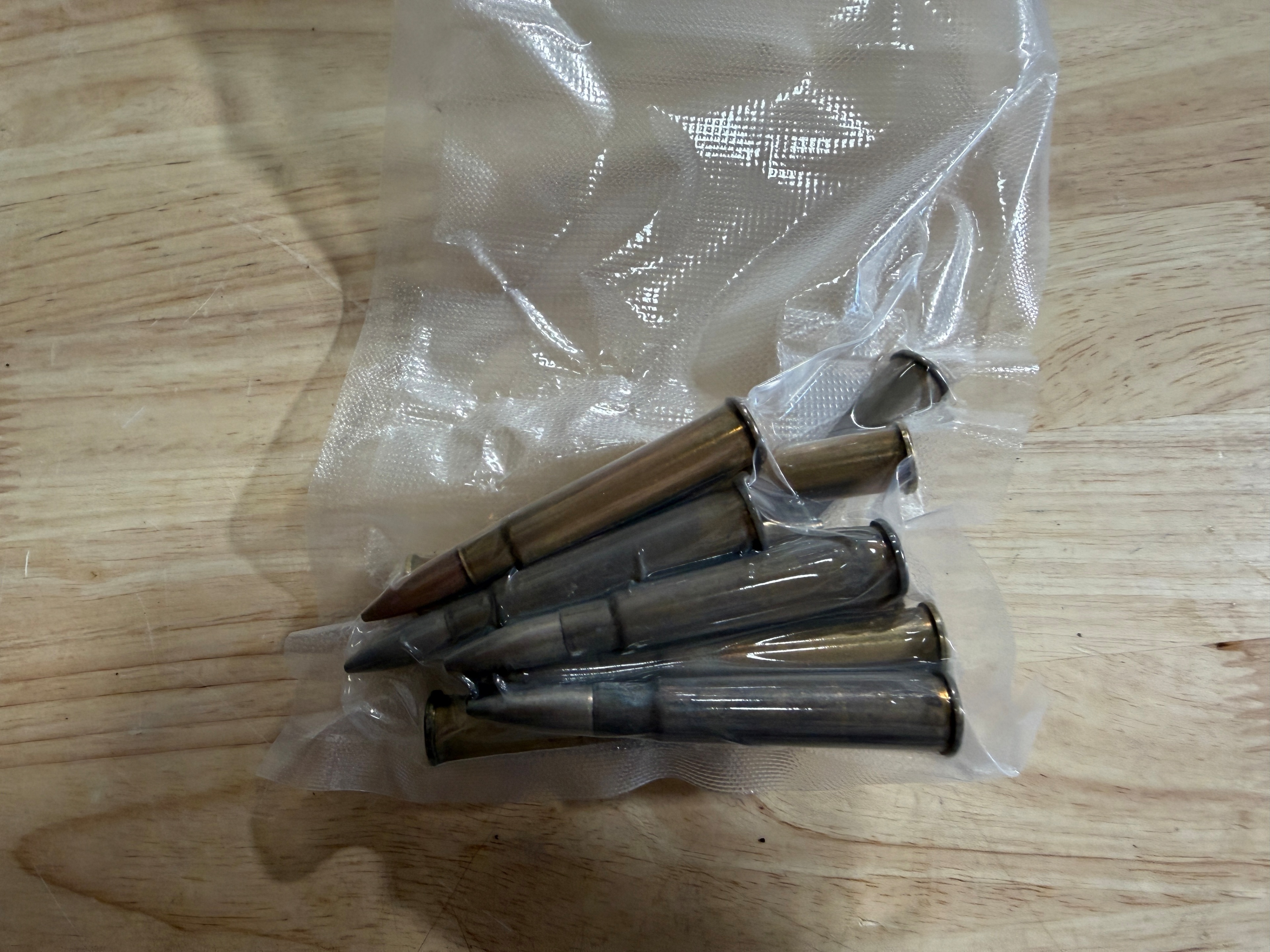
- Case condition. Inspect every round from a lot you have not shot before. Split case heads, cracked rims, loose primer pockets, neck splits, and heavy corrosion pitting are reasons to set a round aside, not reasons to try it. Ammunition of unknown history stored in a shed or attic for forty years fails this test often enough to matter.
- Headspacing reality. The .303 headspaces on the rim. Chambers erode, surplus brass varies, and rim thickness varies with it. A rifle that chambers commercial ammunition cleanly may show loose lock-up on thin-rim surplus. If extraction feels slick or the bolt closes with noticeably less effort than you are used to, stop and have the chamber cast before continuing.
Surplus remains the cheapest .303 you can buy by the case, and for volume practise with iron sights it has no real rival in this caliber. It is not a hunting load and it is not a defensive load. Treat it as range fuel with a maintenance obligation attached, and it earns its shelf space.
The commercial load menu
Commercial .303 is a hunting shelf, and the menu is short enough to learn in one sitting. Bullet weight moves velocity and recoil in the usual direction; construction decides what the bullet does on impact.
| Weight | Velocity | Construction | Best at |
|---|---|---|---|
| 150 gr | ~2,700 fps | Soft point | Deer and lighter game, flatter trajectory |
| 174–180 gr | ~2,500–2,550 fps | Soft point or hunting FMJ | The general-purpose hunting weight |
| 200–220 gr | ~2,200–2,350 fps | Soft point, sometimes bonded | Moose, bear, and heavier-bodied game |
| 174 gr ball | ~2,400–2,500 fps | Full metal jacket (surplus) | Practice only |
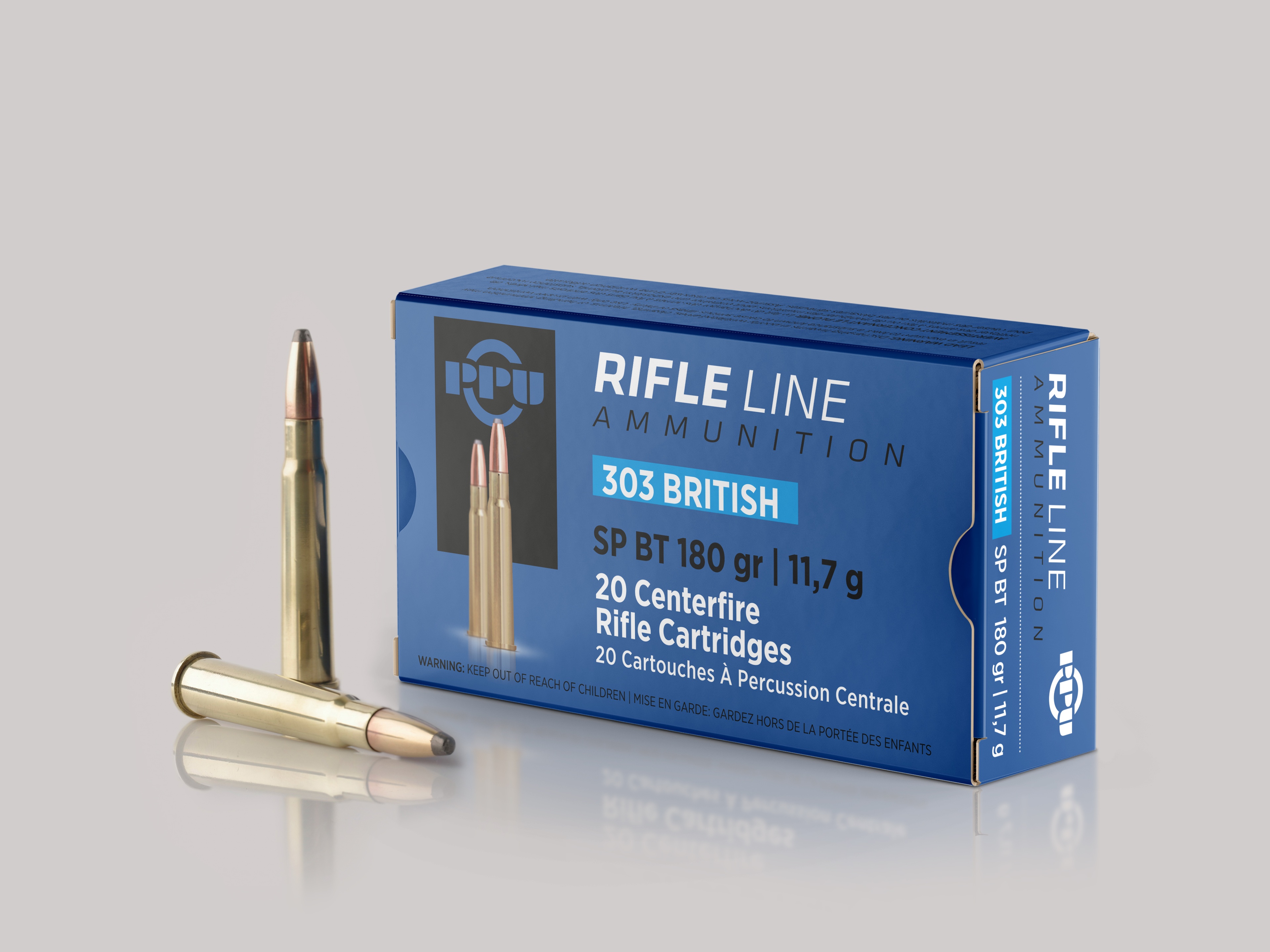
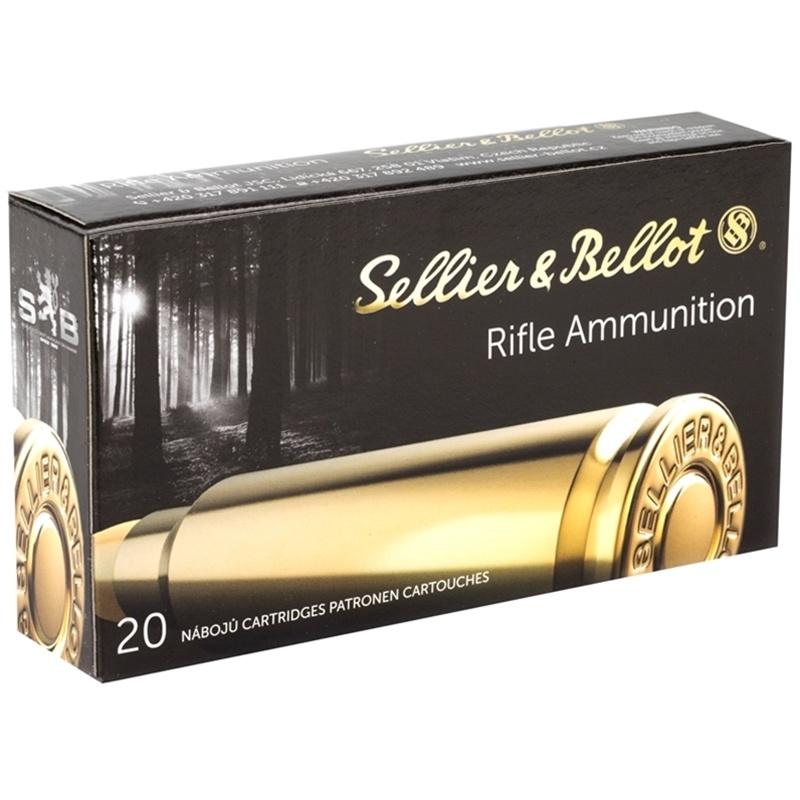
For deer-sized game, a 150- or 180-grain soft point is the default and it has been for seventy years. The old warning about .303 soft points tearing rather than expanding at close range has a real basis: the cartridge is fast, and a simple lead-tip bullet opened hard at 50 yards. If you routinely shoot inside 100 yards at larger animals, a controlled-expansion or heavier 200-grain-class bullet behaves better. The construction question is the same one covered in understanding grain weight, with weight doing one job and jacket design doing another.
Buy hunting ammunition from a current production run. Factory loads turn over; a box that has sat since the 1980s is not automatically bad, but it has had decades of temperature cycles and it is not the place to economise when fresh boxes exist at$0.76 a round.
Storage, and the rimmed-case quirks
Surplus ball in original packaging is a collector’s item that also happens to be ammunition. Store it cool, dry, and off concrete; the same rules that apply to any long-term cache, set out in storing ammunition properly, apply here with one addition: corrosive primer residue means any round that has already been fired through your rifle needs a clean bore before the rifle goes back on the rack, not eventually.
If you reload, .303 is a rimmed case with the usual straight-wall lesson: powder that is not seated behind the case head can migrate into the rim recess between loads and produce a squib. Weigh charges, do not shake powder around in a loaded tray, and treat military brass with the same suspicion you would give any case of unknown origin.
A sensible first order
- Two boxes of commercial 180-grain soft point for the season. That is a deer load, a zeroing load, and the ammunition you should be most familiar with.
- One box of 150-grain soft point if you also take lighter game or want the flatter option for open country.
- A case of surplus ball if your rifle passes the extraction and headspace checks, and you accept the cleaning obligation. Practise ammunition earns its keep; it does not get a pass on inspection.
The full shelf, current production and surplus, is on the .303 British caliber page. And if the Enfield is not your only rifle, the same load-selection logic — match bullet construction to the animal, practise with the cheap loading, verify with the hunting load — carries across the shelf, from .300 WSM down to the pistol cartridges.
Shop this caliber
Live prices from the warehouses that have it on a shelf right now.