.350 Legend ammo buying guide
.350 Legend was built for the states that require a straight-walled cartridge for deer. The load menu is short, the 150-grain soft point is the default answer, and the AR-15 needs its own upper and magazines.
By TAS6 min read
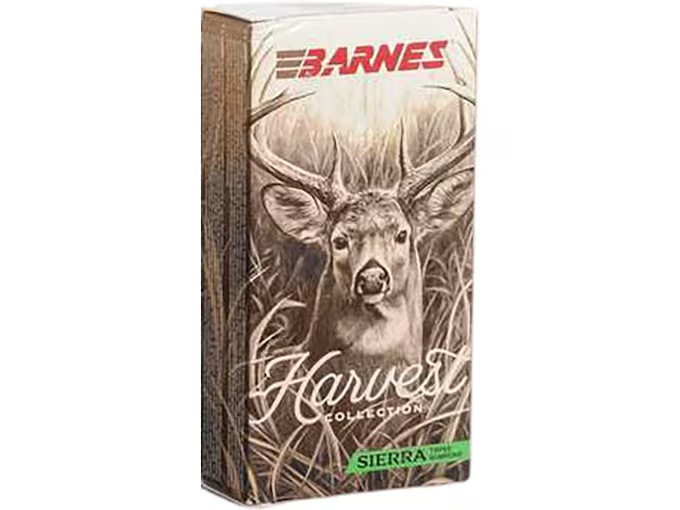
.350 Legend exists because several Midwestern and Eastern states allow deer hunting with a straight-walled cartridge and not with a bottlenecked one. Winchester designed it to fit an AR-15 lower with a dedicated barrel and magazines, to recoil far less than the larger straight walls, and to keep a simple factory load menu. If you hunt those states, the ammunition decision is unusually short: match the bullet to the animal, and practise with FMJ.
What the cartridge is for
From a 16–20-inch barrel, a 150-grain soft point typically leaves at about 2,100 fps. Energy is in the mid 1,400–1,500 ft-lb range — solid for deer inside 200 yards, short of heavy-shoulder magnum territory. Recoil is mild: closer to .243 Winchester than to .450 Bushmaster. That combination is why the cartridge spread so quickly through straight-wall seasons.
It is a deer-and-hog cartridge with a practice load. It is not a long-range precision round, and it is not a substitute for a full magnum on elk or moose. Stay inside the distances the bullet was designed for and the cartridge does its job cleanly. Most hunters who shoot it well keep their first-round opportunity inside 150 yards and treat 200 as the edge of the envelope rather than the middle of it.
The load menu
| Bullet | Weight | Typical velocity | Role |
|---|---|---|---|
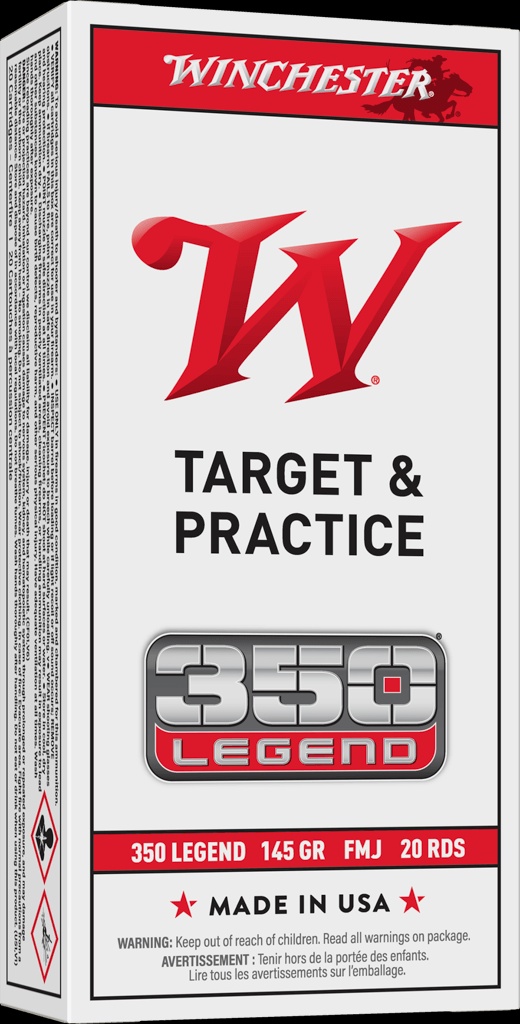
| FMJ | 145 gr | ~2,100 fps | Volume practice, steel, zero confirmation |
| Soft point | 150 gr | ~2,100 fps | Deer default — the load most hunters should carry |
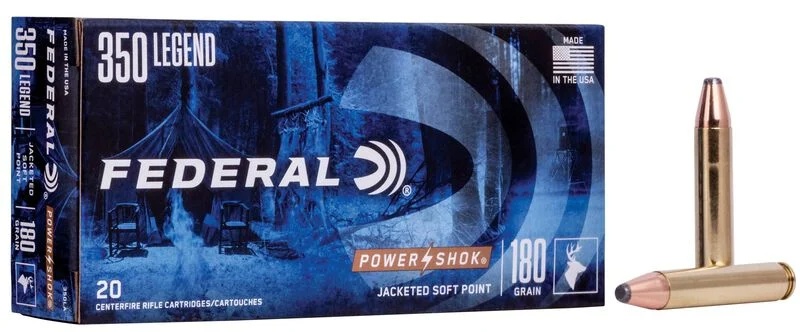
| Heavy soft / hunting | 170–180 gr | ~1,900–2,000 fps | Heavier game, brush, controlled expansion |
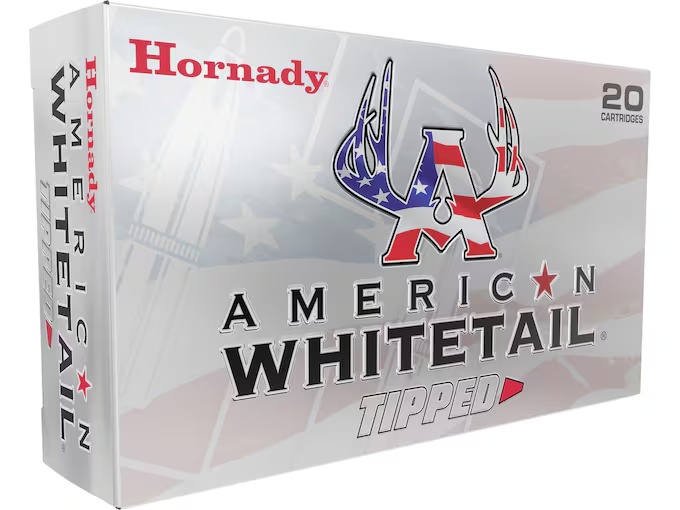
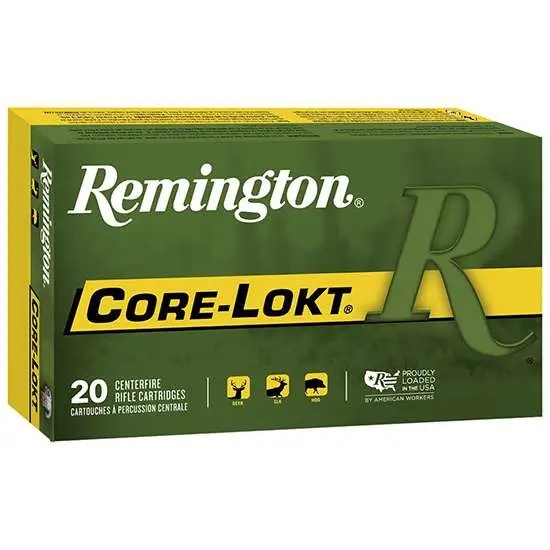
Winchester, Federal, Hornady and Remington all publish factory loads. The commercial story is simple: 150-grain soft point is the default for deer, 145-grain FMJ is the practice load, and the heavier hunting bullets are for hunters who already know they need them. Live pricing on the .350 Legend shelf sits near $0.76 a round when cases are stocked.
AR-15 versus bolt gun
In an AR-15 you need a dedicated .350 Legend upper (or barrel and bolt) and magazines sized for the straight case. The lower is standard; the magazine is not a 5.56 magazine with a different stamp. A properly built Legend AR is as accurate as the shooter and the optic allow, and it keeps the familiar controls and manual of arms of the rifle you already practise with.
Bolt guns — single-shots, single-actions, and several compact turn-bolts — often squeeze slightly more velocity from a given load because of freebore and throat differences, and many hunters prefer them for the straight-wall season. A shorter, stiffer platform is easier to pack through timber, and there is no magazine to seat carefully under a coat. Either platform is fine. Zero the load you will hunt with, not the load you happened to zero in March.
Sighting matters more than the platform choice for most hunters in this season. A 1–4x or low-power variable covers the distances the cartridge was designed for; a high-magnification dial that looks impressive on a gun rack will not help at 80 yards through brush. Pair the optic with the bullet, not the other way round.
What to practise with
Buy 145-grain FMJ by the case for volume work. It is the cheapest way to run an AR or bolt gun through a season of practise, and it keeps the rifle fed without burning expensive soft points. Keep a box of your hunting load for zero confirmation and a short function run before opening day.
The general rules for when a case beats repeated boxes are in bulk ammo. How to compare any of this by the round rather than the box is in price per round.
Common mistakes
- Practising only on FMJ and hunting with soft point without re-zeroing. Point of impact can move between 145 FMJ and 150 soft point at distance. Confirm with the hunting load.
- Buying 5.56 magazines for a Legend upper. They will not feed reliably. Use magazines built for the cartridge.
- Stretching the cartridge past its design range. It is a 200-yard deer round for most hunters, not a 400-yard precision tool. Wind and bullet drop both arrive faster than the marketing suggests once you leave the zero distance.
- Ignoring state straight-wall definitions. A legal cartridge in one state may be illegal in the next county over. Confirm case design, diameter, and any velocity limits before the season, not the night before.
- Treating a new upper as zeroed because it is new. A fresh barrel and a fresh load still need a confirmation group at your hunting distance, from a rest, with the optic you will use.
A sensible first order
- One case of 145-grain FMJ for practice and zero work through the season.
- Two boxes of 150-grain soft point — one to verify and zero, one for the hunt.
- One box of heavier soft point only if you already know you need it for larger game or brush work.
Check the live .350 Legend page for current stock and case pricing. For the longer magnum ladder and the recoil trade that comes with it, see 7mm Remington Magnum.
Shop this caliber
Live prices from the warehouses that have it on a shelf right now.