7mm Remington Magnum ammo buying guide
7mm Remington Magnum has been the long-range hunting standard for decades. The load ladder is deep, the heavy bullets are the point, and recoil is the filter most shooters under-estimate.
By TAS6 min read
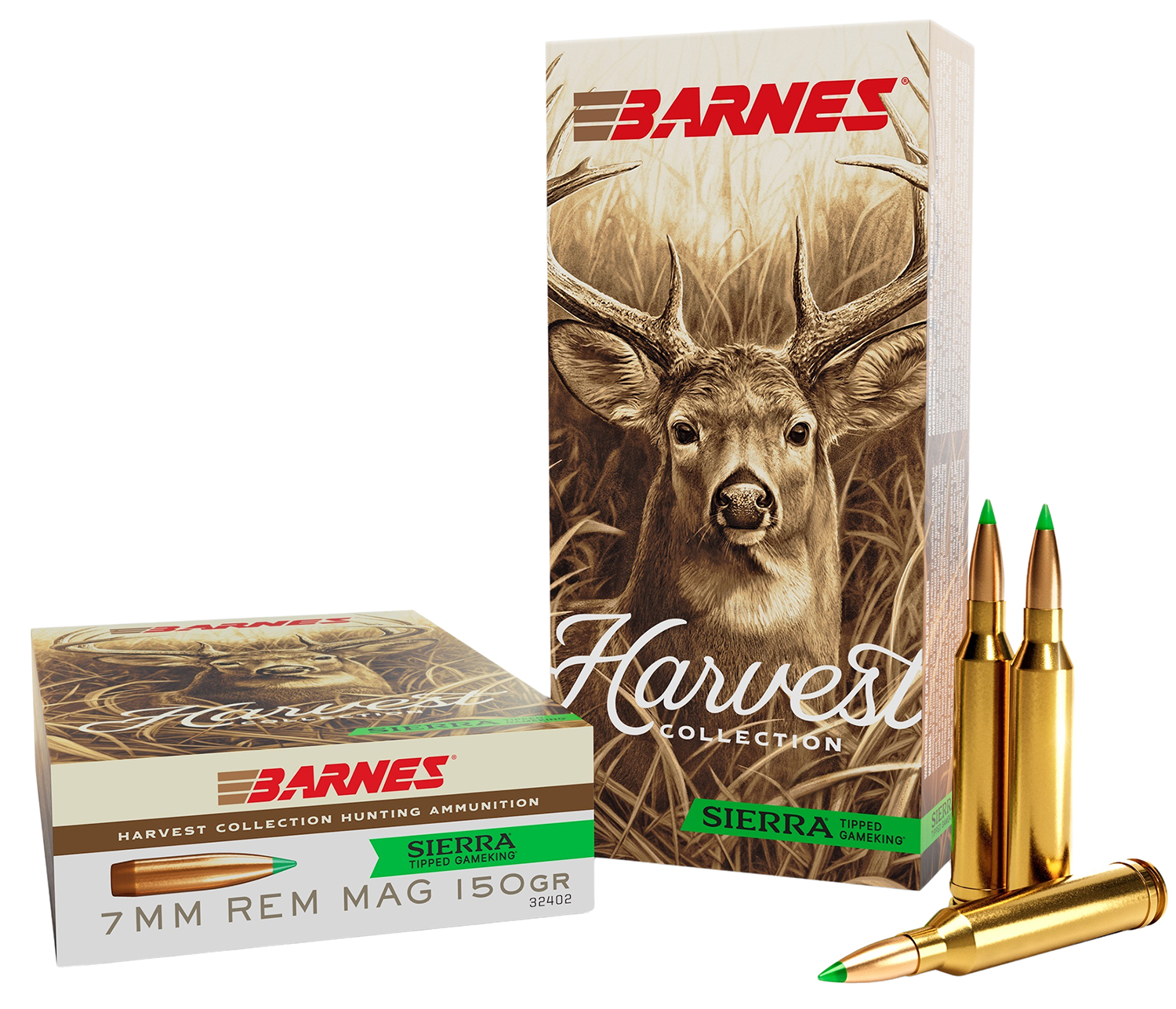
7mm Remington Magnum earns its reputation with high ballistic coefficient bullets, not raw case capacity. From a 1962 belted design it has become the default long-range hunting cartridge for a great many North American hunters, and the factory load ladder is deep enough that you never have to handload to get a serious load. The real filter is not availability — it is recoil, and whether you will practise enough to shoot the cartridge accurately.
What the cartridge is for
A 140-grain hunting load typically leaves an 24-inch barrel near 3,050–3,100 fps; a 150-grain load near 2,900; a 175-grain load near 2,700–2,800. Energy at the muzzle is in the mid 2,000s to low 3,000s of foot-pounds depending on the load. Those numbers put the cartridge comfortably on deer, antelope and similar game at extended range, and with the right heavy bullet on elk and moose as well.
The ballistic advantage over shorter 7mm and .30s is real but specific: a heavy, high-BC bullet holds velocity and resists wind longer. That is a mountain and open-country tool, not a woods tool. If your shots are inside 150 yards in timber, you are buying recoil you do not need.
The load ladder
| Bullet weight | Typical velocity | Character | Best at |
|---|---|---|---|
| 140 gr | ~3,050–3,100 fps | Flattest, milder recoil of the three | Deer, open country, lighter-framed shooters |
| 150 gr | ~2,900–2,950 fps | The versatile middle | General big-game hunting |
| 175 gr | ~2,700–2,800 fps | Highest BC, hardest recoil | Long range, elk and moose, wind |
Federal, Hornady, Remington, Nosler, Winchester and others keep multiple lines in production — from bulk soft points to premium bonded and monolithic hunting bullets. The depth of that ladder is the cartridge’s quiet advantage: you can spend a season practising on mid-grade soft points and still buy a serious hunting bullet in the same weight without special-ordering. Live pricing for 7mm Remington Magnum sits around $1.89 a round for the cheapest in-stock load when cases are stocked; premium hunting bullets cost substantially more.
Recoil as the real filter
Recoil energy with a 175-grain load is roughly in the mid-to-high twenties of foot-pounds from a standard 8-pound rifle — comparable to .300 Winchester Magnum and meaningfully more than .308 or .270. With a 140-grain load it drops into the low twenties. That difference is the practical argument for the lighter bullets.
What to practise with
Almost everything sold in this cartridge is hunting ammunition. That changes the practice economics: you either shoot mid-grade soft points in volume, or you accept fewer, more deliberate sessions with premium bullets. A workable middle path:
- Mid-grade soft point by the case for routine range work and zero confirmation. Federal, Hornady and Remington all publish affordable lines in 150 and 175 grains.
- One box of your actual hunting load for final zero and a short verification group before the season.
- A chronograph session once with the hunting load, so your drop chart is built from your gun rather than from a catalogue number that came from a laboratory test barrel you will never own.
For the grain-weight reasoning behind 140 against 175, see understanding grain weight. For when a case purchase actually saves money on hunting-caliber boxes, see bulk ammo.
Hunting bullet selection
Match bullet construction to the animal and the distance. Rapid expansion works for deer at moderate range; bonded, Partition and monolithic designs hold together on heavier game and at higher impact velocities. Federal, Hornady, Nosler and Winchester all publish premium lines in 150 and 175 grains; pick the construction for the shoulder you expect to hit, not for the box art.
If you stretch shots past 400 yards, favour the high-BC 175-grain options and build the dope to match — that is where the cartridge earns its name. At closer ranges the heavier bullet is still a fine choice, but the flatter 140-grain load is easier to place under time pressure in timber or broken ground.
Keep a written drop chart or a reliable ballistic app loaded with the real velocity from your chronograph. Catalogue velocity from a test barrel is a starting point, not a substitute for your gun’s number. The unit conversion behind that chart is in minute of angle.
If you are still deciding between magnum class and a milder straight-wall option for a specific season, the contrast with .350 Legend is useful. For the general magnum-versus-mild decision frame, see 9mm against .45 ACP — the capacity-and-recoil logic transfers even when the cartridges do not.
A sensible first order
- One box of 150-grain mid-grade soft point to zero and decide whether 150 or 175 suits your rifle and recoil tolerance.
- One case of that same mid-grade load once the weight is settled, for the season’s practise.
- Two boxes of premium hunting bullets in the chosen weight for the hunt and a spare.
Check the live 7mm Remington Magnum shelf for current stock and per-round figures before you commit a season’s budget.
Shop this caliber
Live prices from the warehouses that have it on a shelf right now.