6.8 SPC ammo buying guide
6.8 SPC almost became the US military's intermediate rifle cartridge, then lost to logistics and a moving 5.56 target. The commercial shelf is thin, and the hunting case for it is better than the shelf suggests.
By TAS6 min read
6.8 Remington SPC was developed in the early 2000s for US Special Operations, nearly won a formal military adoption, and then lost to a combination of improved 5.56 ammunition, supply-chain inertia, and a cartridge (6.8 SPC) that never quite settled its own chambering standards. What survived is a hunting-flavored AR-15 cartridge with a genuinely useful ballistics window and a load menu that is thinner than the ballistics deserve. The buying guide is therefore two questions in a trench coat: what does 6.8 actually do, and can you feed it?
What the cartridge does
6.8 SPC takes a shortened .30 Remington case, necks it to .277, and pushes 110- to 115-grain bullets at roughly 2,500 fps from a 16-inch barrel, a little more from an 18- or 20-inch one. Compared with 5.56 NATO, that is more bullet mass and more energy inside 300 yards, at the cost of a heavier rifle, a shorter effective range, and a smaller aftermarket. The relevant comparisons are all local: 5.56 for volume, 6.8 for weight-on-target at hunting distances.
| Bullet | Velocity (16–20") | Role | Notes |
|---|---|---|---|
| 110 gr | ~2,500–2,600 fps | Hunting, general purpose | The default weight; FTX and soft-point types dominate |
| 115 gr | ~2,450–2,550 fps | Hunting | Slightly heavier, slightly slower, similar role |
Energy at 200 yards sits comfortably above a 5.56 soft-point load and inside the window where deer and feral hogs are honestly taken with the cartridge. It is not a long-range round, it is not a prairie-dog cartridge, and it is not a straight-wall-state option — the case is bottlenecked, and the straight-wall deer laws that have driven .350 Legend and .450 Bushmaster demand a different shape entirely.
The conversion, in parts and dollars
Running 6.8 in an existing AR-15 requires three things, and the cost of all three is the real barrier:
- A 6.8 barrel with the correct extension, in a twist rate matched to your bullet — 1:11.25 or 1:10 suits the 110–115 grain loads that exist. Slower twists stabilise lighter varmint bullets that are not the point of the caliber.
- A 6.8 bolt — the case head is larger than 5.56 and will not fit a standard bolt. A complete 6.8 bolt carrier group is the simple answer; a bolt swap is the cheap one.
- Magazines — purpose-built 6.8 magazines, or modified 5.56 magazines with adjusted feed lips. Dedicated magazines are worth the money; modified GI magazines work but deserve a function check with your actual ammunition before anything relies on them.
None of that is exotic, and all of it is cost that 5.56 owners do not pay. If the rifle is already 5.56 and the hunting you do is short, weigh the conversion against simply buying a bolt gun in a caliber with a deeper shelf. The 5.56 against .223 comparison covers the baseline this cartridge is trying to improve on.
The load menu, honestly
This is the part that decides whether 6.8 SPC is viable for you. Factory ammunition exists from Hornady and a rotating cast of others, and it is mostly hunting loads:
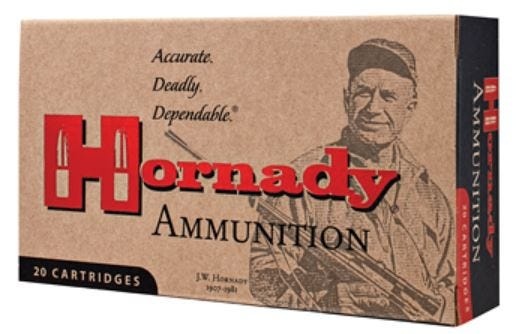
- Hornady 110 FTX — the load most 6.8 owners actually buy: a flexible-point bullet designed for tubular and box-magazine rifles, suitable for deer-sized game, and available in both commercial and LEVERevolution lineages.
- Soft points and hunting loads from Federal, Remington, and boutique makers when production runs land. These come and go; check stock before planning a season around a specific bullet.
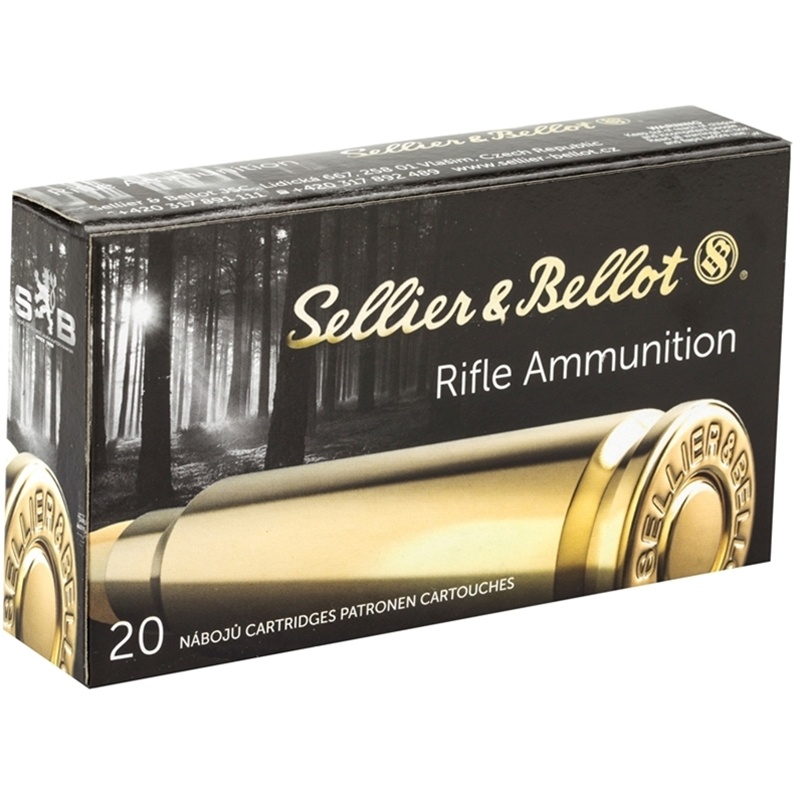
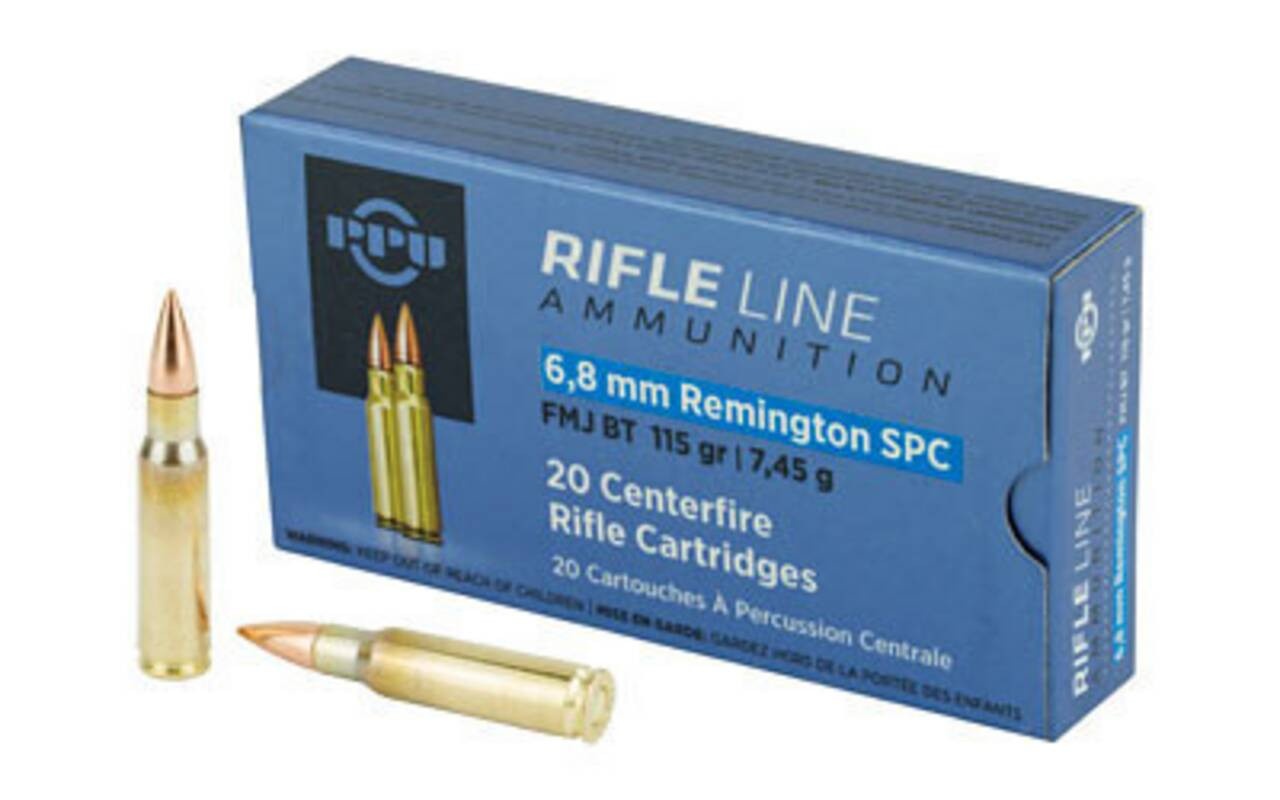
- FMJ / practice loads — the thinnest part of the menu. 110-grain FMJ exists, but not at 5.56 volumes or prices. Current cheapest in-caliber pricing runs around $0.97 a round, which is the number that should discipline your practice plans.
There is no deep surplus pipeline, no steel-cased economy tier, and no guarantee your preferred bullet will be in stock in August when you need it in September. That is the trade you accept for the extra energy, and it is the reason 6.8 SPC never became the default AR cartridge despite its ballistic merits.
Hunting with 6.8, and the practice problem
Inside 250 yards on deer and hogs, 6.8 SPC with a 110-grain soft point or FTX is a legitimate, well-mannered choice: more bullet than 5.56, less recoil than a full-power rifle cartridge, and a flatter trajectory than the heavier straight-wall AR options. Zero for the load you will carry, confirm at 100 yards, and practise from the positions you will actually shoot from — the same field-position discipline that separates a capable hunting rifle from a range toy.
The practice problem is the shelf. Budget 200 rounds of FMJ or cheaper hunting loads for zero and confirmation, then stop treating this as a volume caliber. If you shoot 1,000 rounds a year and want them to cost what 5.56 costs, this is not your cartridge; if you shoot a box a month and want more energy on a hog at 150 yards, it might be. The grain-weight and construction background applies here as it does to every hunting caliber: pick the bullet for the animal, not the marketing sheet.
A sensible first order
- Confirm the rifle will feed — barrel, bolt, and magazines installed, then 20 rounds of the FMJ or practice load through the system before any hunting ammunition is bought in quantity.
- Two boxes of 110 FTX or equivalent hunting load for zero and the season. Buy the same lot if you can; lot-to-lot velocity spread matters more in a thin menu.
- One spare box of practice ammunition to keep the rifle honest between seasons, and nothing in bulk — there is no volume discount worth the shelf space in a caliber this thin.
Everything currently stocked sits on the 6.8 Remington SPC caliber page. For the other modern short-action 6.5 that took a different path through the same era — and a deeper shelf to show for it — see the 6.5 PRC guide.
Shop this caliber
Live prices from the warehouses that have it on a shelf right now.