5.7x28mm ammo buying guide
5.7x28mm rewards a carbine and punishes assumption: the armour-piercing mythology is not what you can buy, and the practice ammo has never been 9mm-cheap.
By TAS6 min read
5.7x28mm was designed to defeat body armour from a compact weapon, and the commercial market ended up with something more ordinary: a fast, flat, soft-shooting cartridge that behaves considerably better from a carbine than from a pistol, at a price that has never once been cheap. Three decisions cover most purchases – what you shoot it from, whether you want defensive loads that actually expand, and how much per round you are willing to pay for a niche caliber.
What the cartridge is for
The 5.7x28mm came out of FN’s PDW programme in the 1990s and arrived commercially through the P90 and later the Five-seveN pistol. The civilian shelf today runs through full-size pistols – the Ruger-57, the PSA Rock, the Smith & Wesson M&P 5.7 – and a growing set of carbines and large-format pistols built on the same round. The ballistics explain the appeal: a 40-grain commercial load leaves a 5-inch pistol barrel at roughly 1,600 fps and a 16-inch carbine closer to 1,850–1,900 fps, which is a 22-calibre rifle trajectory in a package that holds 20-plus rounds and recoils less than 9mm.
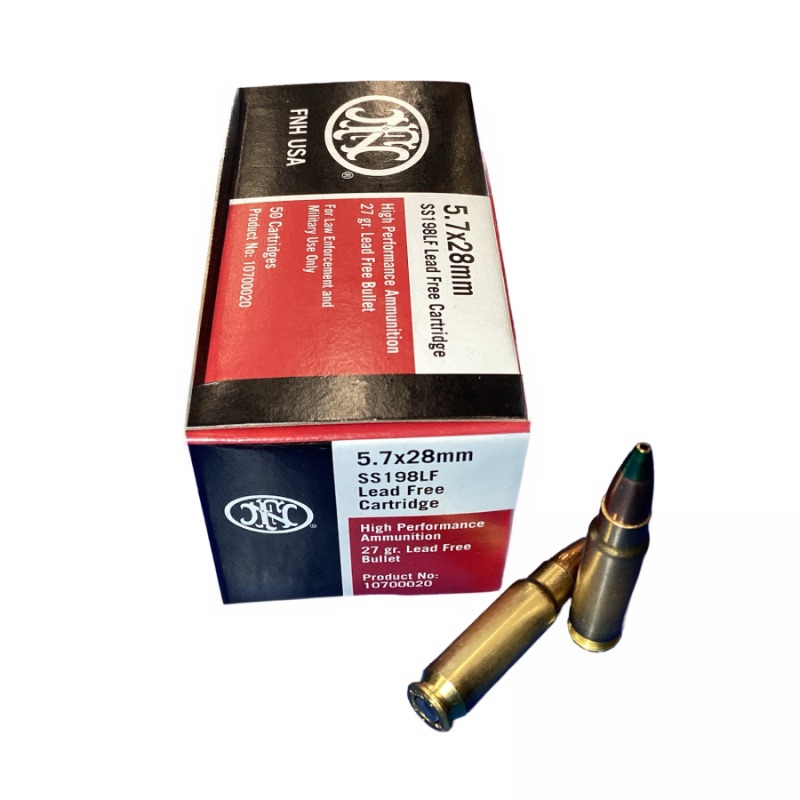
What the cartridge is genuinely good at: fast, flat shooting inside 100 yards, negligible recoil that lets a shooter run the gun hard, and capacity that rivals any duty pistol. What it is not: a cheap way to practise, and not a magic answer to armour. Everything you have read about defeating soft plates comes from military SS190 ammunition, which is not sold commercially. Commercial 5.7x28mm is lead-core. Buy it for what it does on paper and steel, not for what a forum post claims it does to kevlar.
The load menu
The commercial shelf is narrower than 9mm but it covers the three jobs that matter:
| Type | Bullet | Velocity | Role |
|---|---|---|---|
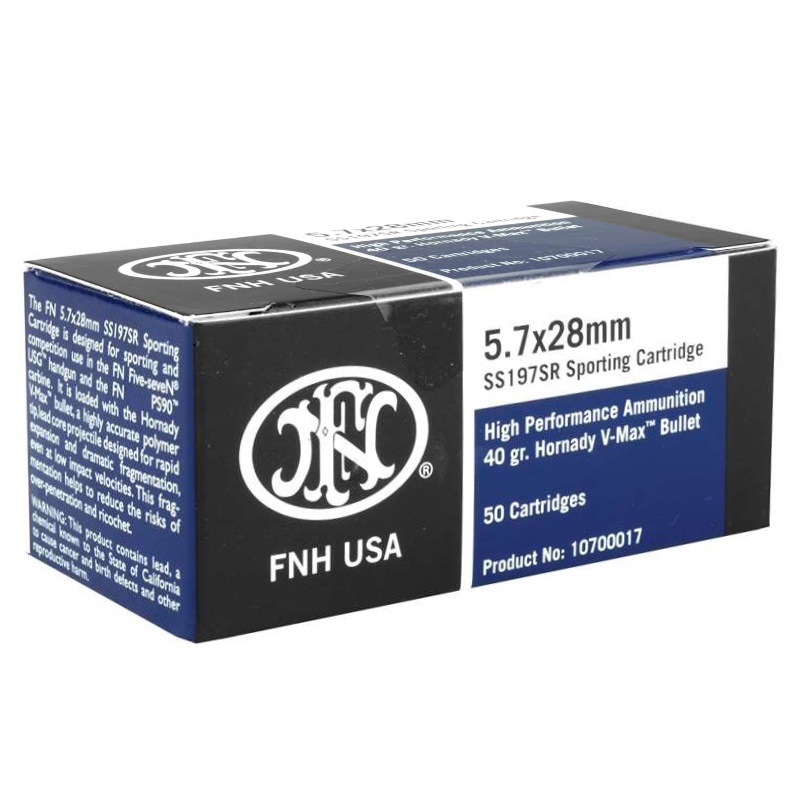
| FMJ / TMJ | 40 gr copper-plated | ~1,600 fps | Volume practice, steel, plinking |
| Ballistic tip | 40 gr polymer tip | ~1,600–1,650 fps | Varmint, small game, the hunting side |
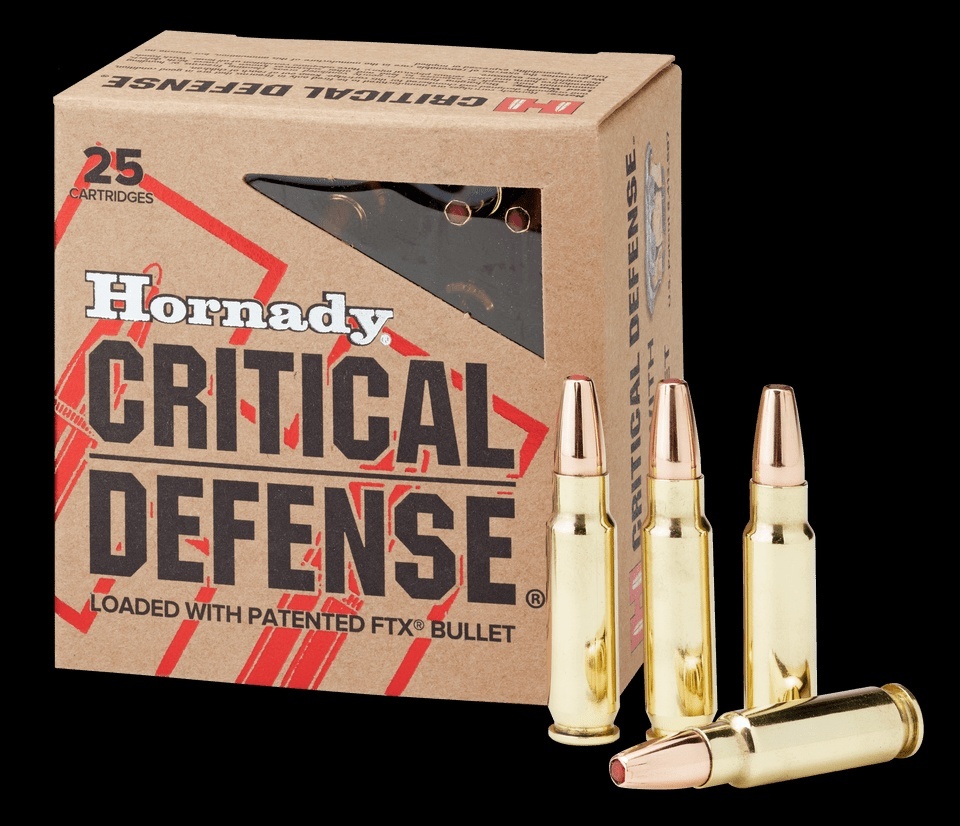
| Bonded JHP | 40 gr bonded hollow point | ~1,550–1,600 fps | Defence from a pistol |
The defensive load worth knowing is Speer Gold Dot in 40 grains, purpose-built for 5.7x28mm rather than adapted to it – the bonded core is what makes expansion work when the velocity comes from a short pistol barrel. Federal American Eagle 40-grain TMJ is the volume practice default: consistent, clean enough, and the cheapest reliable option by the case. Polymer-tip loads split the difference and are the sensible small-game choice.
Carbine and pistol are not one system
The single most common 5.7 mistake is treating the carbine and the pistol as interchangeable. They are not. A bullet that leaves a pistol at 1,600 fps and a carbine near 1,900 fps has different point of impact, different expansion behaviour, and a different practical range. If you own both, zero both, and label the defensive boxes by gun.
The carbine is where the cartridge makes the most sense. The extra velocity tightens trajectory – a 40-grain load stays within about two inches of a 100-yard zero from 50 to 150 yards – and the longer sight radius makes the round’s flatness an actual advantage rather than a number on a box. That is also why the PCC crowd has picked the caliber up: negligible recoil, 20-plus rounds, and a trajectory you can hold over without a calculator. For reading what a 100-yard zero is worth at other distances, see minute of angle.
What to practise with, what to carry
Practise on 40-grain FMJ or TMJ, by the case. It is the cheap end of an expensive shelf, and for volume shooting it is the only load that makes sense. Match the weight of your defensive load so point of impact carries over; in 5.7x28mm that is easy, because almost everything commercial is 40 grains.
Carry a bonded hollow point designed for the caliber. Gold Dot is the reference load; a few manufacturers now match it. Run 50 rounds of it through your pistol before you trust it – 5.7 pistols run fast and a feed hiccup you find at the range is one you do not want to find anywhere else.
Expect to pay for the niche. The 5.7x28mm caliber page shows the live figure, and $0.58 a round at the cheap end sits meaningfully above an equivalent 9mm FMJ. If per-round cost is the binding constraint, this is not your volume-caliber; the economics are covered properly in price per round. The honest comparison against the mainstream duty caliber is in 9mm against .45 ACP, which makes the same point from the other direction: capacity and cost argue louder than calibre mythology.
A sensible first order
- 500 rounds of 40-grain FMJ for practice, enough to shoot the pistol hard and confirm the carbine zero without thinking about the bill.
- Two boxes of bonded JHP – one to run 50 rounds of function and point-of-impact verification, one to keep loaded.
- One box of polymer-tip if you will hunt or shoot small game with it; it is a genuinely good varmint round from a carbine.
That is a working system for a pistol, a carbine, or both: practice volume you can afford, a defensive load proven in your gun, and no money spent on an armour-penetration story that was never on the shelf.
Shop this caliber
Live prices from the warehouses that have it on a shelf right now.