Ammunition storage laws: what states actually require
There is no federal ammunition storage rule. The state picture is mostly firearms statutes that may or may not name ammunition, plus a few duties that arrive with the parcel.
By TAS6 min read
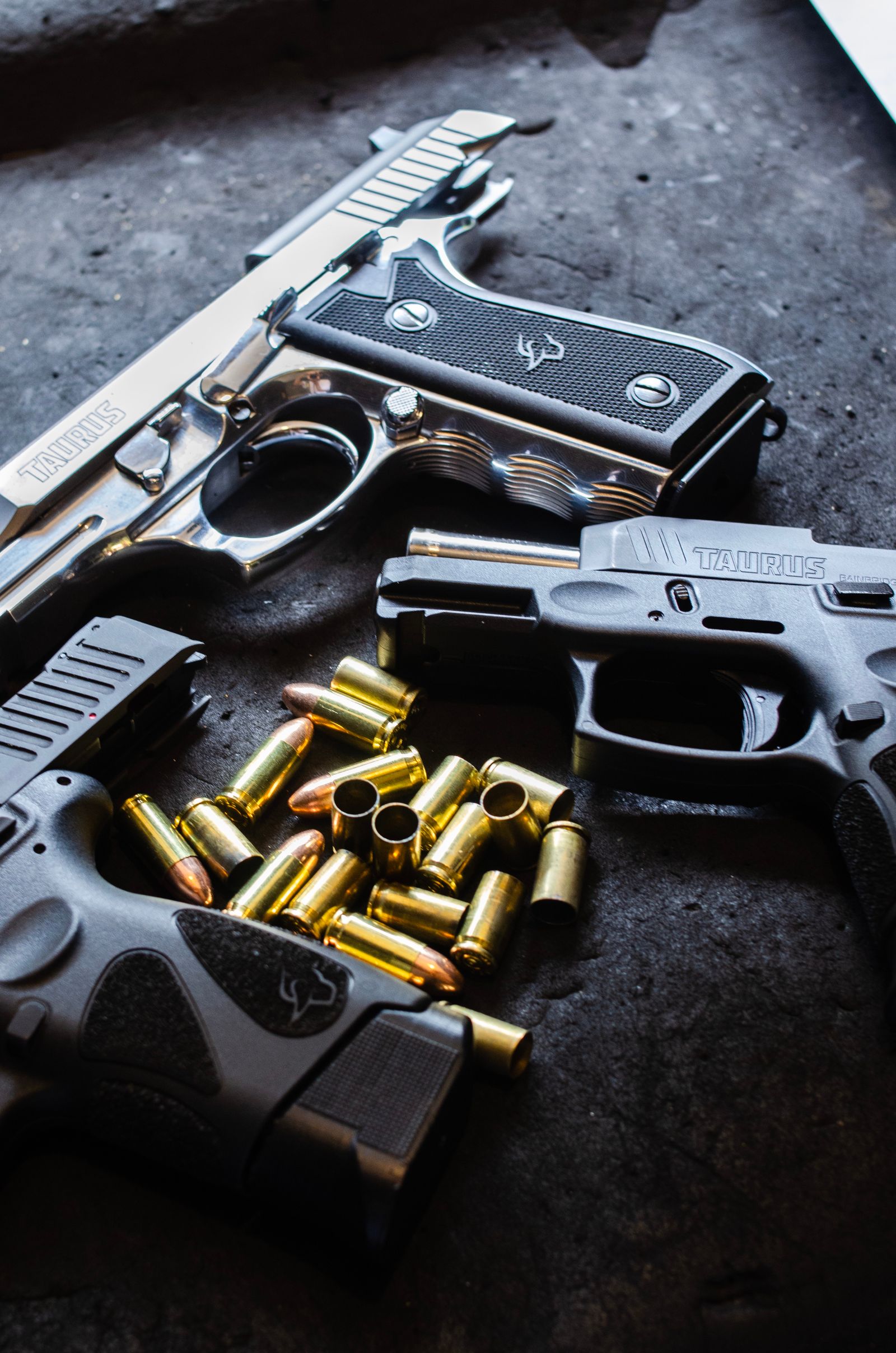
Search for ammunition storage law and you will mostly find firearms safe-storage statutes, a handful of seller record-retention rules, and occasionally a carrier delivery requirement wearing all three like a coat. They are different things, they bind different people, and only one of them has a clear federal baseline.
The clear baseline is this: there is no federal requirement that ammunition be stored in any particular way. Everything else is state law, contract, or practice — and the state law needs to be read, not summarised.
The federal floor is empty
The federal provisions that govern ammunition impose duties on who may sell, who may buy, and how certain records are kept. They do not prescribe storage. 18 U.S.C. 923(g)(1)(A) requires records of firearms only — the word is firearms, and ammunition is absent — so there is no federal record to store, and therefore no federal retention period to anchor on. There is no ATF Form 4473 for ammunition, no NICS check for ammunition, and no acquisition and disposition book entry for ammunition.
The two federal rules that come closest to how people store are not storage rules at all. 18 U.S.C. 922(x) forbids transfer of a handgun, or ammunition suitable for use only in a handgun, to a juvenile — a rule about who has access in the course of a transfer, not about where a box sits afterwards. And 18 U.S.C. 922(g) forbids nine categories of person from receiving or possessing ammunition, which matters in a shared household. Both are covered properly in prohibited persons and ammunition.
State safe-storage statutes mostly say “firearm”
Here is the high-confidence structural statement, and then the honest limit.
Safe-storage and child-access statutes across the states are predominantly written around firearms. Their operative tests are usually whether a firearm was loaded, and whether it was accessible to a minor or to a prohibited person — two questions that turn on the gun, not the cartridge. Where ammunition appears in these statutes, it appears expressly: legislatures that mean to include it name it, the way Washington, Oregon, Minnesota and Pennsylvania each expressly named ammunition in their local preemption statutes, and the way Virginia expressly named ammunition in its possession prohibition.
The verification is mechanical. Open your state’s firearm offences or weapons chapter, find the safe-storage or child-access provision, and ask three questions of the text. Does it define its scope as firearms, or does it also say ammunition? Does its accessibility test depend on the firearm being loaded? Who does it bind — the possessor, a parent, a person who stores on behalf of another? If the word ammunition does not appear, the statute as written is a firearms rule. Local ordinances can add a layer in states without express preemption, so a second call to the county and city clerk is cheap insurance.
Three things that look like storage law and are not
A surprising amount of what circulates as “storage law” is one of these.
- Possession rules. Virginia’s Va. Code 18.2-308.2 makes it unlawful for a convicted felon, and for certain persons adjudicated delinquent as juveniles, to knowingly and intentionally possess or transport firearm or ammunition. That is a status-based prohibition. It says nothing about safes, trigger locks or storage duration, and it binds the possessor wherever in the Commonwealth the ammunition is.
- Seller record retention. Every retention period that binds a seller comes from state law, from carrier or payment processor contract, or from evidentiary self-interest — there is no federal number. Some states impose retention duties well beyond anything federal law contemplates, and at least one imposes a retention maximum rather than a minimum, which pulls in the opposite direction. California city and county ordinances require ammunition sale records kept for defined periods, and the District of Columbia requires a licensed dealer to keep a signed receipt for one year. All of that is about the seller’s filing cabinet, not yours.
- Delivery conditions. These arrive with the parcel and are easy to mistake for a storage rule. Colorado requires the carrier to verify 21 or over against government photo ID and to obtain written acknowledgment of receipt. Puerto Rico requires the carrier to withhold ammunition until the consignee produces a weapons licence or armourer’s licence. Both are duties that attach at the moment of handover, and the full carrier picture is in how ammunition ships.
Practise, not statute
None of the above is advice on how to store ammunition, and it should not be read as minimising the practical question. Storage practice that is good for the ammunition is also, conveniently, the practice most likely to keep it from being accessible to anyone you would not want to have it: cool, dry, organised, and separated from the firearms it belongs to unless you are using them. The house guidance on keeping ammunition in condition worth shooting is in storing ammunition properly, and how much of it to keep on hand is a separate judgement covered in how much ammunition you should keep.
Carrying large quantities through a doorway is also where travel rules can bite; the distinction between a delivery map and a road map is the subject of traveling with ammunition.
The decision rule
Federal law will not tell you how to store ammunition. Your state might, or might not, and the only way to know is to read the provision and check whether it names ammunition — then to check that no county or city underneath it has added its own. Everything sold to you as “the storage law” is probably one of three other things: a possession rule, a seller record rule, or a carrier delivery condition.
Read the statute once, at leisure, rather than the summary once, in a panic. And if you are ordering into a state with a credential or an age ceiling, that question comes first — see buying ammunition online for the matrix that decides whether the parcel may move at all.