Does ammo expire? Shelf life, and the round that fails quietly
Ammunition does not expire on a date. It degrades quietly through powder decomposition and primer corrosion, and you find out one round at a time.
By TAS6 min read
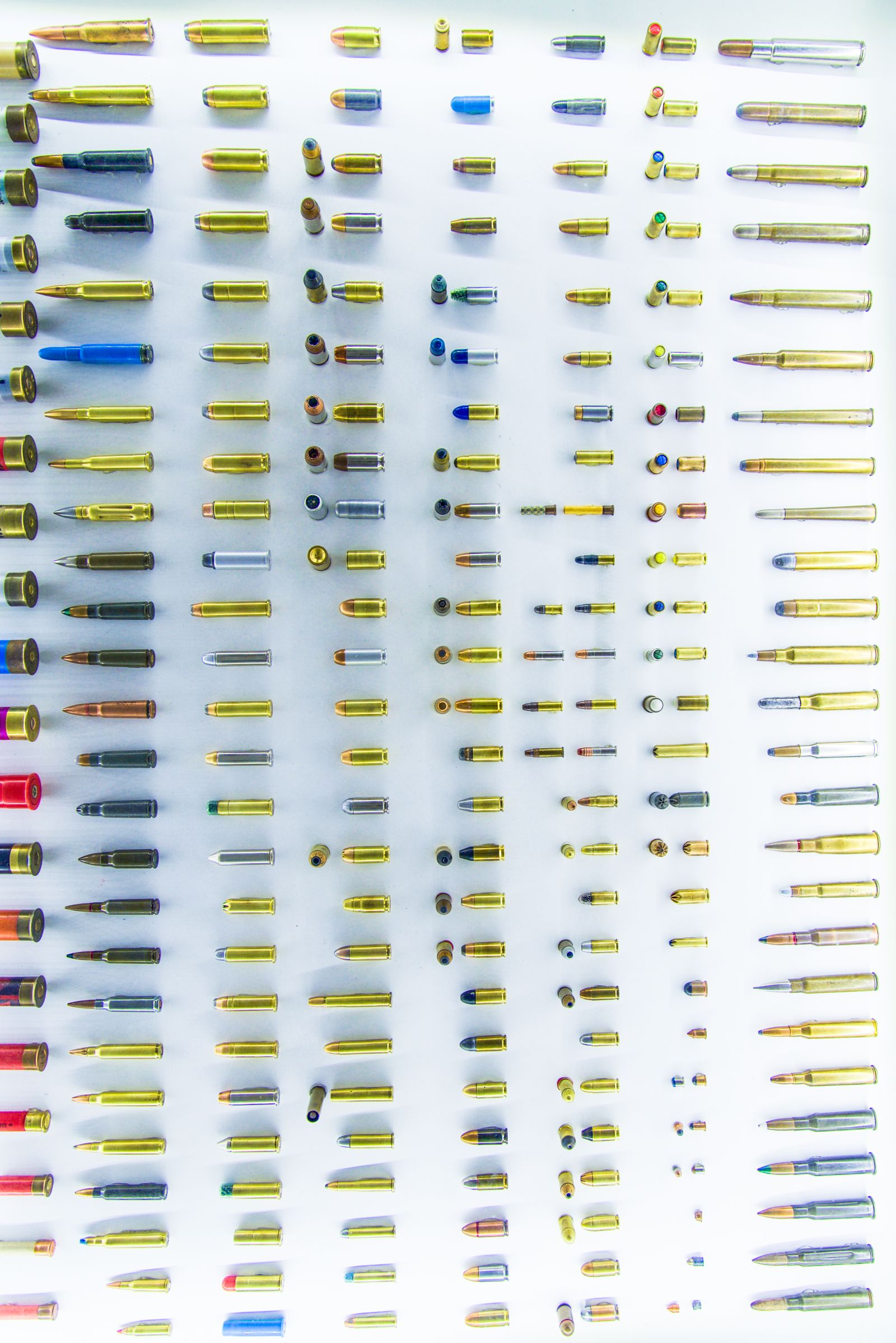
There is no printed expiry date on a box of ammunition, and there is no date to print. Two chemistries inside a cartridge age at rates set by temperature, humidity and time, and neither one announces itself. The honest answer is that ammunition kept well is good for decades — plenty of 1960s non-corrosive surplus still fires correctly — and that ammunition kept badly fails quietly, one slow round at a time.
So the useful question is not “how long does it last” but “what shortens it, what does a failure look like, and what do I do with the box I found in the garage”.
The powder clock
Smokeless powder is nitrocellulose, and nitrocellulose decomposes slowly on its own. Manufacturers add stabilisers that absorb the products of that decomposition; the powder stays serviceable until the stabiliser is used up. The rate at which it is used up rises sharply with heat, which gives the only rule about ammunition shelf life that really matters: heat damage is cumulative and irreversible. A summer in a hot trunk is not undone by a cool winter, and a box that has spent five years above 125°F has spent five years of its life.
What powder degradation looks like from the shooter’s side is a slow loss of velocity, then inconsistent velocity, then a failure to ignite properly. None of it is visible. This is the failure mode people mean when they say old ammunition “just does not feel right” — a round that fires but prints a different group, or a pistol that starts producing keyholing it never had.
Primers: slower, more fragile
The priming compound is reasonably stable when it is dry and sealed, and it fails for different reasons than powder does. Three of them:
- Contamination. Oil, solvent and cleaning residue that reach the priming compound kill it outright. A box stored in the same drawer as a cleaning kit — a surprisingly common arrangement — is the classic source of misfires.
- Corrosion. Moisture attacks the primer pocket and the case. Green crust and pitted brass are the visible form, and a corroded primer pocket is not a round worth firing.
- Age alone. Slow, and far less important than the two above. A dry, cool, sealed primer from 1975 still goes off.
What a decade of humidity does
Humidity is the slow, boring threat, and it attacks the case rather than the propellant. Below about 50% relative humidity corrosion effectively stops; above it, brass takes on a dull haze, then green spots, then pitting. None of this is visible inside a sealed plastic box until you open it, which is why the container matters as much as the room.
The whole handling problem — where to keep it, what to keep it in, why desiccant is worth a few dollars, and why the original boxes should never come off — is written out in storing ammunition properly. That is the prevention half of this article; what follows is the inspection half.
Inspection that works
Hold the box, not the round, first: read the caliber marking and the purchase date, then work through the ammunition itself. Discard, do not fire, any round with:
- A corroded, green or heavily discoloured case or primer.
- A cracked or split neck, or a dent deep enough to crease the wall.
- A bullet that moves or twists by hand.
- A primer that is missing, sideways, backed out or pierced.
- Any round whose history you cannot account for — loose, unmarked and unknown is its own reason.
For ammunition that passes, the practical test is one round fired alone, into a safe backstop, from a gun you trust, before the rest goes into a magazine. If it lights cleanly and groups where it should, the lot is fine; ammunition does not become dangerous with age, it becomes unreliable.
Rotation that makes sense
Rotation is cheap insurance and it takes about four seconds of discipline:
- Write the purchase date on the box when you put it away. Marker, lid, done. Without it, “how old is this?” is unanswerable and every box looks the same.
- Shoot the oldest first. This single habit turns a stockpile into a supply. Practising ammunition moves by itself if you shoot regularly; the problem is ammunition bought and then left.
- Rotate defensive ammunition annually — not because it expires, but because the round sitting at the top of the magazine has been re-seated every time you checked it. Repeated chambering pushes the bullet back into the case, which raises pressure. Swap the top round rather than re-chambering the same one.
- Shoot a test round from any lot older than about fifteen years before you rely on it for anything. Cost is one round.
This is also why buying ahead works. If stored properly, ammunition bought at a normal price today is ammunition you do not have to buy at a spike price later, and the assumption underneath buying by the case is exactly this — see the conditions. The same reasoning explains why hunting loads should be checked before the season rather than trusted from the shelf: how the staple loads fit in.
Bottom line: nothing on the box will tell you when to worry. Cool, dry, dark, dated and shot oldest-first is the entire programme, and it is worth about twenty minutes a year.