Twist rate and bullet weight: why your AR cycles two loads badly
When one AR shoots 55 grain into one hole and opens up with 77, the barrel is telling you its stabilisation window. Read the paper, not the box, and the fix is a two-box experiment.
By TAS6 min read
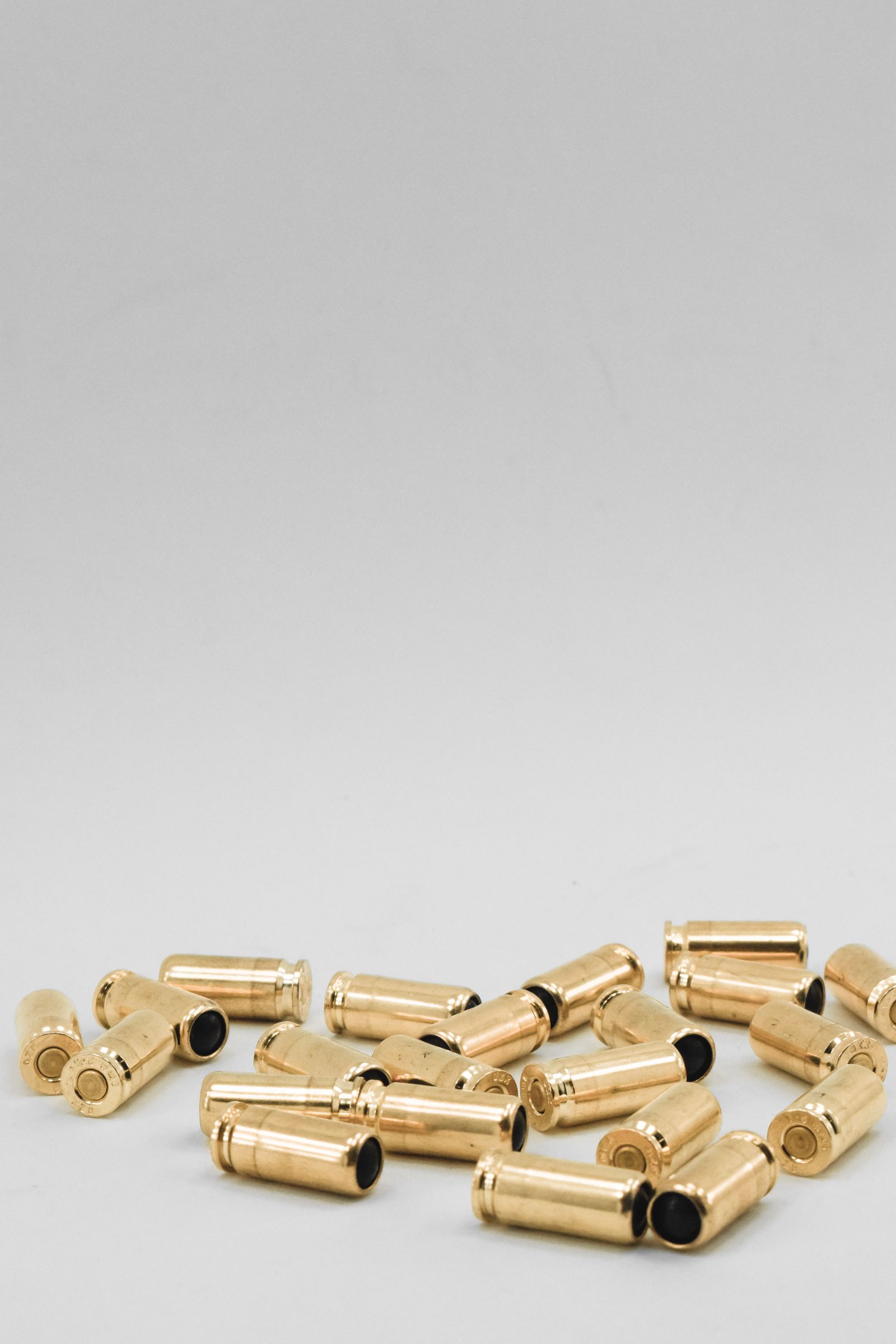
Barrel twist sets the window of bullet lengths your rifle will stabilise, and nothing else in the ammunition chain overrides it. When an AR prints tight groups with 55 grain and ragged, keyholing ones with 77, the bullet is leaving the barrel before the spin has caught up with its length — no accuracy load, no optic and no amount of indexable handloading fixes that.
One word of housekeeping first: twist rate has nothing to do with cycling. Failure to feed or eject is magazines, gas and buffer &reliability. Twist shows up entirely on paper, as group size and hole shape. Two loads, two different problems — work out which one you actually have.
What twist does
Rifling is cut as a spiral groove: one full rotation every so many inches. 1:7 turns once in seven inches, 1:9 once in nine. Faster twist means more revolutions per foot of barrel and a higher spin rate at exit, which gyroscopically stabilises the bullet against aerodynamic overturning — the same principle as a well-thrown American football.
The rule that gets misquoted everywhere: twist stabilises a bullet by its length, not its weight. Weight is the proxy printed on the box and it works within a family of bullets, but a long copper monolithic can demand more twist than a lead-core bullet twenty grains heavier, because the copper bullet is longer for the same mass. When in doubt, measure or look up the bullet’s length; the grain number is shorthand.
Under-stabilised bullets announce themselves. Groups open well beyond what the rifle does with a load it likes, and the holes in paper come out oval or outright sideways — keyholing, the bullet is tumbling before it arrives. Over-twist is the quieter failure: a slightly faster spin rarely wrecks accuracy with shorter bullets, which is why 1:7 barrels tolerate almost everything and 1:9 barrels do not tolerate long heavies. The asymmetry is the practical core of the 1:7 vs 1:9 argument.
The windows, in practice
| Twist | Comfortable weights | Where you find it |
|---|---|---|
| 1:12 | 40–55 gr | Older varmint barrels; 55 grain only |
| 1:9 | 55–69 gr | Many commercial ARs; runs 55 and 62, struggles with 77 |
| 1:8 | 55–77 gr | The versatile compromise |
| 1:7 | 55–77 gr and up | US military M4 standard; what match heavies specify |
Read the table from the ammo side for a moment. The 55 and 62 grain loads that stock every shelf fit every twist on the list, which is why most owners never meet this problem until they buy a box of 77 grain match and wonder why the rifle went stupid. The full reasoning behind that heavy end of the table — and the aerodynamics that make it worth chasing — is in 55 grain vs 62 grain and ballistic coefficient explained.
The cheap way to find out what your barrel shoots
You do not need a plot chronograph or a barrel swap. You need two boxes:
- Read the twist off the barrel if it is marked — usually stamped near the muzzle or on the barrel heel. Know whether you own a 1:7, 1:8 or 1:9 before buying anything.
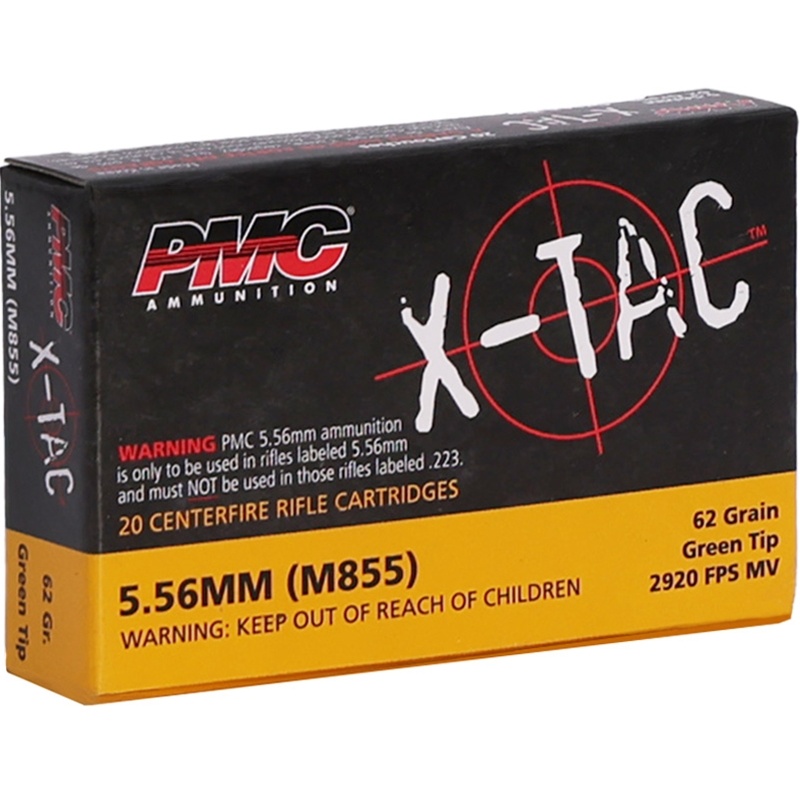
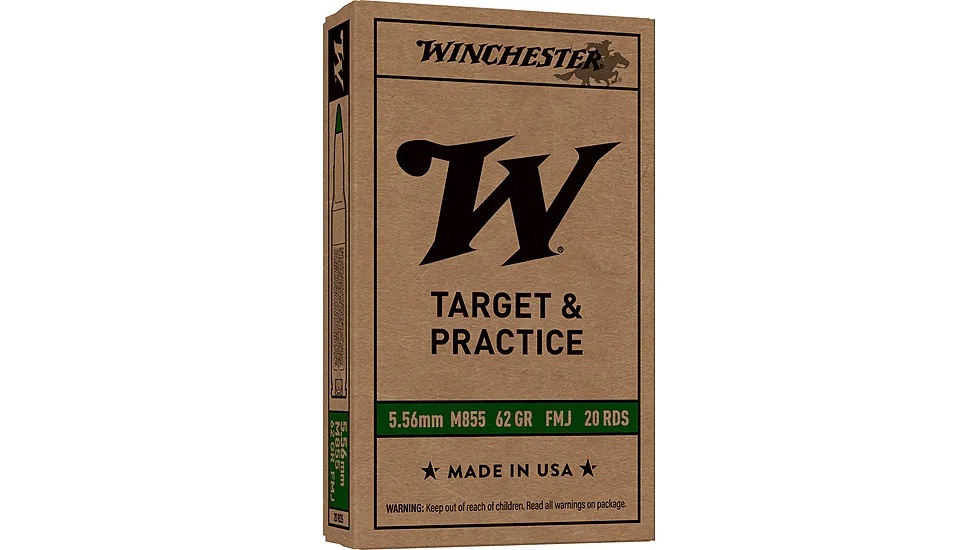
- Buy one box of 55 grain and one of 77 grain (or 62 and 77, if 55 is already your known quantity). About forty dollars all in, from the 5.56 NATO shelf at $0.52 a round for the practice load.
- Shoot five-shot groups off a rest at 100 yards, with the same zero, same optic setting, same bags. Alternate the loads so heat does not confound the comparison.
- Look at the paper, not the scores. Oval holes or keyholes with the heavy load mean the twist will not take it. Clean, round, comparable groups mean it will, and the rifle’s preference — not the spec sheet — is now known.
The same test scales down: a 1:12 barrel that keyholes 62 grain green tips is not defective, it is a barrel from an era before the heavier loading existed. Nothing about twist is a defect; it is a specification you buy into with the rifle and then honour with the ammunition.
What to do with the answer
- 1:9 and below: live in the 55 to 69 grain range. 55 for economy, 62 when you want the common service loading. Leave the 77 grain match boxes for someone else’s barrel.
- 1:8 or 1:7: the whole shelf is open. Practise with the cheapest weight that stabilises, then use 77 grain when the distance or the wind justifies a higher ballistic coefficient.
- Every rifle: match the load to the same grain weight you zeroed for, re-verify when you change, and buy the winner by the case.
Twist rate is the one variable on the rifle that reaches out and disqualifies ammunition before a single shot is fired for accuracy. It is printed on the barrel, it never changes, and once you have read it — and spent forty dollars confirming it against two boxes of ammo — every ammunition decision after that gets simpler.
Shop this caliber
Live prices from the warehouses that have it on a shelf right now.