55 grain vs 62 grain .223/5.56: the only two weights most shelves stock
Nearly every bulk box of 5.56 is 55 or 62 grain, and the choice is not close for everyone. Here is what each bullet actually does, and the point where 77 grain takes over.
By TAS6 min read

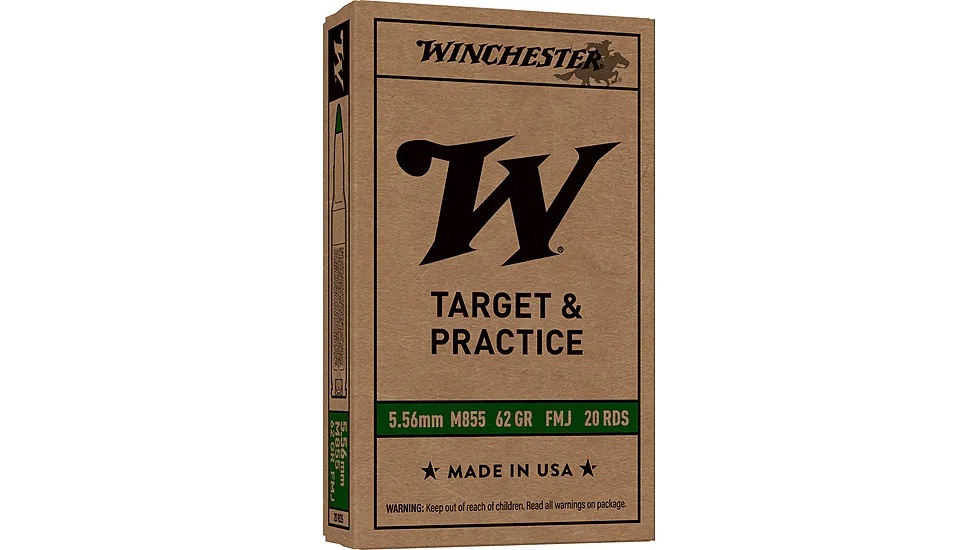
55 grain is the lighter, faster, cheaper loading — M193-pattern ball, the default for plinking and the bullet every barrel is guaranteed to stabilise. 62 grain is the heavier service loading — M855-pattern ball with a mild steel penetrator in the nose — slower, slightly better at holding velocity, and it needs at least a 1:9 twist. Neither is a precision bullet; when accuracy becomes the point, both lose to 77 grain.
The buying decision fits in one line: mostly paper and steel inside 100 yards on a budget, shoot 55; matching military-spec training, working through light barriers, or shooting a barrel that prefers it, shoot 62; genuinely chasing groups past 200, twist-check a 77.
The numbers side by side
| Loading | Weight | 20″ barrel | 16″ barrel | Twist floor |
|---|---|---|---|---|
| 55 gr FMJ (M193 pattern) | 55 gr | ~3,240 fps | ~2,950 fps | 1:12 works |
| 62 gr FMJ (M855 pattern) | 62 gr | ~3,020 fps | ~2,750 fps | 1:9 minimum |
| 77 gr match OTM | 77 gr | ~2,750 fps | ~2,550 fps | 1:8 or faster |
Barrel length is the variable people forget when they read box numbers. Dropping from 20 to 16 inches costs roughly 200 to 300 feet per second — which pushes the 55 grain load down towards velocities where its terminal behaviour on impact changes character, and pulls the 62 grain load down with it. The cartridge is the same; the physics after the muzzle is not.
Velocity against stability
55 grain leaves the muzzle fastest of the three. Its advantages are economic and mechanical: it is the cheapest 5.56 available in quantity, it stabilises in every twist ever cut for the caliber, and inside 100 yards — where most practice ammunition is actually used — it is indistinguishable from anything heavier on paper. Its disadvantages are downstream: it sheds velocity faster than a longer bullet, and its wind performance at 300 yards and beyond is the weakest of the three.
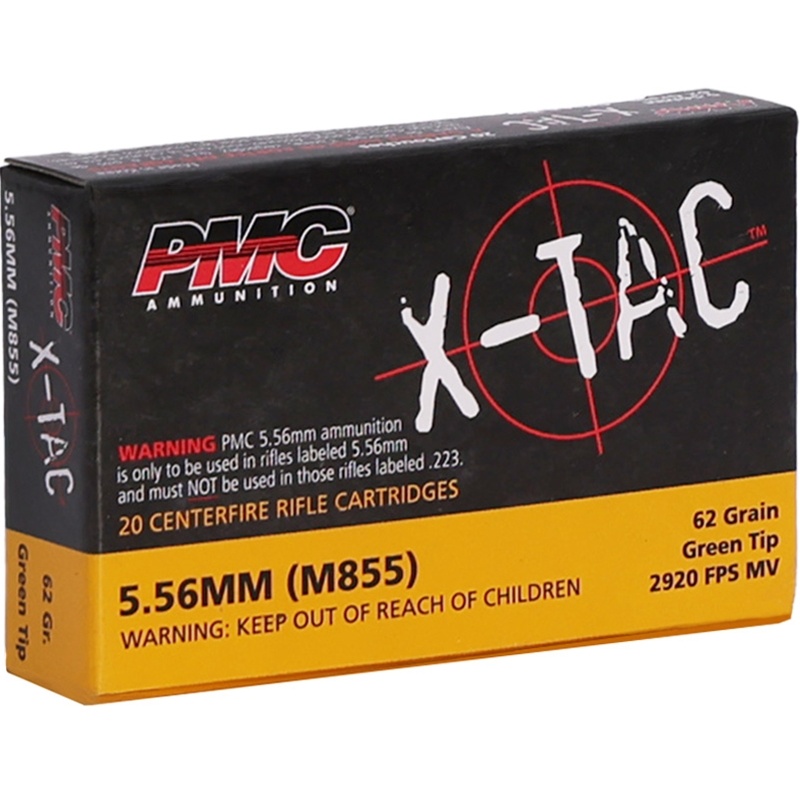
62 grain trades about 200 feet per second for a longer, generally higher-BC bullet that holds its speed better downrange. It also carries a harder nose in military-spec form, which is where the penetration conversation starts: the mild steel insert makes M855 noticeably more effective against barriers — light steel, hard pack, vehicle sheet — and is exactly why many ranges ban steel-core ammunition on their targets. Check the range rules before you buy a case of green tips; a berm is not a licence to shoot them anywhere.
The second thing people ask about is what the bullets do on impact, and the honest answer is that ball ammunition is not built for terminal performance at all. Both are designed to satisfy a penetration requirement against a specification, not to expand. In practice the 55 grain load is more likely to yaw and fragment at close range when it arrives at high velocity, while the 62 grain, with its harder nose, tends to hold a straighter path and penetrate further — which is useful against barriers and unhelpful on game, where neither bullet is shaped to open. The twist question sits underneath all of it: stability is the second filter after barrel length, and 62 grain is the first weight to expose a marginal or worn barrel. The full window table and the keyholing diagnosis live in twist rate and bullet weight.
When 77 grain is the answer instead
The heavy end of the shelf exists because the trade reverses. A 77 grain match open-tip bullet is longer, carries a much higher BC, and lands at 300 to 600 yards with far less wind drift and drop than either ball load. From a 1:8 or 1:7 barrel it is also the most accurate ammunition most ARs will ever fire — the weight that turned the platform into a legitimate mid-range precision tool.
What it costs: about double the price per round, and nothing whatever in advantage inside 100 yards, where the group is the shooter, not the bullet. Heavier also means slower and a loopier trajectory; you earn it back only at distance or in wind. The grain-weight mechanics behind all of this — recoil, point of impact, why heavier bullets drop more even as they drift less — are covered in understanding grain weight.
The decision rule
- First case, general practice, volume: 55 grain. The 5.56 NATO shelf starts at $0.52 a round, and buying it by the case is the single biggest saving available in rifle ammunition.
- Service-style training, light barriers, matching a duty load: 62 grain, from a barrel with 1:9 or faster, where the range allows it.
- Precision, 300 yards and out, windy country: 77 grain match, and confirm your twist first.
- Hunting: neither ball loading. FMJ with a mild steel core is the wrong tool on game — bullet construction for quarry is a different conversation entirely — and the chambering question underneath it is covered in 5.56 vs .223.
For most owners the honest answer is a case of 55 grain and a fifty-round box of 62 to see whether the rifle prefers it. Shoot the two-box test, read the paper, and let the barrel — not the shelf arrangement — make the call.
Shop this caliber
Live prices from the warehouses that have it on a shelf right now.