Rifle Ammo
.300 AAC Blackout Ammo
In stock from $0.65 / round · 4 of 13 products available now
Supersonic it behaves like a short .30-30; subsonic and suppressed it is extraordinarily quiet. Same lower, same magazines, different barrel.
In stock today
- Cost per round
- $0.65 to $2.05
- 3 Brands
- Barnes, Hornady, IKONICK
- Bullet weights
- 110, 147, 208, 220 grain
- Pack sizes
- 20, 200, 250 rounds
Learn more about .300 AAC Blackout
At a glance
- Also known as
- .300 BLK, 300 AAC Blackout, 7.62x35mm
- Common bullet weights
- 110-125 grain supersonic, 190-220 grain subsonic
- Typical use
- Suppressed short-barrel carbines, hog hunting, home defense
- Before you buy
- A .300 BLK round will chamber in a 5.56 barrel and wreck the rifle. Never share magazines or ammo cans
- Age to purchase
- 21+ (the federal licensed-dealer minimum for ammunition suitable for a handgun, applied as TAS policy)
.300 AAC Blackout was designed to give an AR-15 a .30 calibre bullet without changing anything but the barrel (same bolt, same magazines, same lower) and to reach full velocity out of a very short barrel, which is exactly what a suppressed carbine wants. It runs in two distinct modes: supersonic loads in the 110 to 125 grain range that behave like a short-range .30-30, and heavy subsonic loads around 190 to 220 grain that are extraordinarily quiet behind a suppressor. Before any of that, there is one safety fact about this cartridge that every owner must know.
Out of stock
Freedom Munitions.300 AAC Blackout - Freedom Munitions 147 Grain Full Metal Jacket (FM300F147N50) - 50 Round Box
147gr FMJ · 50rd
$30.78$0.62/rdCurrently unavailable
- IKONICK
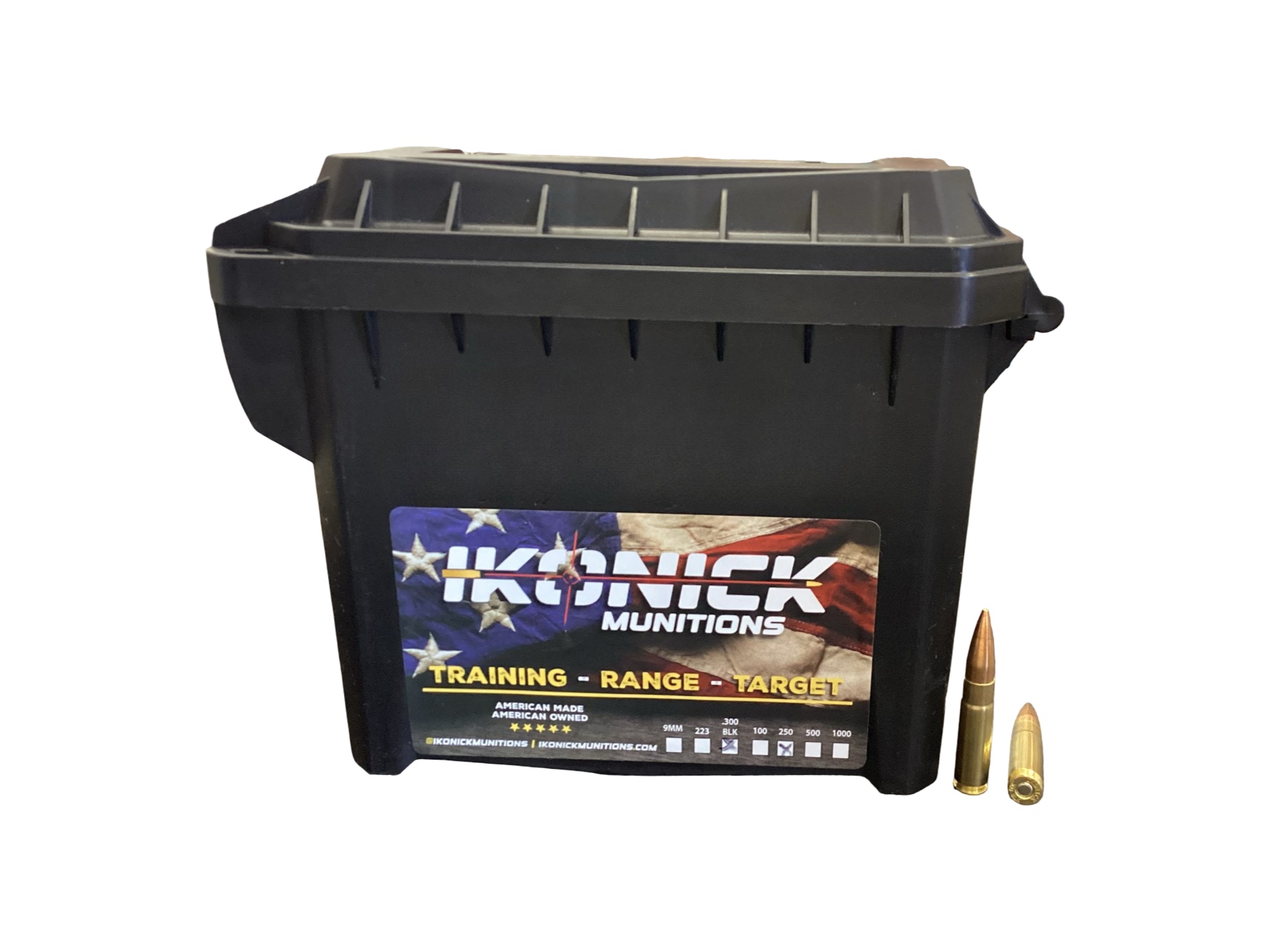
.300 AAC Blackout - IKONICK IU-300-147FM-C250 300BO 147GR FMJBT - 250 Round Can
147gr FMJ · 250rd
$162.00$0.65/rdIn stock
Out of stock
Magtech.300 AAC Blackout - Magtech Tactical Subsonic - FMJ 200 Grain (300BLKSUBA)-- 50 Round box
200gr FMJ · 50rd
$38.34$0.77/rdCurrently unavailable
Out of stock
Wyoming Cartridge Company.300 AAC Blackout - Wyoming 220 Grain Full Metal Jacket "Subsonic" - 20 Round Box
220gr FMJ · 20rd
$14.85$0.74/rdCurrently unavailable
Out of stock
Winchester300 AAC Blackout, Winchester Target & Practice 147 GR FMJ - USA300B147 - 20 Round Box
147gr FMJ · 20rd
$15.66$0.78/rdCurrently unavailable
Out of stock
ArmscorArmscor 300 Blackout AMMO 147gr FMJ Brass Cased 100rd Box
147gr FMJ · 100rd
$69.11$0.69/rdCurrently unavailable
Out of stock
BarnesBarnes 300 AAC Blackout AMMO 125gr OTM BT 20rd Box
125gr 20rd
$37.79$1.89/rdCurrently unavailable
- Barnes
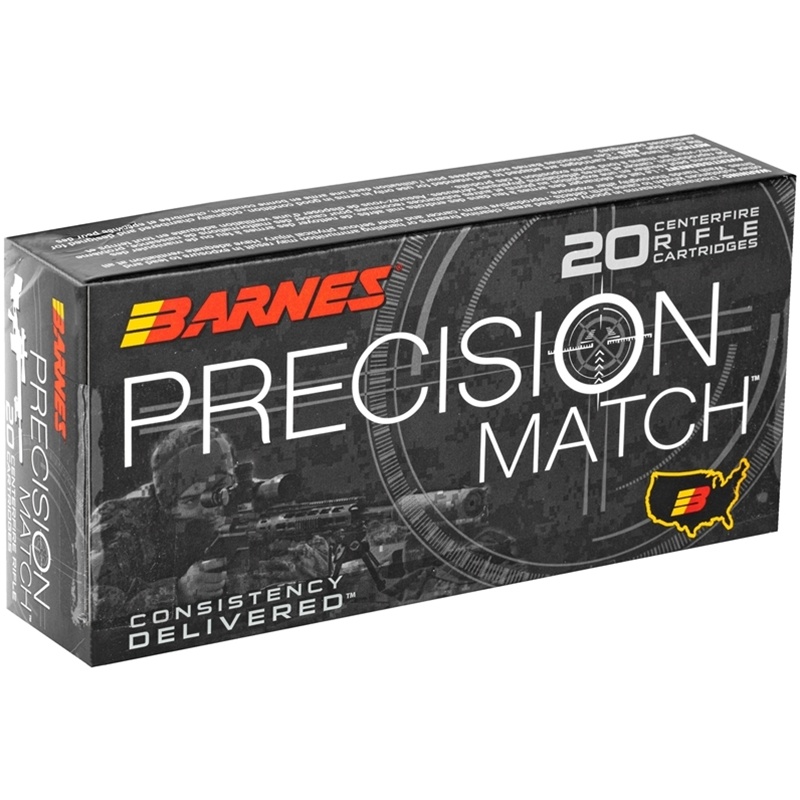
Barnes 300 Blackout AMMO 220gr Match Burner OTM BT 32134 Precision Match 20rd Box
220gr 20rd
$41.03$2.05/rdIn stock
Out of stock
BarnesBarnes VOR-TX 300 Blackout 110gr TAC-TX FB Brass Cased 20rd Box
110gr 20rd
$43.19$2.16/rdCurrently unavailable
- Hornady
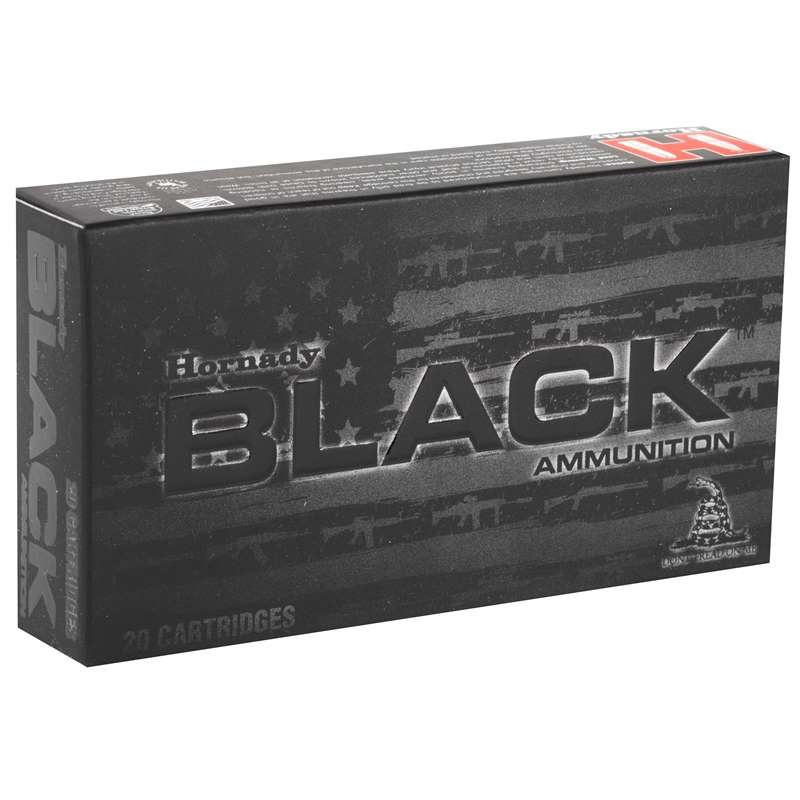
HORNADY BLACK 300 BLACKOUT AMMO 110GR V-MAX 20RD BOX
110gr 20rd
Also in 200rd
$29.15$1.46/rdIn stock
- Hornady
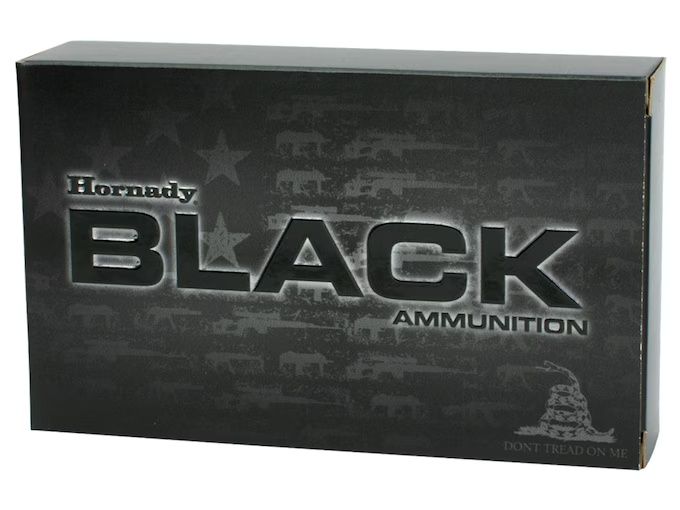
HORNADY BLACK 300 BLACKOUT AMMO 208GR ELD-MATCH SUB-SONIC 20RD BOX
208gr 20rd
Also in 200rd
$31.31$1.57/rdIn stock
Out of stock
HornadyHORNADY CUSTOM 300 BLACKOUT 110GR CX (LEAD FREE SOLID COPPER) BRASS CASED 20RD BOX
110gr 20rd
$25.77$1.29/rdCurrently unavailable
Out of stock
HornadyHORNADY CUSTOM 300 BLACKOUT AMMO 135GR FTX 20RD BOX
135gr 20rd
$26.49$1.32/rdCurrently unavailable
Before you buy
What to know about .300 AAC Blackout
What people buy it for
- Suppressed shooting, subsonic and supersonic
- Short-barrel rifles and AR pistols, where it loses little velocity
- Hog and short-range deer hunting
- Home defense with a compact, suppressed carbine
Never let .300 Blackout near a 5.56 rifle
A .300 Blackout cartridge will chamber in a 5.56 barrel (the case is a shortened 5.56 case) and firing it there destroys the rifle and can seriously injure the shooter. This is not theoretical; it happens every year. Keep .300 BLK ammunition in clearly marked containers, never in a range bag alongside loose 5.56, colour-code or label your magazines, and check the barrel marking every time you build or borrow an upper. Treat it with the same discipline you would give a live primer.
Subsonic and supersonic are effectively two cartridges
Supersonic 110 to 125gr loads shoot flat enough for practical work inside 200 to 300 yards and hunt hogs and deer well at short range. Subsonic 190 to 220gr loads travel below the speed of sound so there is no ballistic crack (which is the entire point behind a suppressor), but they drop steeply and have a short useful range. Zeroes differ dramatically between the two. Decide which you are shooting before you buy a case.
Twist rate for heavy subsonics
Heavy .30 calibre subsonic bullets are long and slow, and they need a fast twist to stabilise. 1:8 or 1:7 is the standard for .300 Blackout barrels and handles the whole range. A slower twist may shoot supersonic loads acceptably and keyhole the heavy subsonics. Check the barrel before buying 220gr.
Cycling subsonics takes a little setup
Subsonic ammunition generates less gas, and many rifles will not cycle it reliably without a suppressor's back-pressure, an adjustable gas block or a lighter buffer. If your rifle short-strokes on 220gr unsuppressed, that is normal rather than a defect. Buy a box before a case, and test the exact configuration you intend to shoot.
Questions
Common questions
Can I convert my 5.56 AR-15 to .300 Blackout?
Yes, a barrel change is all it takes. The bolt, bolt carrier, magazines and lower receiver all carry over, which is a large part of why the cartridge exists. The essential caveat comes with it: once you own both, .300 Blackout will chamber in a 5.56 barrel and fire catastrophically. Mark your uppers, mark your magazines, keep the ammunition physically separated, and confirm the barrel marking every single time.
Do I need a suppressor to shoot .300 Blackout?
No. Supersonic loads work perfectly well unsuppressed and give you a .30 calibre bullet out of a short AR. But subsonic ammunition unsuppressed is largely pointless: it is quiet-ish, drops steeply, and often will not cycle the rifle without back-pressure. If you are not suppressing, buy supersonic.
What is the practical range of .300 Blackout?
Supersonic loads are usefully accurate and effective out to a few hundred yards, in roughly the same territory as a .30-30. Subsonic loads are much shorter-ranged: the trajectory falls away quickly once the bullet is below the speed of sound, and holdovers get large fast. Neither is a long-range cartridge, and nothing about the design pretends otherwise.
Why is .300 Blackout more expensive than 5.56?
It is made in far smaller volume, uses roughly twice the bullet weight in the subsonic loads, and has no military surplus production behind it. Expect to pay a real premium per round, which is exactly why the cost per round is printed beside every price here rather than buried in the fine print.
How much does .300 AAC Blackout cost per round?
.300 AAC Blackout runs from $0.65 to $2.05 per round in stock right now. Every price on the page carries its cost per round beside it, so the comparison is one glance rather than arithmetic.
Which brands of .300 AAC Blackout do you stock?
Barnes, Hornady and IKONICK are in stock in .300 AAC Blackout today. Stock changes as the feed runs, so the list on the page is the current one.
What bullet weights does .300 AAC Blackout come in?
The .300 AAC Blackout in stock runs 110, 147, 208, 220 grain. Weight changes how the round feels and where it prints more than most shooters expect, so it is worth matching what you already shoot.
Is .300 AAC Blackout in stock?
4 of the 13 .300 AAC Blackout products we list are in stock right now. Out of stock items stay on the page rather than disappearing, so a link you saved still works and you can see what normally sits here.