.327 Federal Magnum ammo buying guide
.327 Federal Magnum is the revolver cartridge that eats three shorter .32s for practice and shoots a magnum load that punches above its size.
By TAS6 min read
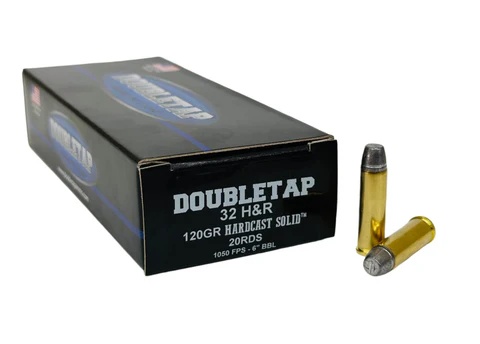
.327 Federal Magnum arrived in 2007 as Federal and Ruger’s answer to a question no one had quite asked: can a small revolver chamber a magnum load that approaches .357 energy while also cycling, from the same cylinder, .32 H&R Magnum, .32 S&W Long, and .32 S&W for practice. The answer was yes, and the market has mostly shrugged. That is the opportunity. A .327 revolver holds one more round than a comparable .357, recoils less with magnum loads, and lets you practise on the cheapest ammunition in the cylinder while carrying a load that does real work.
One chamber, four cartridges
The headspace geometry of the .327 case is designed so that the shorter cartridges in the family headspace correctly on the same cylinder:
- .327 Federal Magnum – the magnum load, 100 grains at about 1,500 fps from a 4-inch barrel, roughly 500 ft-lb.
- .32 H&R Magnum – the middle step, about 1,200 fps, milder recoil, and a fine defensive compromise for a small revolver.
- .32 S&W Long – the practice and target load, about 800 fps, gentle enough for long range sessions.
- .32 S&W – the oldest and mildest, for compatibility with older .32 revolvers and very mild practice.
That ladder is the whole argument for the caliber. A Ruger SP101 in .327 holds six rounds against five of .357 in the same frame; a Smith & Wesson J-frame or the Ruger LCR give you a small, light revolver that is genuinely pleasant to shoot with magnum ammunition and almost recoil-free with .32 Long. You do not need a second revolver to practise economically; you need a box of the shorter cartridge.
The load menu
| Load | Velocity | Character | Role |
|---|---|---|---|
| 100 gr JHP (.327) | ~1,500 fps | Magnum energy, moderate recoil | Carry, hunting small game |
| 85–100 gr (.32 H&R) | ~1,150–1,250 fps | Middle ground | Carry for recoil-sensitive shooters |
| 98 gr (.32 Long) | ~800 fps | Gentle, cheap | Volume practice, beginners |
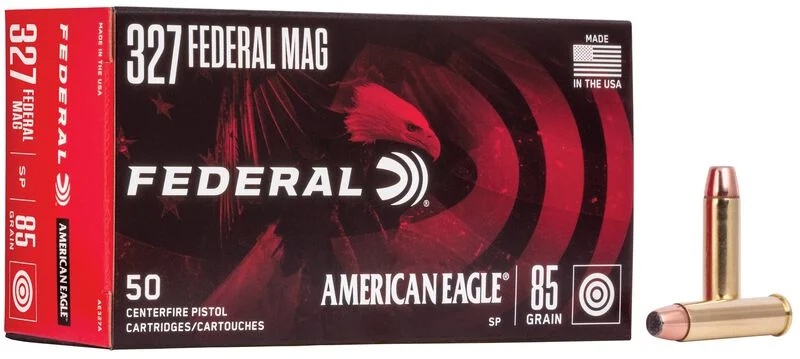
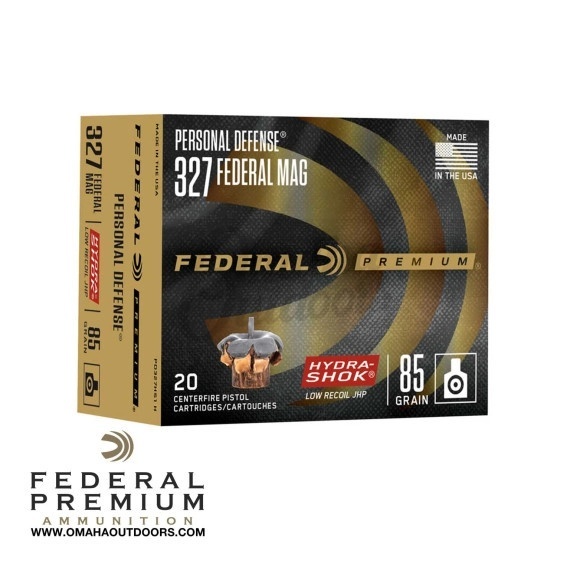
Federal’s 100-grain jacketed hollow point is the standard .327 carry load and the one to buy first: it is designed for the caliber, expands at the velocity the cartridge actually produces, and is the load most commonly used in the gel tests that justify the round. If your revolver has a small-game or varmint role, a lighter 85-grain load runs faster and is a legitimate choice from a longer barrel.
The practice economics are where the caliber becomes hard to argue against. A .32 Long or .32 H&R box costs meaningfully less per round than .327 magnum ammunition, and the recoil difference is enormous – a snub-nose .357 is a chore to practise with, a snub-nose .327 with .32 Long is a gun you will actually take to the range. That is the difference between owning a revolver and shooting one.
What to practise with
Practise on .32 S&W Long or, if you want a little more snap to better simulate carry recoil, .32 H&R Magnum. Both headspace correctly in a .327 cylinder, both are cheaper than magnum ammunition, and both will make you a better shooter with the gun you carry. Match the bullet weight to your carry load within a grain or two if you want point of impact to track closely.
Carry the 100-grain .327 hollow point and run 50 rounds of it through the revolver before you trust it, including from the cylinder you actually load. Then load it and leave it, rotating the top round rather than rechambering the same one weekly – the same advice that applies to any revolver or pistol defensive load. A speedloader or two of .32 H&R is a reasonable middle step if you want more than .32 Long but less snap than the magnum; many .327 owners end up carrying that middle rung and practising below it.
The live shelf and current economics are on the .327 Federal Magnum caliber page, where $0.73 a round at the low end is the number to plan a practice budget around. For the general train-versus-carry logic that applies to any small defensive revolver, the 9mm buying guide makes the same argument from the semi-automatic side.
A sensible first order
Buy the carry load and the practice ladder together; separating them is how .327 owners end up shooting their revolvers rarely and justifying the purchase badly.
- Two boxes of 100-grain .327 JHP – one to verify function and point of impact, one to keep loaded.
- One case of .32 Long or .32 H&R for volume practice, the cheaper ladder rung that makes the revolver economical to shoot.
- One box of .32 H&R if you have never compared it to magnum loads back to back; the middle step is often the best carry compromise for a small frame.
.327 Federal Magnum is an underrated revolver system precisely because it does two jobs at once: a magnum load that earns its keep and a practice ladder that keeps you shooting. If you own one, or are shopping for a small revolver and want the flexibility, the ammunition decision is the easy part – buy the magnum for carry, buy the shorter .32s for everything else.
Shop this caliber
Live prices from the warehouses that have it on a shelf right now.