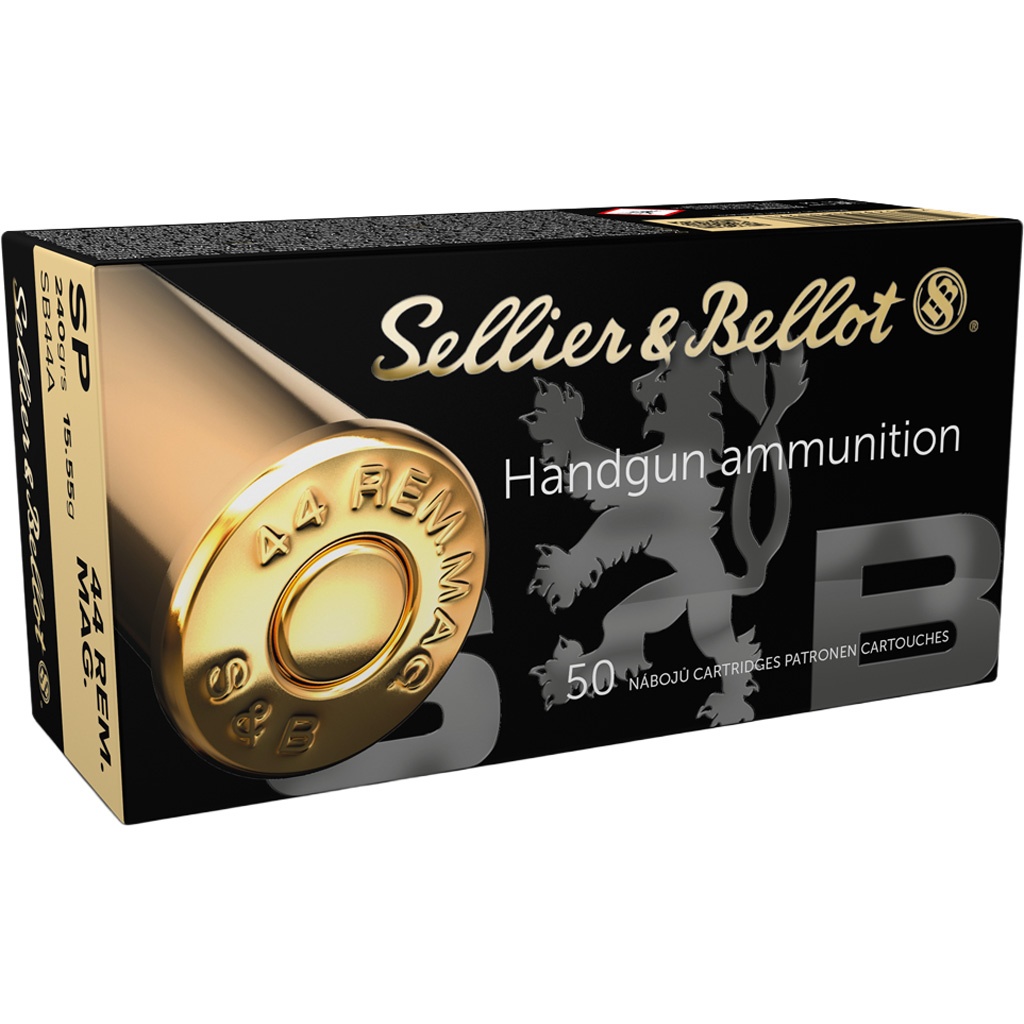
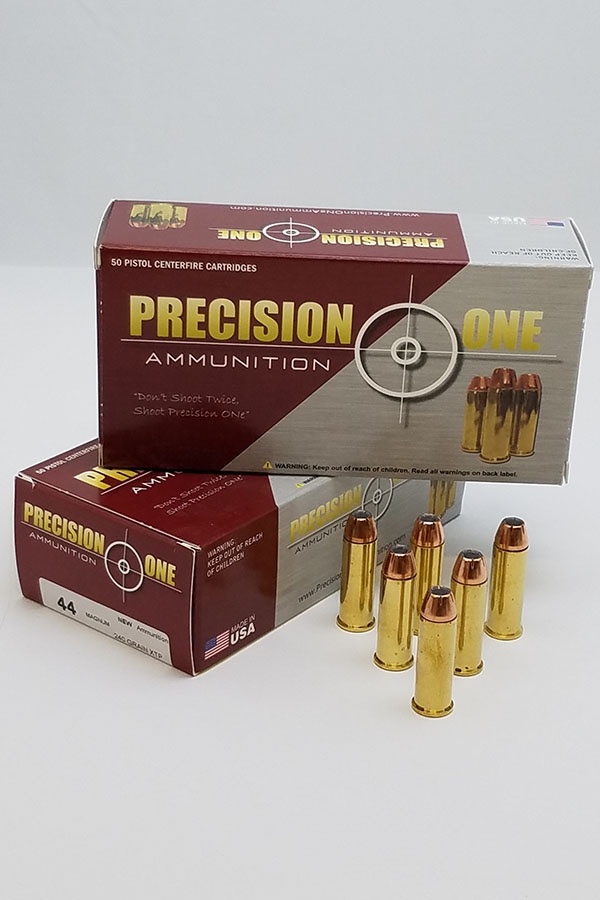
.44 Magnum ammo buying guide
Handgun hunting and bear country are the two honest use cases for .44 Magnum, and they want different boxes: jacketed magnum for game, hardcast solids for animals, and .44 Special for practice.
By TAS6 min read
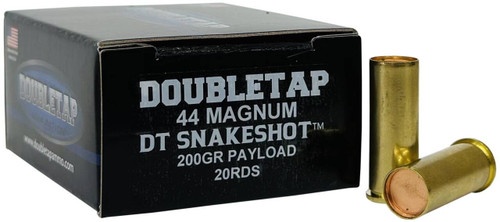
.44 Magnum is not a general-purpose pistol cartridge; it is a hunting and field cartridge that occasionally doubles for defence. The buying decision follows from that. Jacketed magnum loads for medium game, hardcast solids for bear country, and .44 Special for practice — because a revolver that chambers .44 Magnum also chambers the Special, and the Special costs less and recoils less without changing the manual of arms.
The second structural fact is barrel length. A 240 grain magnum load leaves a 4-inch revolver at roughly 1,350 fps and a 6- to 8-inch rifle barrel at 1,500 fps and above. If the gun lives in a holster, shop accordingly; if it lives in a scabbard, the rifle velocity is the reason you own it.
What .44 Magnum is for
The cartridge arrived in 1955 as the most powerful mainstream shoulder-fired handgun round of its day, built on the older .44 Special case and loaded to roughly twice the velocity. The modern niches are well defined: handgun hunting of deer, hogs, and (with care) larger game at 25 to 100 yards; protection in bear country when a rifle is impractical; and full-size revolver recreation for people who enjoy a cartridge with a genuine personality under recoil.
It is a heavy gun and a heavy load. Recoil in a 48-ounce Smith & Wesson Model 29 or Ruger Blackhawk is manageable with practice; in a lightweight carry revolver it is not, and the practice economy of the .357 Magnum guide applies here in doubled form.
The load menu
| Load | Velocity (revolver) | Character | Best at |
|---|---|---|---|
| 240 gr JHP / SJHP, magnum | 1,300–1,450 fps | The default hunting load | Deer and medium game to 100 yd |
| 240 gr hardcast, magnum | 1,300–1,400 fps | Non-expanding; deep drive | Bear country and heavy bone |
| 300 gr hardcast, magnum | 1,150–1,250 fps | Maximum momentum, more recoil | Large-bore field carry |
| 240 gr lead, .44 Special | 750–850 fps | Mild, cheap, same cylinder | Practice and volume |
Magnum loads versus Special loads
.44 Special, loaded to about 800 fps with a 240 grain bullet, is a big, slow, accurate round with a fraction of the magnum’s recoil. In a .44 Magnum revolver it is completely safe — shorter case, lower pressure — and it is the only sane way to practise volume with the same gun, sights, and trigger you will hunt with. The reverse is the classic safety line: never fire a .44 Magnum cartridge in a .44 Special revolver. The longer case will not fully chamber, which is the warning, but older or modified guns are not a place to test the rule.
The magnum load earns its recoil when the target is 100 pounds or more, at distance, or when the target is not a paper target. For deer-sized game, a 240 grain soft point or hollow point from a 6-inch barrel is the textbook choice: enough energy for a clean ethical hit inside 100 yards, and a bullet designed to expand at magnum velocities. Federal, Hornady, Remington, and Winchester all load credible hunting variants; the specific brand matters less than confirming the bullet is designed for the game you are after.
The rifle-versus-revolver velocity question
The same .44 Magnum cartridge fired from a 16- to 20-inch lever-action barrel can add 150–300 fps over a 6-inch revolver, depending on the load and barrel. That gain is why lever actions in .44 remain popular for brush hunting: you keep the pistol cartridge’s short-range trajectory while stretching the useful range by tens of yards.
The practical buying consequence: loads differ in how they respond. A hunting load listed at 1,350 fps from a revolver may show 1,500+ fps from a carbine, which is well within the design envelope for jacketed bullets but worth checking against the manufacturer’s statements if you handload or if the carbine is your primary hunting arm. Rifle-velocity .44 performance does not replace a proper rifle cartridge at distance — for the rifle-side conversation, the 5.56 buying guide shows how a dedicated rifle cartridge thinks about the same problem — but inside 150 yards, the carbine-and-.44 combination is a legitimate hunting tool.
Common mistakes
- Practising on magnums. Expensive, punishing, and the fastest route to a flinch. Shoot .44 Special for volume; verify with a box of the hunting load.
- Buying hollow points for bear defence. Expansion is the wrong priority on a large animal with heavy bone. Hardcast or bonded, full velocity.
- Ignoring the gun’s weight. A 40-ounce revolver and a 50-ounce revolver shoot the same box very differently. Match the load to the gun you will actually carry into the field.
- Mixing Special and Magnum boxes carelessly. Keep them visually separated in the range bag; headstamp discipline prevents the one mistake that is never a good idea.
A sensible first order
Magnums price as a premium caliber — the current floor on the .44 Magnum caliber page is $0.99 a round, and practice-grade soft-lead or FMJ sits close to that while hunting and hardcast loads cost notably more.
- One case of .44 Special practice — 240 grain lead at roughly double the volume you would buy if shooting magnums — for the cylinder time the recoil budget allows.
- Two boxes of one hunting load — 240 grain soft point or hollow point matched to your game — one for the zero and function run, one for the season.
- One box of hardcast if the pistol or carbine does any duty in bear country; run it once before the trip and then leave it loaded.
That is a year of practice that does not hurt, a verified hunting load, and the field load that matches the trip you are actually taking. When the question becomes where .44 Magnum sits against its smaller sibling, the magnum-vs-magnum comparison lives in the .357 Magnum guide — and the shelf, sorted by velocity and purpose, is on the caliber page linked above.
Shop this caliber
Live prices from the warehouses that have it on a shelf right now.