5.56 NATO ammo buying guide
5.56 buying comes down to three decisions: brass or steel, 55 or 62 grain, and whether the rifle is worth a box of 77 grain match. Chamber markings matter more than brand.
By TAS6 min read
5.56 is the most-produced centerfire rifle cartridge in America, and the buying decision is smaller than the shelf suggests. Steel case or brass decides the practice budget.55 or 62 grain decides the default load. 77 grain match decides whether the rifle is a plinker or a tool. Under all three sits the fact that actually matters: the chamber marking on your barrel — not the brand on the box — determines what you should buy.
Chamber first, then brand. If the barrel says 5.56 NATO, it will fire both 5.56 and .223 Remington ammunition safely; if it says .223 Remington or .223 Wylde, read the .223 buying guide before buying military-pressure ammo. That one marking resolves more arguments than any velocity chart.
What 5.56 is for
The cartridge is the AR-15 platform’s native load: a small, fast .223-caliber bullet at 3,100 to 3,300 fps from a 16-inch barrel, designed for infantry volume fire and now used for everything from varmints to three-gun competition to home defence. The civilian market splits roughly three ways — cheap practice FMJ, barrel-length-optimised duty and hunting loads, and premium match — and most owners buy a case of the first, a few boxes of the second, and a few of the third.
For the full NATO-versus-commercial history, the 5.56 vs .223 comparison is the long answer. This page is the shopping list.
The load menu
| Load | Velocity | Character | Best at |
|---|---|---|---|
| 55 gr FMJ, brass | 3,200–3,300 fps | The civilian default | Practice, plinking, general use |
| 62 gr FMJ, brass | 3,100–3,200 fps | Steel core in mil-spec; slightly heavier | Practice in 1:7 and 1:8 twists |
| 55 gr FMJ, steel case | 3,150–3,250 fps | Cheapest; runs dirtier | Volume practice in semi-autos |
| 77 gr OTM / match | 2,700–2,800 fps | High BC; wind-tolerant | Precision and long-range practice |
Steel case versus brass
Steel-cased 5.56 — Tula, Wolf, and similar import production — is the cheapest way to feed an AR, often 20 to 30 percent below brass at the same moment. The trade-offs are real but bounded: steel cases do not stretch and seal the same way, so the chambers run dirtier; primers can be harder, which some firing pins prefer and some do not; and the ammunition is generally bimetal-jacketed, which most indoor ranges and many steel-target owners will refuse.
For a semi-automatic rifle, steel case is fine practice ammunition if your gun eats it. Run a box before you commit to a case — extractors vary, and a gun that runs Tula without complaint is a gun that just saved you a meaningful percentage. Bolt guns are a different story: steel can stick in cold chambers and stiff extractors, so brass is the conservative default there.
Brass practice — Federal American Eagle, Winchester M193-equivalent loads, Remington, Fiocchi — is the middle path: reloadable if that ever matters, cleaner-running, and accepted at every range. The current floor for the caliber is $0.52 a round on the 5.56 NATO caliber page; steel sits at the bottom of that number, brass a few cents above.
55 versus 62 grain — and why 77 changes the conversation
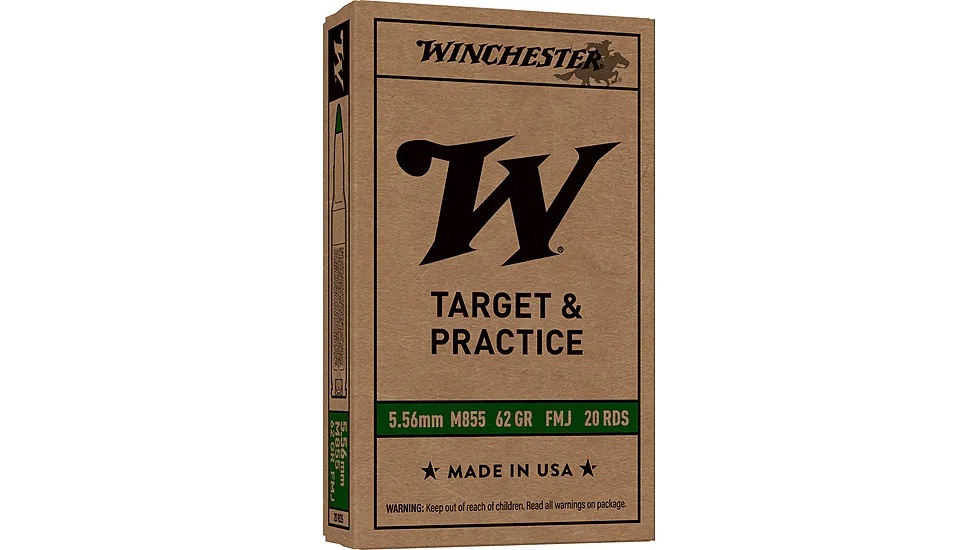
55 grain is the civilian default and the weight most practice ammunition ships in. It stabilises in the common 1:9 and 1:8 twists, it is the cheapest per round, and inside 200 yards it is indistinguishable from 62 grain for most shooters.
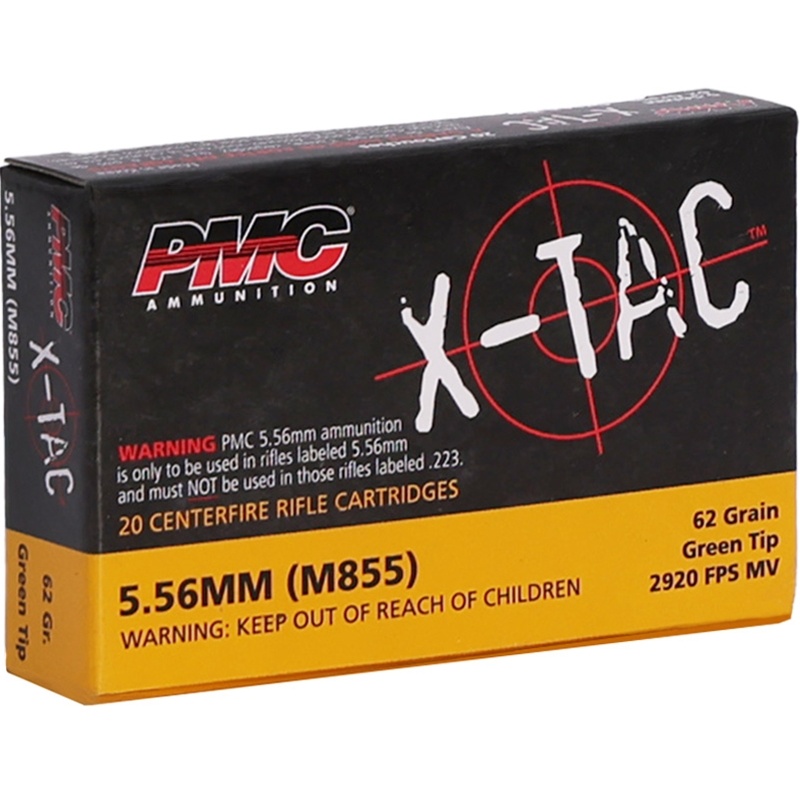
62 grain is the military ball weight (M855, with a steel penetrator core in mil-spec production) and behaves very similarly from 1:7 and 1:8 twist barrels. For practice it is an interchangeable substitute for 55 grain; buy whichever is cheaper on the day, unless your range prohibits steel-core ammunition — which M855 and its copies often are.
77 grain is where the cartridge stops being a plinker. Heavy, high-ballistic-coefficient match loads — Sierra MatchKing-based factory loads, Hornady TAP, and similar — hold velocity and resist wind far better than 55 grain, and they turn a well-built AR into something that can honestly group inside two MOA at 200 yards and ring steel at 600. They need a 1:7 or 1:8 twist to stabilise, they cost two to three times practice FMJ, and they are the single best-box upgrade an AR owner can buy to find out what the rifle is actually worth. The grouping arithmetic behind that claim is in minute of angle.
Common mistakes
- Buying by brand instead of chamber and twist. The barrel stamps decide. Brand is a tie-breaker at equal price, not a specification.
- Skipping the steel test box. A case of steel that your particular rifle refuses is the most expensive lesson on the shelf. One box first.
- Practising exclusively on 77 grain match. Buy a box to verify the rifle, not a case to feed it. Volume comes from 55 grain.
- Ignoring range rules. Bimetal jackets, steel cores, and steel cases are three separate prohibitions at indoor ranges; know which you are carrying before you arrive.
- Handloading pressures. The NATO chamber runs a higher pressure than commercial .223 chambers; military-spec ammunition in a 5.56 chamber is the designed pairing, and the details are in the .223 guide.
A sensible first order
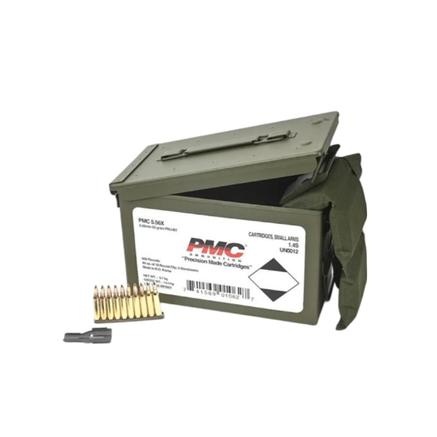
- One 500- or 1,000-round case of 55 grain brass or steel — steel if the rifle eats it, brass if the range is strict — at the caliber floor of $0.52 a round. This is the volume that makes everything else work.
- One 20-round box of 77 grain match to verify what the rifle does from a rest at 100 yards. If the groups are good, buy more; if not, the rifle told you something useful for less than a case would have.
- One 20-round box of 62 grain only if you want to compare it against 55 grain in your own gun — most shooters will not see the difference and should not spend the time.
That order covers a year of practice, a precision data point, and a written answer to what the rifle prefers — which is worth more than any amount of brand loyalty. The cartridge’s commercial twin is covered in the .223 Remington buying guide, and the case economics are in when buying a case makes sense.
Shop this caliber
Live prices from the warehouses that have it on a shelf right now.