5.7x28 vs 9mm: velocity, capacity, and penetration claims
The 5.7x28 argument rests on a military load you cannot buy. Against commercial loads and a 9mm hollow point, here is what the gel data and the capacity trade say.
By TAS6 min read
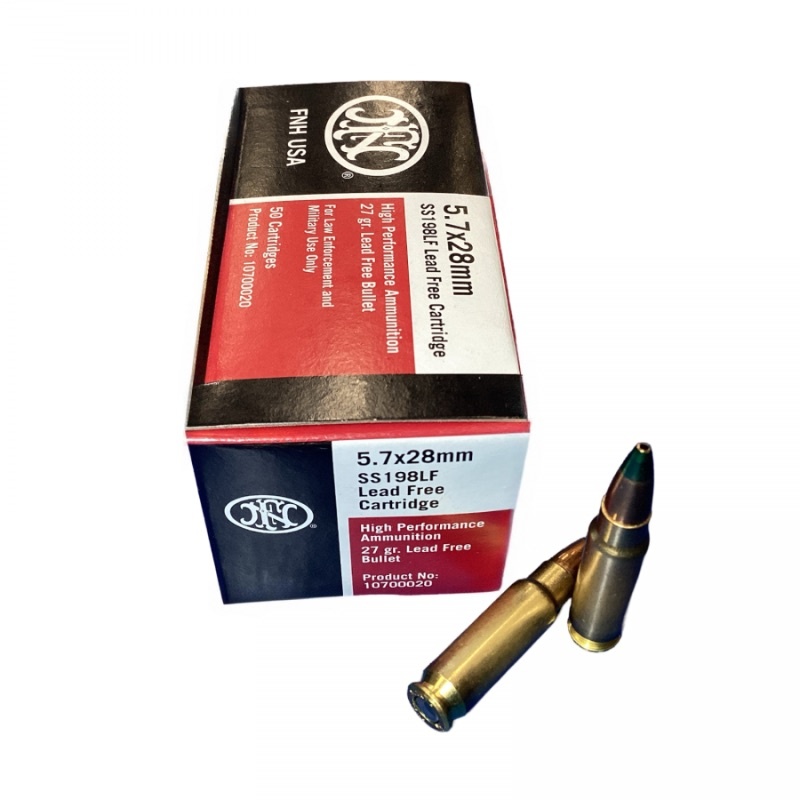
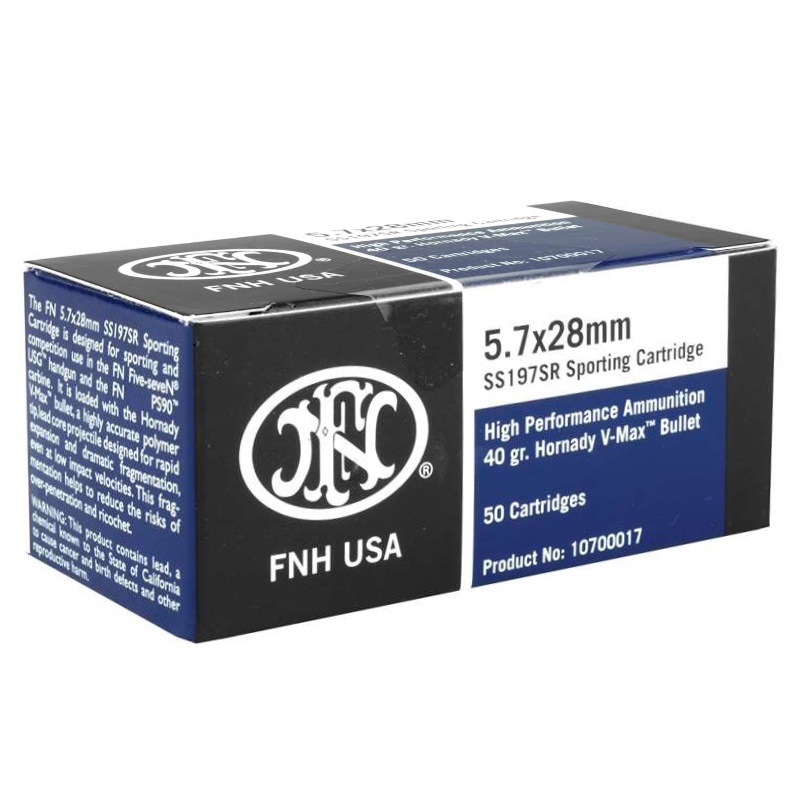
Nearly every 5.7x28 claim you will read traces back to one load, SS190, which was designed around defeating soft body armour and is not sold on the civilian shelf. The cartridge you can actually buy fires 27 to 40 grain bullets at very high velocity, and the honest comparison is against a 9mm hollow point that has had thirty years of gel testing. That is the argument this post makes: commercial loads, real penetration behaviour, and the capacity-versus-mass trade, not the brochure.
The two cartridges on paper
| Cartridge | Bullet | Velocity | Muzzle energy | Typical capacity |
|---|---|---|---|---|
| 5.7x28, 40 gr FMJ | 40 gr | 1,650–1,750 fps | ~250–275 ft-lb | 20+1 |
| 5.7x28, 27–31 gr JHP | 27–31 gr | 1,900–2,100 fps | ~230–300 ft-lb | 20+1 |
| 9mm, 115 gr FMJ | 115 gr | 1,150–1,200 fps | ~355 ft-lb | 15–17+1 |
| 9mm, 124 gr JHP | 124 gr | 1,100–1,150 fps | ~335 ft-lb | 15–17+1 |
The energy column is the one that surprises people: a 40 grain 5.7 load carries less muzzle energy than ordinary 9mm ball, because energy goes as mass times velocity squared and mass is doing most of the work in the 9mm. What the 5.7 has instead is a flat trajectory and a small frontal area, which is why it drifts less and why its penetration story is told in a different way.
What SS190 was, and what replaces it
SS190 is a 31 grain composite-core bullet designed to defeat NIJ IIIA soft armour at specified ranges. It is the load behind the cartridge’s reputation and behind most of its restrictions. It has never been the load on a civilian shelf; what you buy instead is 40 grain ball, 40 grain tipped hunting loads, and lighter 27 to 31 grain defensive or practice loads. Those behave nothing like SS190 in gel: the 40 grain FMJ tends to yaw and can over-penetrate, the tipped loads expand, and the light loads fragment early at handgun velocity.
The consequence for a buyer is simple. Judge the cartridge by the box in your hand. A 40 grain FMJ is a plinking round with a penetration profile closer to 9mm ball than to any armour-piercing claim; a polymer-tipped 40 grain load is a genuine small-game and defensive option that expands in gel at moderate velocity. Neither needs the SS190 mythology, and neither inherits its reputation.
The capacity-versus-mass trade
This is the real decision. The 5.7 pistol holds twenty rounds; a comparable 9mm holds fifteen to seventeen, and the rounds weigh about a third as much, which is why a full spare magazine of 5.7 costs nothing to carry. Against that, each 9mm hit carries three to four times the mass, so a well-placed hollow point has more to work with once it meets bone, fabric and fat.
In practice, shot placement and expansion do more work than either number. The 9mm’s advantage is that thirty years of bonded and barrier-tested hollow points have made its terminal performance boringly predictable. The 5.7’s advantage is that the shooter gets five more chances in the magazine and a much flatter bullet to the target, which matters at five yards less than people think and at twenty-five yards more than they expect.
Cost is where the trade becomes concrete: 9mm starts at $0.27 a round against 5.7x28 at $0.58, and the ratio holds or worsens at the defensive end. Training to competence in 5.7 costs noticeably more, which is the argument this site keeps returning to; the method for doing that arithmetic is in price per round.
What a pistol-calibre carbine changes
The 5.7 was designed around a 10-inch carbine barrel, and it is a better cartridge there: the 40 grain load picks up a few hundred feet per second, the trajectory advantage widens, and the capacity question moves to thirty or fifty rounds in a carbine magazine. A 9mm carbine gains almost nothing but a stable platform, because 9mm loads are already near their practical velocity ceiling from a pistol barrel.
So in a PCC the comparison shifts: 5.7 becomes a 50 to 150 yard carbine with a genuine trajectory edge, while 9mm becomes a cheaper, quieter, softer-shooting trainer that shares ammunition with your pistol. Both are defensible; only one of them keeps your training budget intact. If the PCC is a range toy, take the 9mm. If it is a ranch gun for coyotes at distance, the 5.7 earns the conversion, and the barrel-length conversation there has a direct parallel in 6mm ARC against 5.56.
The verdict
- Pick 9mm if this is a defensive handgun, if you train regularly, if ammunition cost is a real constraint, and if you want the widest proven load menu on the planet. It is the default answer and the correct one for most buyers.
- Pick 5.7x28 if you already own a 9mm and want a flatter-shooting second gun for small predators and pests at distance, if you need twenty rounds and will carry the spare magazines, or if your PCC is doing duty as a varmint rifle. Budget for ammunition before you commit.
One decision rule: if the primary use is defence, buy the 9mm and practise; if the primary use is small game and varmints at 75 to 150 yards, buy the 5.7 and accept the feed bill. The two roles only look like one choice when the load menu is ignored. The grain-weight logic underneath the energy column is covered in grain weight, and the same physics decides a heavier comparison in .450 Bushmaster against .350 Legend.
Shop this caliber
Live prices from the warehouses that have it on a shelf right now.