9mm vs .40 S&W: the value argument nobody expected
The .40 S&W was the default duty cartridge until it was not. When departments moved back to 9mm, the ammunition market quietly made .40 the bargain on the shelf.
By TAS6 min read
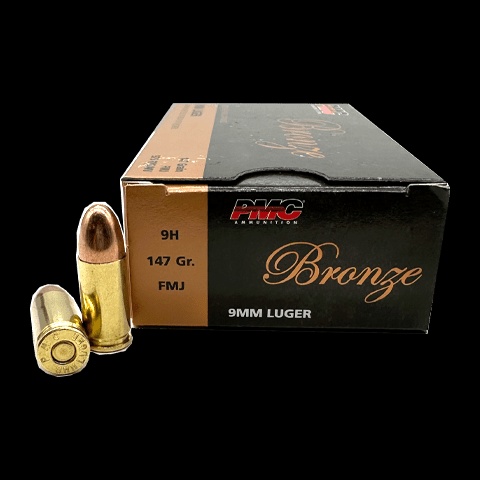
For twenty years the .40 S&W was the American law enforcement answer: more energy than 9mm, capacity that fit in a service frame, and a cartridge engineered specifically for the semi-automatic pistol that replaced the revolver. Then the same agencies that adopted it moved back to 9mm, and the ammunition market responded by making .40 the cheapest mainstream defensive caliber on the shelf. That inversion is the actual comparison now.
What each cartridge does
.40 S&W is a shortened 10mm case with a 0.400" bore, loaded to about 35,000 psi and pushing a 165 to 180 grain bullet at 1,000–1,200 fps. It was designed around one compromise: FBI terminal performance in a grip most agents could shoot. 9mm Luger, loaded to roughly 35,000 psi in its modern form, pushes a lighter 115–147 grain bullet faster, with less recoil impulse overall and more capacity in the same frame.
| Cartridge | Bullet weights | Velocity | Recoil character | Typical capacity |
|---|---|---|---|---|
| 9mm | 115–147 gr | 1,150–1,350 fps | Quick snap, easy to shoot flat | 15–17+1 full-size |
| .40 S&W | 135–180 gr | 1,000–1,200 fps | Sharper, shorter, more muzzle flip | 13–15+1 full-size |
The recoil difference is real and it is consistent across comparable frames. A .40 has a shorter, sharper impulse than a 9mm because the same pressure is acting on a heavier bullet through a shorter case. That shows up as more muzzle flip, which is why .40 pistols wear out locking systems faster and why competitive shooters who switched back to 9mm report better splits without changing anything else. It is trainable, but it is not free.
The economics flipped
When police departments still issued .40, the cartridge was produced at scale and priced accordingly. As those agencies re-armed in 9mm through the 2010s, .40 ammunition production and shelf space followed the demand curve down. The result today is a market where 180 grain .40 practice ammunition is frequently cheaper per round than equivalent 9mm, and the used market for .40 service pistols is deep and cheap.
9mm currently starts at $0.27 a round. .40 S&W starts at $0.35 a round. Those numbers move week to week, but the structural story behind them does not: one cartridge is still expanding its catalogue and the other is being cleared at value pricing. For a shooter who already owns a .40, that is the best news in the handgun market. For a first-time buyer it is a trap, because the cheap ammunition only helps if you bought the gun for the right reasons.
The comparison method for working these spreads properly is in price per round, and the weight differences on the boxes are explained in understanding grain weight.
Terminal performance: the gap is smaller than the boxes claim
A 180 grain .40 hollow point carries more energy than a 124 grain 9mm hollow point at the muzzle, and in bare gelatin it produces a wider permanent cavity. The FBI protocol tests that matter are the ones through clothing, plywood and auto glass, and in those tests modern 9mm duty loads (Federal HST, Speer Gold Dot, Hornady Critical Duty) close most of the gap. Penetration depths converge. Expanded diameters remain slightly larger for the .40, by a margin that shows up in lab measurements and rarely in outcomes.
What has not closed is the cost of practice. A shooter who can afford a thousand rounds of 9mm a year but only six hundred of .40 will be better with the 9mm, and that difference swallows the ballistic margin whole. The .40 still has a legitimate argument for a handloader who wants a heavier-for-caliber bullet at moderate velocity, or for someone who already shoots the caliber well and enjoys the market prices.
Capacity and platform
In the same frame family, expect to give up two to four rounds going from 9mm to .40: a Glock 17 holds 17+1, a Glock 22 holds 15+1. More importantly, many .40 pistols built on 9mm frames needed reinforced locking blocks and heavier springs to survive the cartridge, and the ones that did not have a reputation for shorter service life. If you buy a used .40, budget for a spring kit and inspect the barrel throat. None of that is fatal; all of it is a cost the price of the ammunition does not show you.
Subcompacts widen the gap further. A pocketable 9mm runs 10 to 12 rounds; the same footprint in .40 usually holds eight or nine, with a shorter barrel that strips velocity the cartridge was already shorter on. If deep concealment is the primary job, the capacity and shootability margin both favour 9mm by more than the chart suggests.
The verdict, as a rule
- New buyer, one defensive handgun: buy 9mm. Deeper catalogue, softer recoil, more capacity, better retention of value, and the ammunition market is moving toward it rather than away. Browse 9mm.
- Existing .40 owner: keep it, and enjoy the fact that practice ammunition is currently the best deal in handguns. Stock a case of 180 grain FMJ while the pricing holds. Browse .40 S&W.
- Buying used: a police-trade .40 at a steep discount against a new 9mm is a real bargain if you shoot it accurately and replace the wear parts. It is a bad trade if you bought it because the sticker said “bigger bullet”.
The .40 did not become a bad cartridge. It became a value cartridge, which is a different thing entirely. If you want the other side of that story, where the bigger caliber still owns a clear performance case, read 9mm against 10mm.
Shop this caliber
Live prices from the warehouses that have it on a shelf right now.