9mm vs .380 ACP: the pocket pistol question
The .380 is not a weak 9mm; it is a different cartridge that earns its place in guns too small to shoot 9mm well. The choice is about the gun first.
By TAS6 min read
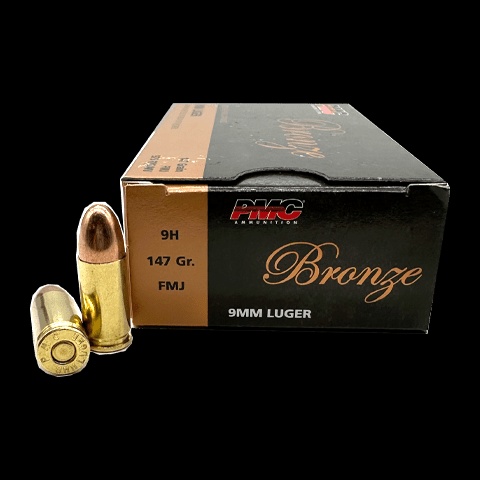
The question “9mm or .380?” is almost always asked in the wrong order. Both cartridges are credible defensive options; what separates them is the size of the gun you can shoot well, and that decision is usually made before the caliber one is. Answer the gun question first and the ammunition comparison mostly answers itself.
What each cartridge is
.380 ACP, also stamped 9mm Kurz or 9mm Short, is a 9mm-diameter cartridge in a shorter case, developed by Browning in 1908 and now the standard chambering for pocket-sized pistols. It pushes a 90 to 100 grain bullet at roughly 950–1,200 fps depending on barrel length. 9mm Luger, with a longer case and higher working pressure, pushes a 115 to 147 grain bullet faster out of any given barrel length, with more energy remaining on the other side of the muzzle.
| Cartridge | Bullet weights | Velocity (3–3.6") | Muzzle energy (typical) |
|---|---|---|---|
| .380 ACP | 90–100 gr | 950–1,150 fps | 180–250 ft-lb |
| 9mm | 115–147 gr | 1,050–1,250 fps | 300–380 ft-lb |
The energy gap is roughly 40 percent, and it is the number that drives every terminal performance claim in this comparison. A .380 hollow point has less velocity to work with, which means less reliable expansion, which means the load selection matters more. On the shelf of any well-stocked dealer, the 9mm defensive menu is wider, deeper, and better tested than the .380 one, though the gap has narrowed considerably in the last decade as the pocket pistol market grew.
Weight is worth understanding properly here, because the .380 is not simply a “lighter 9mm”: it is the same diameter at lower pressure, and that pressure difference is what you are buying or giving up.
The gun question is the real comparison
Put a .380 and a 9mm in frames of the same weight and the .380 recoils less: lower pressure, lighter bullet, less total impulse. Put them in the guns each cartridge actually occupies and the picture reverses. A 16-ounce pocket .380 and a 17-ounce micro-9 weigh almost the same, but the micro-9 is packing substantially more energy into a grip barely larger. The .380’s traditional home was the gun too small to shoot 9mm well; once micro-9s arrived, that home got a lot smaller.
The remaining .380 cases are real, though. Shooters with reduced hand strength, new shooters working up recoil tolerance, and anyone whose carry gun must vanish into a pocket all still do well with a .380. The right test is not whether you can fire the micro-9 once at the range; it is whether you can run a bill drill into a fist-sized group from five yards without anticipating the shot. If the .380 lets you do that and the 9mm does not, the .380 wins, gel data be damned.
Capacity tracks the same line. A full-size 9mm holds fifteen to seventeen rounds; a full-size .380 holds seven to ten, and the pocket guns most people actually carry with the .380 hold six or seven. The energy deficit and the capacity deficit do not cancel each other out; they stack. That is why the .380 is a problem solved by shot placement and practice volume, not a cartridge that apologises for itself.
Cost, availability, and the ammunition menu
.380 ACP currently starts at $0.31 a round, against 9mm at $0.27 a round. The practice ammunition spread is usually a couple of cents per round; the defensive spread is wider, because the deep 9mm duty catalogue (Federal HST, Speer Gold Dot, Hornady Critical Duty in 115–147 grain) has no full equal in .380. The best .380 defensive loads are good; there are simply fewer of them, and they expand at lower velocities, so barrel length matters even more than in 9mm.
If you do carry a .380, buy a load the manufacturer publishes gel data for at your barrel length, and run 50 to 100 rounds of it through the gun before you trust it. Short-barrel hollow point performance is the whole ballgame in this caliber. The broader comparison method is in price per round.
The verdict, as a rule
- Buy 9mm if the micro-9 fits your hand and you can shoot it accurately. The capacity, the energy, and the deeper defensive catalogue all point the same way, and the price gap has closed enough that it is no longer the deciding factor. Browse 9mm.
- Buy .380 ACP if the gun must be truly pocketable, if hand strength or recoil tolerance is the binding constraint, or if you have tried the micro-9s and shot the .380 demonstrably better. A hole you can guarantee beats a hole you cannot. Browse .380 ACP.
- Do not buy .380 because it is cheaper. The practice savings are small, the defensive menu is thinner, and the energy deficit is real. It is the right cartridge for the right gun, not the budget option.
For the next step up the handgun ladder, see 9mm against .40 S&W, where the capacity and cost arguments invert. For the rifle-caliber version of “same idea, different scale”, start with 7.62x39 against 5.56.
Shop this caliber
Live prices from the warehouses that have it on a shelf right now.