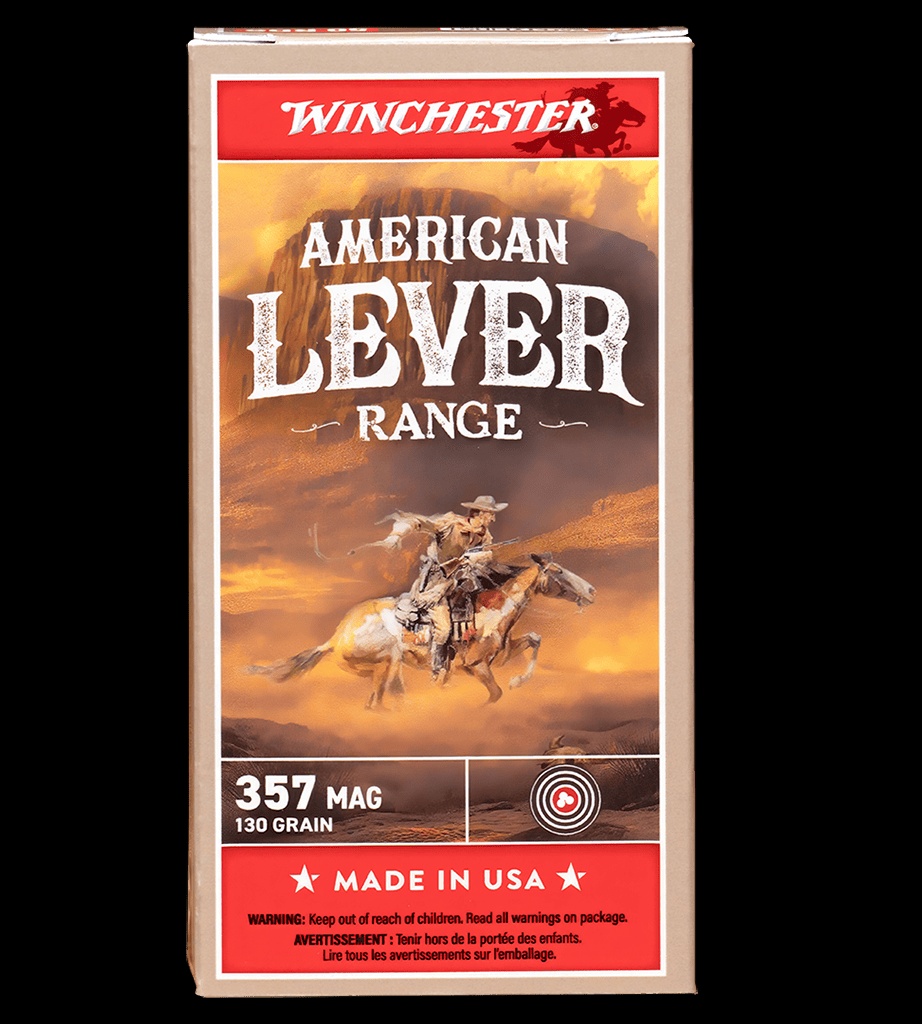
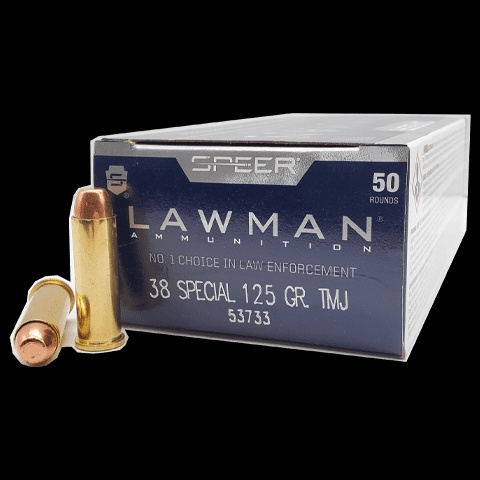
.357 Magnum vs .38 Special: one chamber, two cartridges
The same revolver can shoot both cartridges, which makes this the rare caliber comparison where the cheaper ammunition is the point of the system.
By TAS6 min read
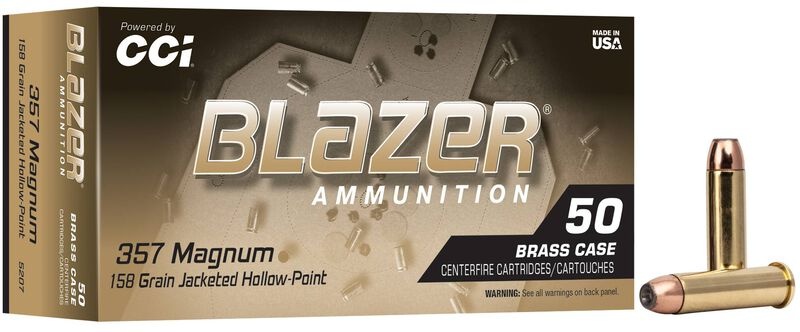
This is the handgun comparison where the two cartridges are not rivals. A .357 Magnum revolver chambers and fires .38 Special, which is the entire economic argument: practise with the cheap cartridge, carry the expensive one, and know exactly where the boundary between them sits. The reverse, .357 ammunition in a .38 Special revolver, is unsafe and will not fit.
What each cartridge is
.38 Special is a 1898 cartridge, originally a black powder round, modernized over a century into a reliable, mild-recoiling service and defence cartridge. It pushes a 125 to 158 grain bullet at roughly 750–950 fps from a 4" barrel. .357 Magnum, developed in 1934, is essentially the same case stretched by 0.128" and loaded to roughly three times the pressure: 158 grain bullets at 1,250–1,500 fps, 125 grain loads faster still.
| Cartridge | Typical bullets | Velocity | Recoil character |
|---|---|---|---|
| .38 Special | 125–158 gr | 750–950 fps | Mild, easy to shoot well |
| .38 Special +P | 125–158 gr | 900–1,100 fps | Noticeably hotter, still manageable |
| .357 Magnum | 125–158 gr | 1,250–1,500 fps | Hard, sharp, demands technique |
The velocity difference at the muzzle is dramatic; the recoil difference is larger than shooters expect, and the difference in how a revolver handles it is larger still. A 158 grain .38 from a medium-frame revolver is a range gun you can shoot all day. The same weight in .357 Magnum from the same frame is a different shooting experience, and from a snub-nose it is punishing. The grain weights are the same; the pressures and the energy are not. Grain weight on the box tells you the bullet, not the cartridge’s work.
The economics that make this a system
.38 Special currently starts at $0.50 a round, against .357 Magnum at $0.58 a round. That spread, compounded over a practice year, is the reason .38 Special has not been replaced by the cartridge that overshadows it ballistically. A .357 Magnum owner who shoots .38 Special for volume and .357 Magnum for verification is getting the full performance of the revolver while paying the practice cost of a milder cartridge.
The point of impact will not be identical between the two. Heavier .357 loads, especially from short barrels, print differently than practice .38, which is the same warning that applies to any practice-versus-carry pairing. Confirm your sight setting with the load you intend to use. The cost comparison method is in price per round.
Load selection: defence, practice, and the +P boundary
The practice menu is simple: 130 or 148 grain .38 Special FMJ, or wadcutters if your range prefers them. They are cheap, clean, and mild. For defensive use, modern .38 Special +P hollow points (Federal HST 130 grain, Speer Gold Dot 135 grain) expand reliably and produce terminal performance that sits between standard .38 and .357 Magnum. They are the right choice for a shooter who finds full .357 Magnum recoil counterproductive, and they require a revolver rated for +P, which nearly all modern ones are.
.357 Magnum defensive loads come in two temperaments. A 158 grain soft point or hollow point at about 1,300 fps is the classic load: heavy, deep-penetrating, and the standard answer for a full-size service revolver. A 125 grain load at 1,450+ fps is harder-hitting but produces punishing recoil from medium and short-barrelled guns; it is a specialist load, not a default.
+P means a published pressure step above the standard cartridge rating. .38 Special +P is standardised and safe in any modern .38 or .357 revolver; check the barrel stamp or the manual if the gun is pre-1970s or a lightweight alloy frame. There is no .357 Magnum +P standard in common commercial use, and “+P+” markings have no published specification behind them at all. If the box does not say what standard it is meeting, treat the load as untested and buy something that does.
The gun decision this comparison actually drives
Once the cartridge relationship is clear, the gun choice mostly follows: if you are buying a revolver and you want the .357 Magnum’s capability without giving up .38 Special practice, buy a .357 Magnum revolver and shoot both. The exceptions are real, though. A snub-nose .357 is a specialist tool whose full-power recoil and blast are severe; a snub-nose .38 Special (+P rated) is easier to shoot well and simpler to feed. Barrel length also dictates what each cartridge becomes: a 2" .357 gives up hundreds of fps and much of its advantage over .38, while a 4" or 6" barrel is where the magnum earns its name.
- Full-size or 4" revolver, one gun for everything: .357 Magnum, practised with .38 Special, carried with a 158 grain .357 or a +P .38 depending on your recoil tolerance.
- Snub-nose carry, recoil-sensitive hand : .38 Special +P with a modern hollow point. The capacity is the same (five or six rounds), the gun is the same size, and you will shoot it better.
- Hunting or wilderness defence : .357 Magnum with a 158 grain load, in a 4" or longer barrel, without compromise.
The verdict, as a rule
Buy the .357 Magnum revolver if you want one cylinder that covers both cartridges, and budget for .38 Special practice ammunition as the cost of owning it properly. Carry .357 Magnum when the recoil is something you shoot well; carry a .38 Special +P when it is not. Either way the boundary is permanent: .38 Special feeds .357, and nothing feeds the other direction.
For the same chambering logic applied to rifles, see .300 Blackout against 5.56, where the mix-up runs the opposite way and the consequences are worse. And for the shotgun comparison that turns on the same question — what does the platform actually accept — start with 12 gauge against 20 gauge.
Shop this caliber
Live prices from the warehouses that have it on a shelf right now.