.38 Special ammo buying guide
.38 Special is a revolver cartridge with a split personality: cheap 158 grain practice loads for volume, and +P hollow points that turn a snub into a credible defensive tool.
By TAS6 min read
.38 Special has been in production since 1902, and the modern buying decision fits on an index card: a snub-nose revolver needs +P hollow points for duty and 158 grain lead semi-wadcutters for practice, and the pistol’s rating decides which side of the +P line you are allowed to step onto. Everything else — brass versus nickel cases, brand loyalty, velocity one way or the other — is preference.
There is one structural fact that changes the maths: a .357 Magnum revolver fires .38 Special. If the gun in your drawer is a .357, the practice economics of this guide apply to you directly, and the magnum loads in the .357 Magnum guide become your carry menu.
What .38 Special is for
The cartridge is the standard snub-nose revolver round: five- and six-shot J-frames, L-frames, and their peers, carried close to the body where a semi-auto would print or snag. Recoil is mild in steel frames and brisk but survivable in lightweight alloys. It is not a distance cartridge — snub sights and 2-inch barrels make 25 yards a real challenge — but at conversational distances it is a proven tool with a century of factory loads behind it.
Semi-autos took most of the duty market, and the capacity argument is real: see 9mm vs .45 ACP for why the handgun world moved. .38 Special persists because the guns are small, the recoil is polite, and the ammunition shelf never thinned out.
The load menu
| Load | Velocity | Character | Best at |
|---|---|---|---|
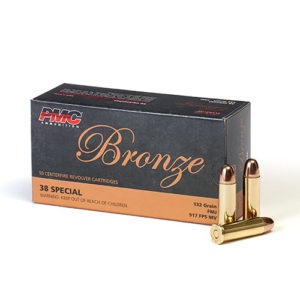
| 158 gr LRN / SWC, standard | 750–800 fps | Cheap, mild, the classic practice load | Volume practice and range work |
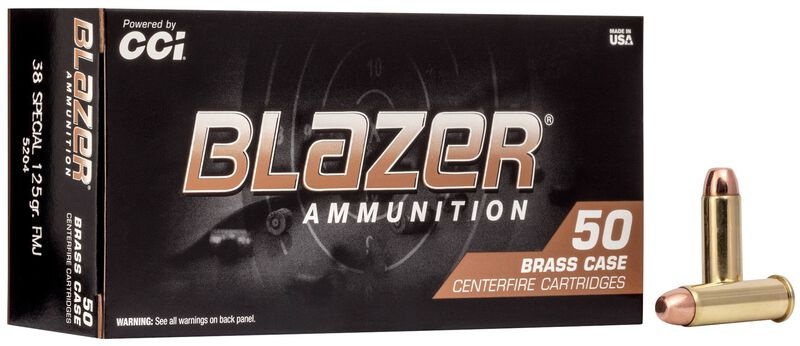
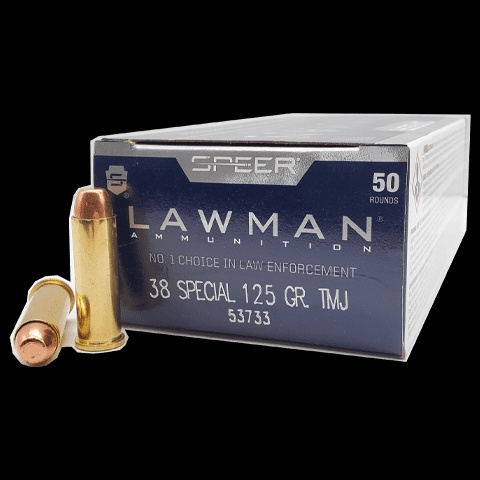
| 130 gr FMJ, standard | 800–850 fps | Harder, cleaner than lead | General practice; copper-plated options |
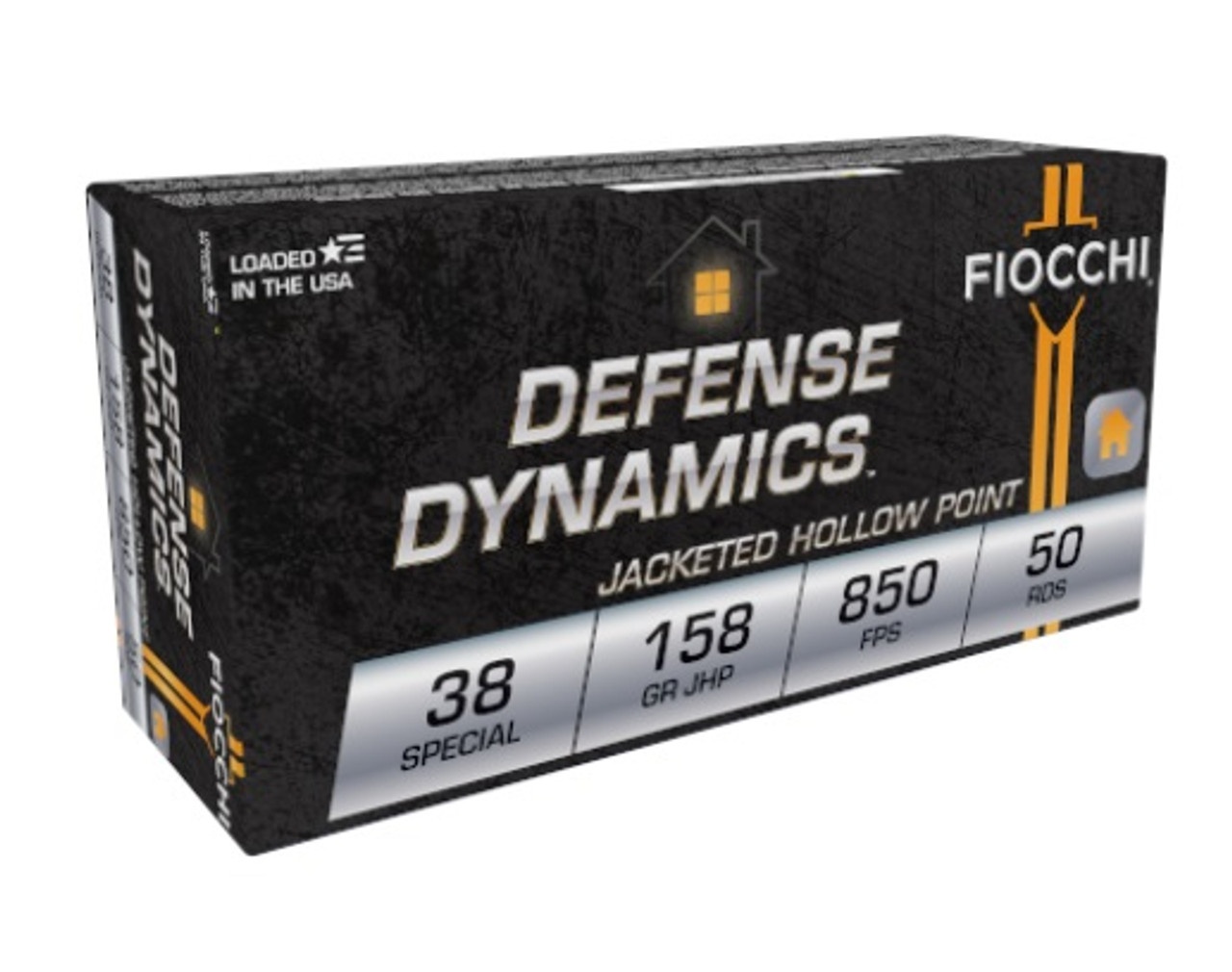
| 125 gr JHP, +P | 950–1,000 fps | The duty standard for decades | Carry from a rated revolver |
| 158 gr LSWCHP, +P | 900–950 fps | The famous Chicago load; deep and slow | Carry, older frames permitting |
Why the 158 grain lead semi-wadcutter still makes sense
The 158 grain lead semi-wadcutter (LSWC) is the .38 Special practice round, and it has not been displaced for three good reasons. It is cheap — the cheapest centerfire on most revolver shelves. It shoots a clean, sharp-edged hole in paper, which matters when you are scoring your own work. And its moderate velocity and long bearing surface lead the barrel gently in older revolvers, which is why handloaders and old-timers still recommend it by name.
The offset: lead bullets leave leading in some barrels, particularly at higher velocities, and some indoor ranges forbid exposed-lead ammunition entirely. Copper-plated 130 grain FMJ is the substitute when the range will not take lead, and the price difference per box is small enough that neither choice is wrong. The current floor for the caliber is $0.50 a round on the .38 Special caliber page — usually one of the practice loads above.
+P duty loads and what to carry
+P is a published, standardised pressure step above the normal .38 Special figure. It is not a wildcat and not a marketing sticker; the pressure number is defined, and modern Smith & Wesson, Ruger, and Taurus revolvers built in the last few decades are generally rated for it. The exception is the gun you cannot check: lightweight alloy revolvers, very old post-war guns, and any pistol whose manual does not say +P should be fed standard pressure ammunition only.
For duty from a rated revolver, the short list is short: Federal HST 130 grain +P, Speer Gold Dot 130 grain +P, and Hornady Critical Defense 110 grain are the names that appear in every serious discussion, because they are designed to expand at .38 velocities and from short barrels rather than borrowed from a faster caliber. The 158 grain +P semi-wadcutter hollow point — the old law-enforcement load — remains a legitimate choice in heavier revolvers where the shooter can control it.
Barrel length moves the numbers: a 2-inch snub loses around 100 fps against a 4-inch service revolver, which is enough to matter for expansion. Choose loads the manufacturer tests at snub lengths, and confirm point of impact at the distance you would actually shoot — the mechanism of that shift is explained in understanding grain weight.
The .357 Magnum chamber, and common mistakes
A .357 Magnum revolver safely fires .38 Special and .38 Special +P: the case is shorter, the chamber is longer, and the pressure of the .38 loads is well within the .357 frame’s rating. The reverse is never true — a .38 Special revolver must not be loaded with .357 ammunition, and the longer cartridge will not fully chamber, which is the only warning you get before someone tries anyway.
For owners of .357 revolvers this is the best of both worlds: 158 grain lead semi-wadcutters for cheap practice, magnum 125- and 158-grain loads for duty. The full case-by-case economics are in the .357 Magnum buying guide. The mistakes that remain, in every .38 Special chambering:
- +P in an unverified frame. The single most expensive mistake in the caliber. Check the rating first.
- Carrying standard-pressure FMJ. A 130 grain round-nose through a snub overpenetrates like the FMJ it is. Spend the small premium on a hollow point built for the velocity you have.
- Practising on carry ammunition. +P hollow points at two to three times the price of practice lead will shrink your range sessions. Train with the cheap load in the same weight where you can, and spend the carry boxes on verification.
- Ignoring the range’s rules on lead. Check before you buy a case of 158 grain LSWC you cannot shoot where you practise.
A sensible first order
- One 500-round case of practice lead or plated FMJ at $0.50 a round — a year of volume for most snub owners, and the cheapest way to get accurate with a short trigger and worse sights.
- Two boxes of one +P hollow point — if the frame is rated — one for the verification run, one for the duty cylinder.
- One box of 158 grain lead semi-wadcutter to see for yourself why the load has survived a century; compare it against your practice FMJ on paper before you decide.
That is a practice regimen, a verified duty load, and an answer to the weight question that comes from your own revolver rather than an argument on a forum. When the question becomes whether the gun should have been a .357 all along, the comparison in the caliber arguments and the magnum guide above close the loop.
Shop this caliber
Live prices from the warehouses that have it on a shelf right now.