.380 ACP ammo buying guide
.380 ACP lives in deep-concealment pocket pistols, and the ammunition question there is unusual: in a 3-inch barrel at roughly 900 fps, a hollow point can be a reliability problem before it is a solution.
By TAS6 min read
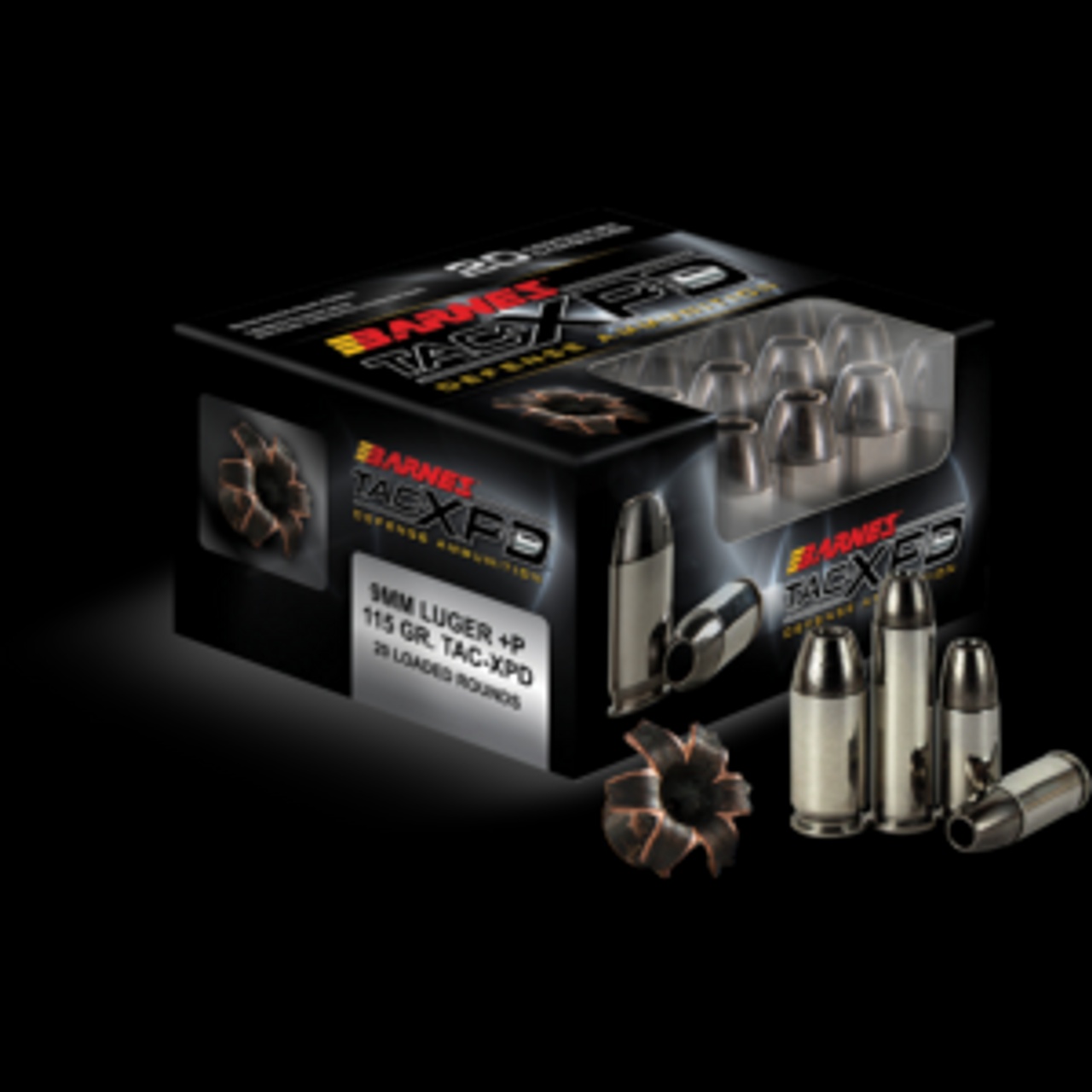
.380 ACP exists for one reason: it fits in guns small enough that nobody dreads carrying them. That purpose dictates the ammunition answer. A pocket pistol has a 2.7- to 3.6-inch barrel, a tiny sight radius, and a magazine measured in single figures — so buy .380 for reliability and volume, and treat the hollow point question as a verification exercise, not a spec sheet.
The practical rule: practise on FMJ, carry a proven hollow point, and test both in your gun before you trust either. The reasoning is below, along with the load menu and a sensible first order.
What .380 is for
.380 ACP (also stamped 9mm Kurz or 9x17mm) is a straight-walled cartridge built in the 1900s for compact pistols of the day. It never left. It powers the deep-concealment market: the pistol in a jacket pocket, the backup in an ankle holster, the gun carried because a larger one was not. Recoil is modest, the guns are small, and the ammunition shelf at any shop runs deep.
What it is not is a service cartridge. If the gun lives in a belt holster and weight is no object, the 9mm buying guide is the better page: for the same money you get more capacity and a wider defensive menu. .380 wins on size, and the shooting that matters for a pocket gun is close, fast, and unforgiving of feed failures.
The load menu
Grain is bullet weight; 7,000 grains make a pound. Almost everything in .380 sits in a narrow band, which is why the differences are subtler than the internet suggests:
| Load | Velocity | Character | Best at |
|---|---|---|---|
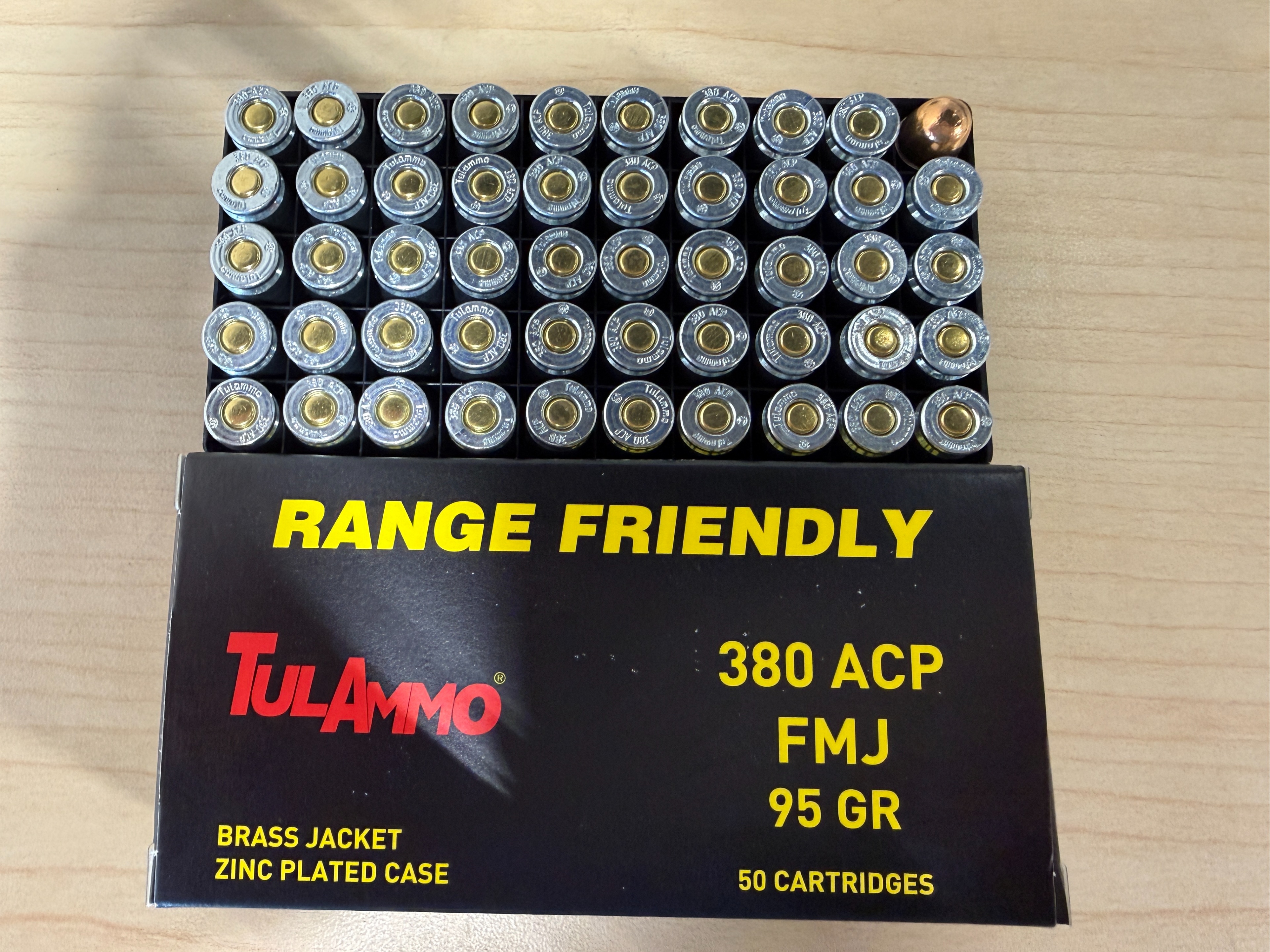
| 90 gr FMJ | 950–1,000 fps | The default; feeds anything | Practice and volume |
| 90 gr JHP | 900–950 fps | Expansion is marginal and design-dependent | Carry, once verified |
| 100 gr FMJ | 900–950 fps | Heavier, a touch softer in recoil | Plinking and older loads |
| 85 gr JHP | 950–1,000 fps | Snappier; some expansion gain | Specific guns only |
Why FMJ is the practice round
A hollow point expands when impact velocity and the cavity design let it. From a 4-inch barrel a .380 defensive load is already on the low end of that window; from a 3-inch pocket pistol it is lower still. A design meant for 950 fps that arrives at 880 fps may not open at all — and a bullet that does not expand performs like a small, round-nosed FMJ anyway, only at a higher price.
There is a second problem: feed reliability. Snub and pocket pistols are the fussiest feeders in the shop. Round-nose FMJ has the gentlest possible profile for a short feed ramp and a weak spring, which is exactly why it belongs in the practice box and the spare magazine. That is also why the bulk shelf — 500- and 1,000-round FMJ cases — is where the bulk of your .380 spending should go. The cheapest in-stock .380 right now is $0.31 a round on the .380 ACP caliber page.
What to carry
The defensive .380 market has consolidated around a short list, and the winners share one property: they were designed for short barrels. Federal HST 90 grain, Speer Gold Dot 90 grain, and Hornady Critical Defense are the names that come up because they are built to open at .380 velocities rather than borrowed from a faster caliber. They cost two to three times FMJ, which is another reason not to practise with them.
Buy two boxes of your chosen load: one to feed the verification run, one to keep loaded. Rotate the chambered round occasionally rather than rechambering the same one for months — repeated chambering can push the bullet back into the case, which raises pressure when it fires.
Common mistakes
- Buying .380 as if it were 9mm. Two extra rounds in the magazine do not convert a pocket pistol into a service pistol. Pick the gun you will actually carry, then buy ammunition for it.
- Skipping the feed test. The most common .380 failure is not terminal performance; it is a hollow point that will not feed from a small magazine on a short ramp.
- Ignoring point of impact. Sights zeroed for 90 grain FMJ may print differently with 85 grain JHP. Confirm where your carry load lands before you rely on it. The mechanics of that offset are covered in understanding grain weight.
- +P labels. A handful of .380 loads are marked +P. Not every pocket pistol is rated for them, and the velocity gain from a 3-inch barrel is smaller than the box suggests. Check the manual before you buy a case.
A sensible first order
- One 500-round case of 90 grain FMJ for practice. At the current floor of $0.31 a round, that is roughly a year of serious practice for most pocket-pistol owners — and it is the cheapest way to find out whether your gun cycles reliably at all.
- Two boxes of one proven hollow point — HST, Gold Dot, or Critical Defense — one for the feed-and-zero verification, one to keep loaded.
- A 50-round box of 100 grain FMJ only if you want to compare recoil character. Most shooters are indifferent; some genuinely shoot the heavier load better.
If the gun is new to you, that order doubles as a shakedown: 500 rounds of FMJ will expose any feeding problem the pistol has before hollow points ever enter the chamber. When you have decided what the shelf looks like, the comparison arithmetic in price per round decides how the next case gets bought.
Shop this caliber
Live prices from the warehouses that have it on a shelf right now.