.45 ACP ammo buying guide
Slow, heavy, and still in half the holsters in America. .45 ACP has one default practice load — 230 grain FMJ — and a short list of hollow points engineered to expand at 830 fps.
By TAS6 min read
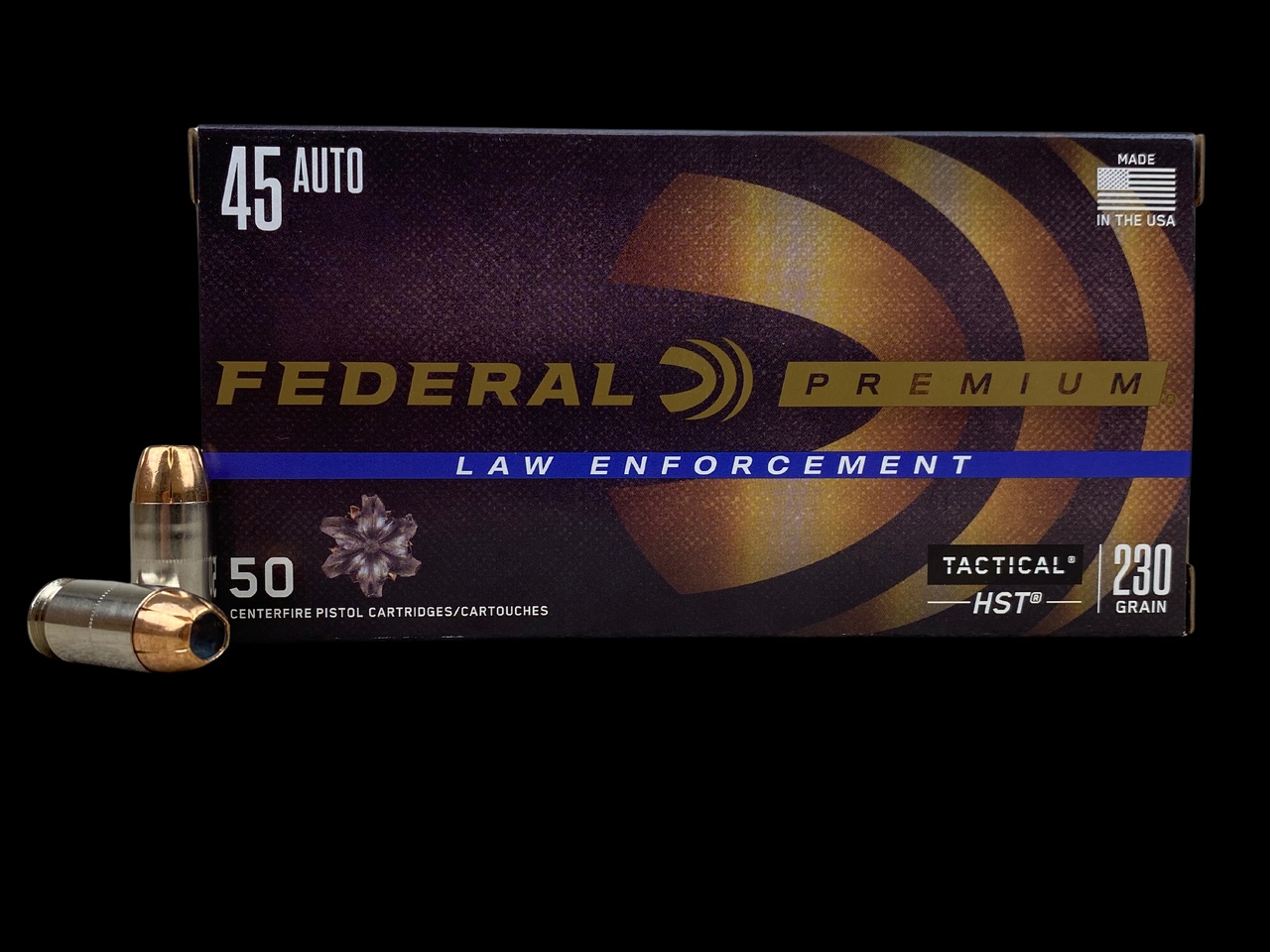
.45 ACP answers a different question than 9mm or .40 S&W: instead of more speed or more capacity, it puts a wider bullet in the target at moderate pressure and modest recoil. That has kept it in American holsters for more than a century, and it keeps the ammunition conversation simple. Almost everything begins with the same load —230 grain FMJ — and the only real branching point is which hollow point still expands at 830 feet per second.
The short answer: practise on 230 grain round-nose FMJ by the case, carry a large-cavity hollow point designed for .45 velocities, and verify feed in whatever pistol you own before you trust it. The longer answer starts with the load menu.
What .45 ACP is for
The cartridge was designed in 1904 for the military’s next sidearm and has been in continuous production since. It is a straight-walled, low-pressure round: 230 grain at roughly 830 fps from a 5-inch barrel, with recoil that is a push rather than the snap of a .40. That character is the selling point. Shooters who flinch at the sharper impulse of faster cartridges often shoot .45 accurately and quickly, and the full-size 1911, Glock 21, and their peers hold seven to fourteen rounds depending on the platform.
If capacity-per-dollar is the priority, the 9mm vs .45 ACP comparison lays out the trade honestly. If you are here because you already own a .45 — or have decided you want one — the rest of this guide is about the ammunition shelf.
The load menu
| Load | Velocity | Character | Best at |
|---|---|---|---|
| 230 gr FMJ | 830–870 fps | The default; soft push, wide hole | Practice, volume, and 1911 function |
| 185 gr FMJ / JHP | 950–1,050 fps | Faster, snappier, more muzzle blast | Specific loads; not the default |
| 200 gr SWC | 900–950 fps | A middle weight; classic target shape | Target work and handloaders |
| 230 gr JHP | 830–870 fps | Wide cavities built for low velocity | Carry and home defence |
Notice what is missing: a high-velocity lane. .45 ACP was designed not to exceed the speed of sound, and the loads that ignore that tend to produce blast and recoil without changing the terminal picture much. For almost every shooter, 230 grain is the answer, and the variations are for specific jobs rather than general preference.
230 grain FMJ as the default
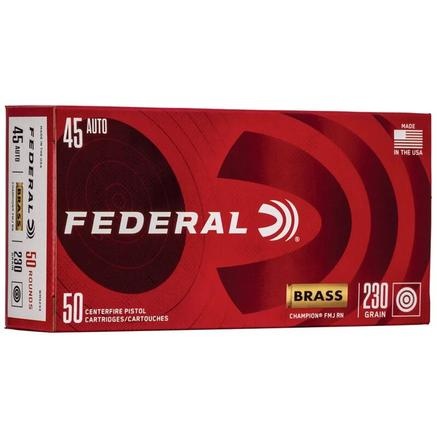
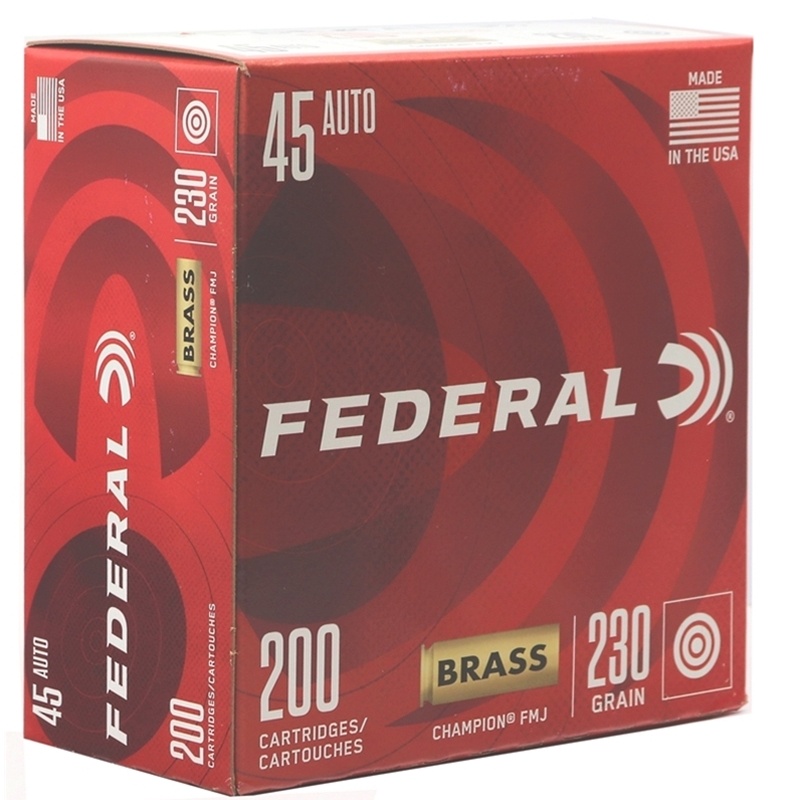
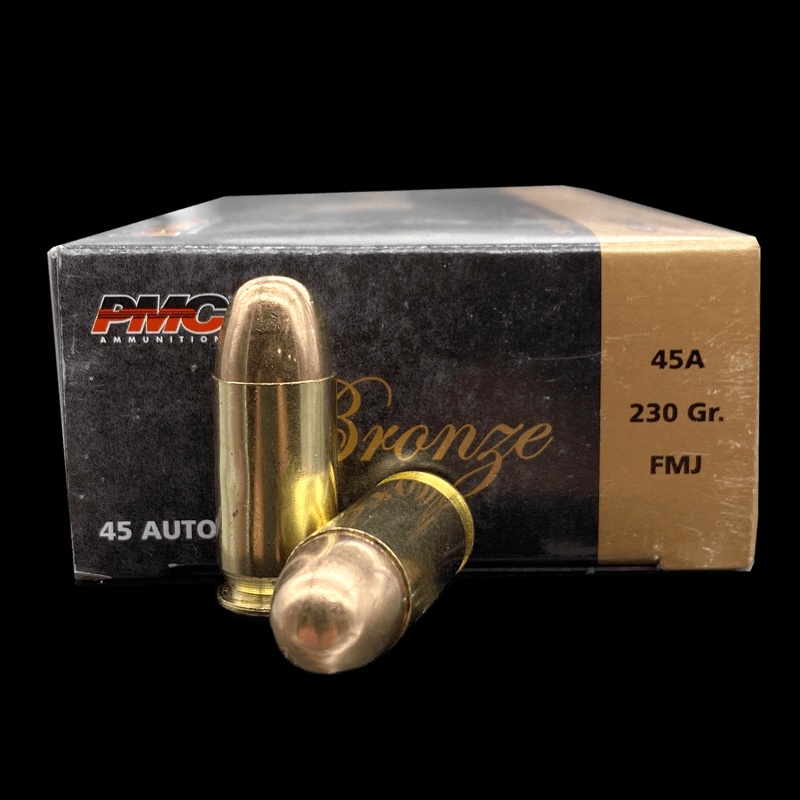
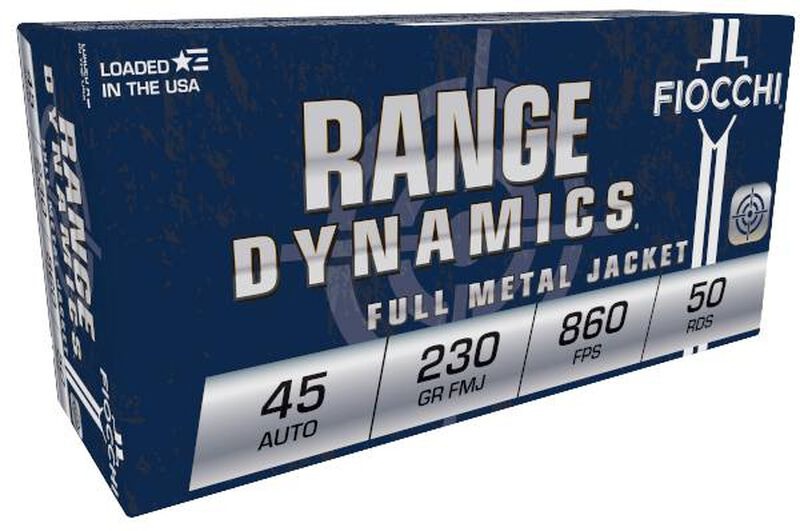
Full metal jacket round-nose is what the military ball specification called for, and the modern civilian equivalents — Federal American Eagle, Winchester White Box, Blazer Brass, Magtech — are functionally the same load. They feed reliably in every .45 platform including feed-ramp-sensitive 1911s, they are the cheapest thing on the shelf, and they put a .451-inch hole through paper and steel with mild recoil that lets you shoot volume without a flinch developing.
The current floor for the caliber is $0.43 a round on the .45 ACP caliber page. At those numbers a case of 230 grain FMJ costs about what a case of premium 9mm did a few years ago, which is the quiet argument for owning a .45: the practice ammunition never got expensive.
Hollow points that expand at 830 fps
This is the one place .45 ACP shopping takes real attention. A hollow point needs impact velocity and an open cavity to expand; at 830 fps a design tuned for 9mm or 10mm velocities may simply plug and track like FMJ. The loads that solve this use wide, open cavities and often lighter 185- to 200-grain bullets — or bonded 230-grain designs with large nose openings — rather than deep, narrow cavities built for speed.
Federal HST 230 grain, Speer Gold Dot 230 grain, and Hornady XTP loads in the 185- to 230-grain range are the names that keep coming up, because they are tested to open at .45 velocities rather than borrowed from a faster caliber. They cost two to three times FMJ, so practise with practice ammunition and spend the hollow points on verification.
One more construction note: bonded jackets — where the jacket and lead core are fused — hold together better through clothing and bone than a simple open cavity. That is the same engineering argument that dominates the 9mm defensive market; the difference in .45 is that the bullet starts slower, so the cavity has to be wider to do the work. Loads marketed specifically for short barrels exist, and they matter if the pistol is a compact rather than a full-size 1911.
One platform note: 1911s are the fussiest feeders in the caliber. A 230 grain round-nose will feed where a wide-cavity hollow point will not, especially in older or tight-ramped guns. Run a full box of your chosen carry load through the pistol — from the magazines you actually carry — before you load it for duty.
Common mistakes
- Chasing velocity. High-velocity 185 grain loads trade the .45’s character for a cartridge that recoils like a snappy .40 with no capacity advantage. Buy them only if a specific load shoots better in your gun.
- Mixing weights without re-zeroing. A pistol zeroed for 230 grain will print differently with 185 grain. Confirm point of impact if you switch — see understanding grain weight.
- Skipping the feed test. The most common .45 failure is a hollow point that will not cycle reliably in a 1911 or a compact. One box of testing ammunition prevents that conversation entirely.
- +P labels. A few .45 loads are marked +P; many older 1911s and some compact pistols are not rated for them. Check the manual before buying a case.
A sensible first order
- One 500- or 1,000-round case of 230 grain FMJ. At $0.43 a round, the case is the only sensible way to buy .45 practice ammunition; box-by-box, the cost adds up faster than the shooting does. The case economics are in when buying a case makes sense.
- Two boxes of one hollow point — HST, Gold Dot, or an XTP load your pistol cycles — one for the verification run, one for the gun.
- A 50-round box of 185 grain only if you want to compare recoil character rather than assume it.
That order covers a year of ordinary practice, a verified carry load, and an answer to the weight question that comes from your own target. For the broader comparison against the cartridge that took most of .45’s market share, the full 9mm vs .45 analysis closes the loop — and the caliber page linked above is where the shelf lives, sorted and priced.
Shop this caliber
Live prices from the warehouses that have it on a shelf right now.