7.62x39 ammo buying guide
Steel case is cheap because it is designed to be disposable, not because it is bad. The real 7.62x39 decisions are the action you shoot it from and the bullet you put in it.
By TAS6 min read
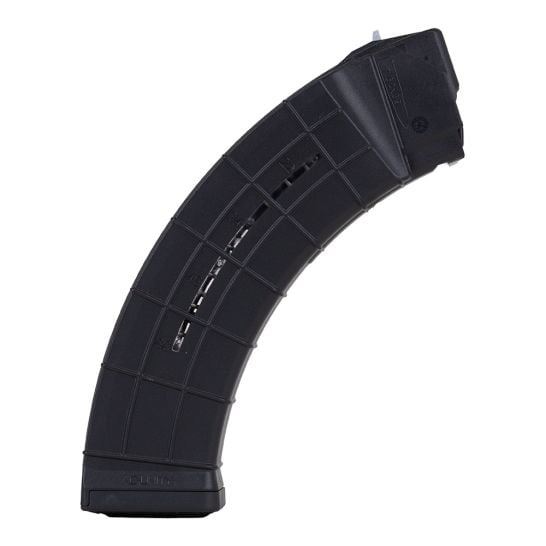
7.62×39mm is the intermediate cartridge the AK-47 was built around: a short, stubby .30 caliber that hits hard enough for deer at woods ranges and costs about half what comparable .308 practice does. The buying questions are narrower than the internet suggests. Steel or brass, FMJ or soft point, and whether your particular rifle eats the first one at all.
What the cartridge is
Do not confuse the dimensions with .308 Winchester. The bullet is .311 inches in diameter (.312 in some European loadings) against the .308’s .308: the cartridges are not interchangeable, and neither is the reloading brass. A typical load is 123 grains at about 2,350 fps from a 16" barrel, which is roughly the energy of a .30-30 from a carbine with a slightly flatter short-range trajectory.
| Weight | Velocity | Bullet | Best at |
|---|---|---|---|
| 123 gr | 2,300–2,375 fps | FMJ | Practice, volume, steel |
| 125–123 gr SP | 2,300–2,350 fps | Soft point | Deer and hog inside 150 yards |
| 150 gr | 2,150–2,250 fps | Heavy soft point | Heavy game, slower twist barrels |
Factory velocities come from 20–24" test barrels far more often than from the 16" AK barrel you actually own. Budget about 50 fps an inch of barrel you are missing, and zero for the load you shoot rather than the number on the box.
Steel case, without the mythology
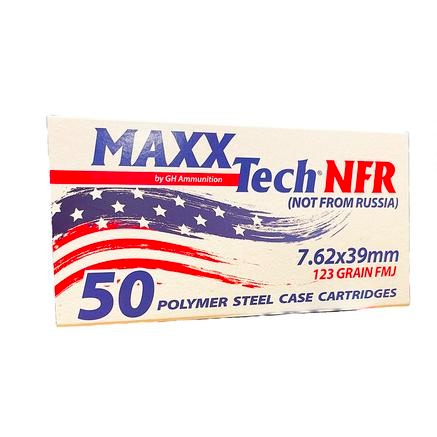
Steel-cased ammunition is not a reliability compromise for an AK; it is what the rifle was designed to run. The case is a copper-washed or lacquered steel body that expands and seals the chamber, then is meant to be thrown away rather than reloaded. The loose chamber tolerances and long-stroke gas system of the AK platform were specified around exactly that behaviour. In a properly functioning AK, steel case is as reliable as anything else on the shelf.
The reliability stories come from a different place: tight-chambered bolt guns and semi-autos not designed for it. A Mini-30, a bolt-action 7.62×39, or a tight AR-15 upper will run some steel-case lots and hang on others, because the steel case does not stretch and seal the same way brass does. If you own one of those, test a box before you buy a case, and read the extractor and bolt-face for unusual wear after the first hundred rounds.
The other real objection is economic rather than mechanical: you cannot reload it usefully. If you already reload, brass-case ammunition pays for itself over a season. If you do not, the steel-cased discount — often 30–40% per round against brass — is yours to keep, and the cheapest in-stock price on the 7.62×39 page is $0.67 a round right now.
FMJ for practice, soft point for everything else
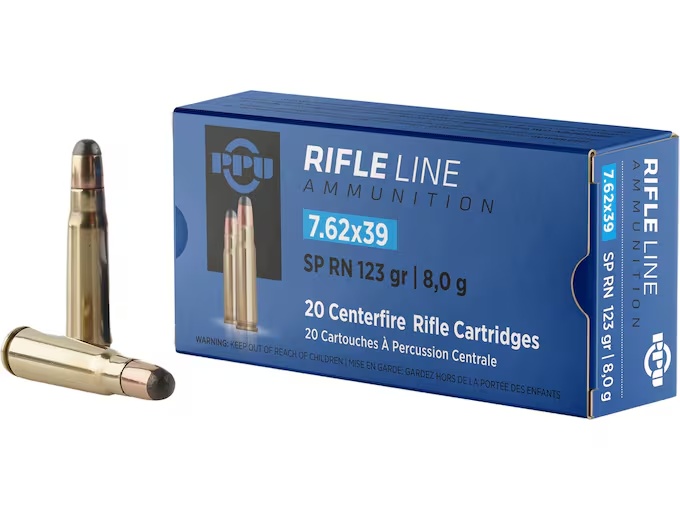
Full metal jacket is cheap and it punches a caliber-sized hole straight through — which makes it correct for paper and steel and wrong for hunting or defence. Soft point is the load that makes this cartridge worth owning beyond the range. A 123 grain soft point at 2,300 fps opens on deer and hogs at the distances this round actually works at, and the bullet is cheap enough to practise with, too.
For handloaders and for anyone willing to pay a little more, there are premium controlled-expansion bullets in the .311 diameter that turn 7.62×39 into a genuinely capable short-range hunting round. Outside that niche, a good factory soft point out of a 16" barrel is what 95% of hunters should be carrying into the woods.
One hunting note that has nothing to do with the cartridge and everything to do with the rifle: most 7.62×39 rifles are zeroed for 123 grain FMJ at a conventional rifle distance, and the soft point you carry may print differently. Confirm point of impact with the hunting load before season, at the distance you will actually shoot — call it 75 to 150 yards for this cartridge — and keep the FMJ for practice rather than assuming they print the same.
The 5.56 comparison, honestly
If you are choosing a general-purpose rifle rather than feeding one you already own, the real question is against 5.56, not .308. 7.62×39 keeps more energy at 150 yards and recoils a bit more; 5.56 is flatter, lighter to carry, and usually cheaper to practise with by the case. The full argument, including the wound-channel and terminal-performance side, is in the 5.56 and .223 guide. The .308 comparison, when you are stepping up to a full-size short action, is the .308 buying guide.
A sensible first order
- 250 rounds of steel-cased FMJ to confirm your rifle runs it. Count malfunctions for the first three magazines; if it is clean, you have found your practice ammunition.
- Four boxes of 123 grain soft point for zeroing and the season. That is enough to put a group on the zero target and still have rounds left when the first cold morning comes.
- A box of brass-cased FMJ for the ranges that will not take steel, so you never have to skip a session over a rule.
Everything else on the shelf, sorted by price and jacket type, is on the 7.62×39 caliber page. If you also shoot a long-action precision rifle and want to understand that load ladder rather than this one, the 6.5 Creedmoor guide covers it, and the box-price trap both cartridges set for buyers is in price per round.
Shop this caliber
Live prices from the warehouses that have it on a shelf right now.