Shotgun Ammo
20 Gauge Ammo
In stock from $1.08 / round · 11 of 12 products available now
A lighter gun and a smaller payload, which means noticeably less recoil, and, at the ranges most birds are actually shot, very little difference in results.
In stock today
- Cost per round
- $1.08 to $3.45
- 6 Brands
- Brenneke, Federal, Hornady, Lightfield, Remington, Rio Ammunition
- Bullet weights
- 250, 260, 308, 328, 383, 438 grain
- Pack sizes
- 5, 25, 50, 100 rounds
Learn more about 20 Gauge
At a glance
- Also known as
- 20 ga, 20 bore
- Common shell lengths
- 2.75in and 3in
- Common loads
- 7/8oz to 1-1/4oz, #6 to #8 shot, buckshot and slug
- Typical use
- Upland birds, youth and smaller-framed shooters, home defense
- Before you buy
- A 20 gauge shell dropped into a 12 gauge lodges in the barrel: that is why 20 gauge hulls are yellow, and it is worth knowing
- Age to purchase
- 18+ (long-gun ammunition, attested at checkout)
20 gauge is the sensible answer for a great many shooters and it is not a compromise. It throws a smaller payload than 12 gauge from a lighter gun, which means noticeably less recoil, and inside the ranges most upland birds are actually shot at the difference in results is small. It is the traditional choice for young and smaller-framed shooters, for anyone carrying a shotgun all day, and increasingly for home defense where the recoil of a 12 gauge is more than the situation needs. There is also one specific safety fact about 20 gauge that every shotgun owner should know.
- Federal
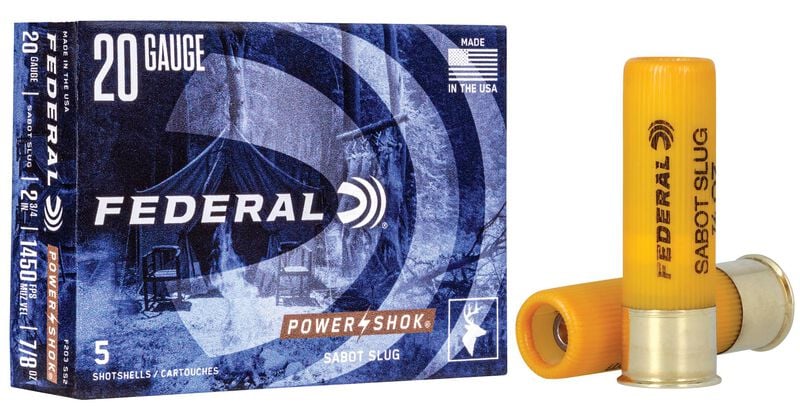
20 Gauge - Federal Power-Shok 2-3/4in Sabot Slug 7/8oz (F203 SS2) - 5 Round Box
383gr Slug · 5rd
$9.67$1.93/rdIn stock
- Remington
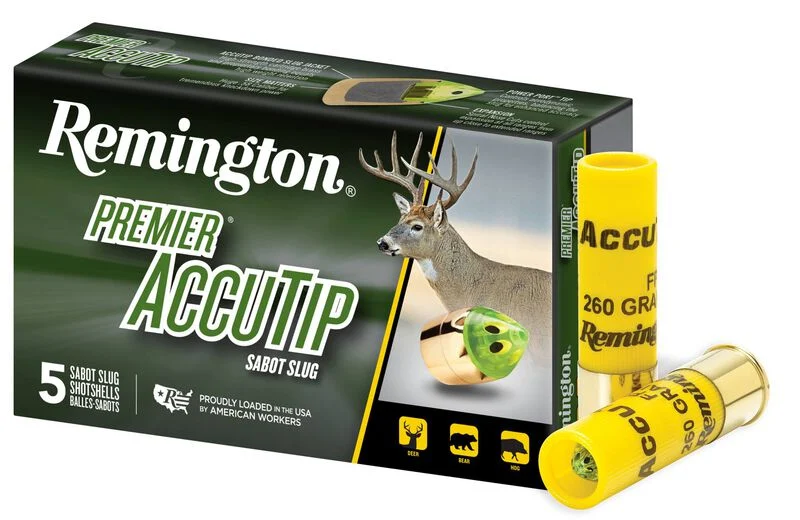
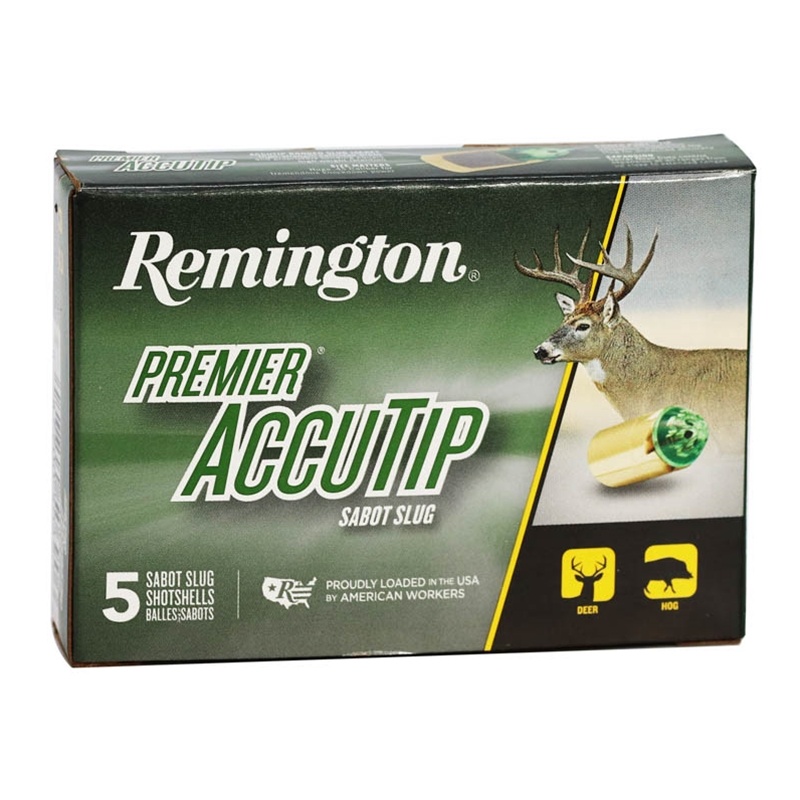
20 Gauge - Remington Premier 2 3/4", 260 Grain, AccuTip Bonded Sabot Slugs (PRA20) - 5 Round Box (50 Round Box)
260gr 50rd
$166.32$3.33/rdIn stock
- Brenneke
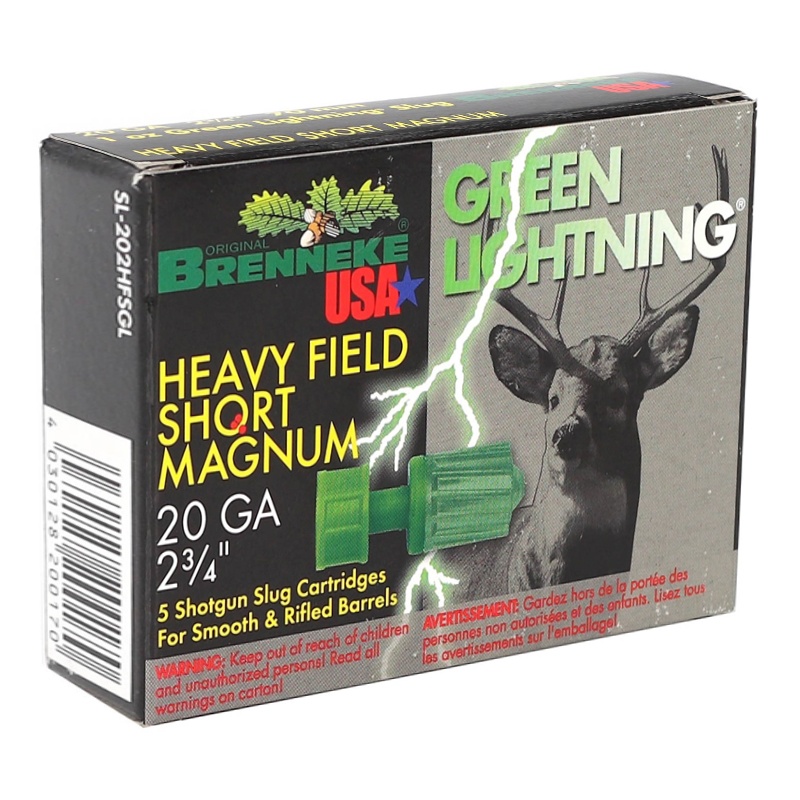
Brenneke Green Lightning 20GA AMMO 2.75in Slug 1oz 1392FPS 5rd Box
438gr Slug · 5rd
$12.95$2.59/rdIn stock
- Brenneke
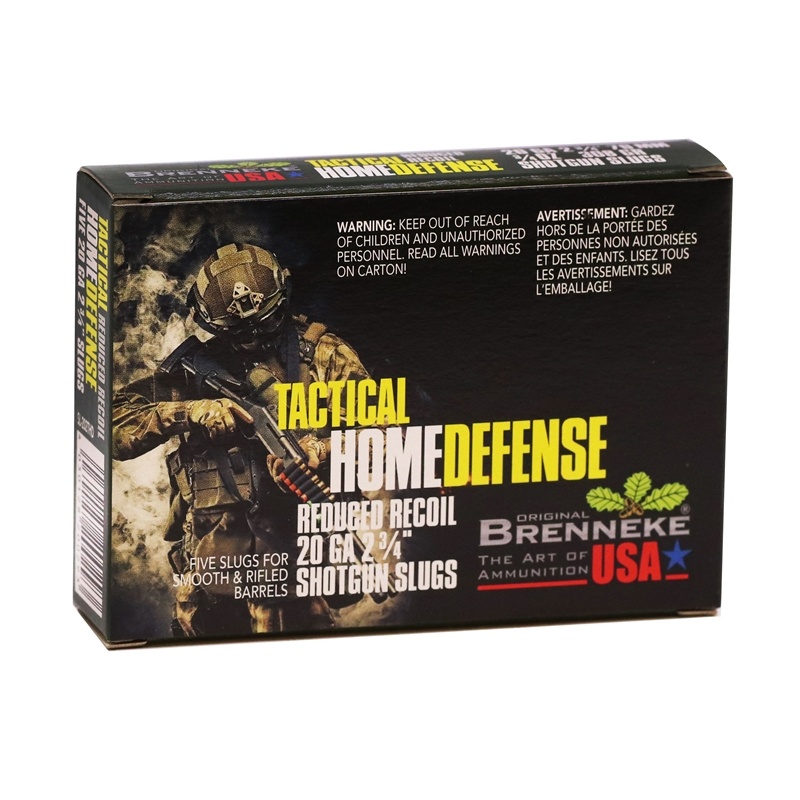
Brenneke Tactical Home Defense 20GA AMMO 2.75in 3/4oz 1250FPS 5rd Box
308gr Slug · 5rd
$8.63$1.73/rdIn stock
- Federal
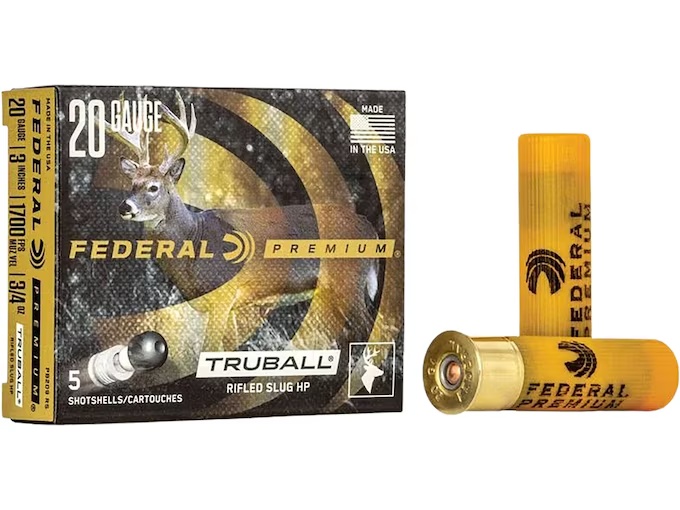
FEDERAL PREMIUM 20GA AMMO 3IN 1700FPS 3/4OZ TRUBALL SLUG 5RD BOX
328gr 5rd
$8.63$1.73/rdIn stock
Out of stock
FiocchiFIOCCHI SHOOTING DYNAMICS 20GA AMMO 2 3/4IN 7/8OZ #8 SHOT 25RD BOX
25rd
$11.87$0.47/rdCurrently unavailable
- Lightfield
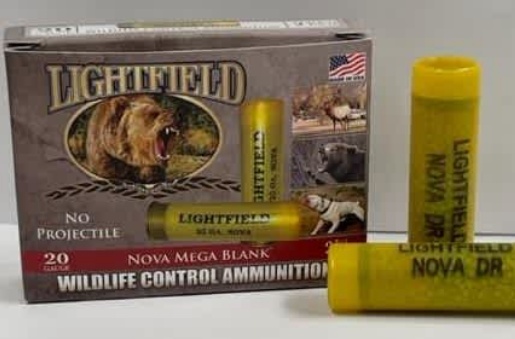
LIGHTFIELD WILDLIFE CONTROL 20GA AMMO 2.75 IN NOVA DR BLANK CONCUSSION 5RD BOX
5rd
$8.63$1.73/rdIn stock
- Remington
Remington Ammunition PRA20 Premier Accutip 20 Gauge AMMO 2.75" 260 GR 5RD Box
260gr 5rd
Also in 100rd
$15.12$3.02/rdIn stock
- Remington
REMINGTON PREMIER ACCUTIP 20GA AMMO 3IN 260GR SABOT SLUG 5RD BOX
260gr Slug · 5rd
Also in 100rd
$17.27$3.45/rdIn stock
- Rio Ammunition
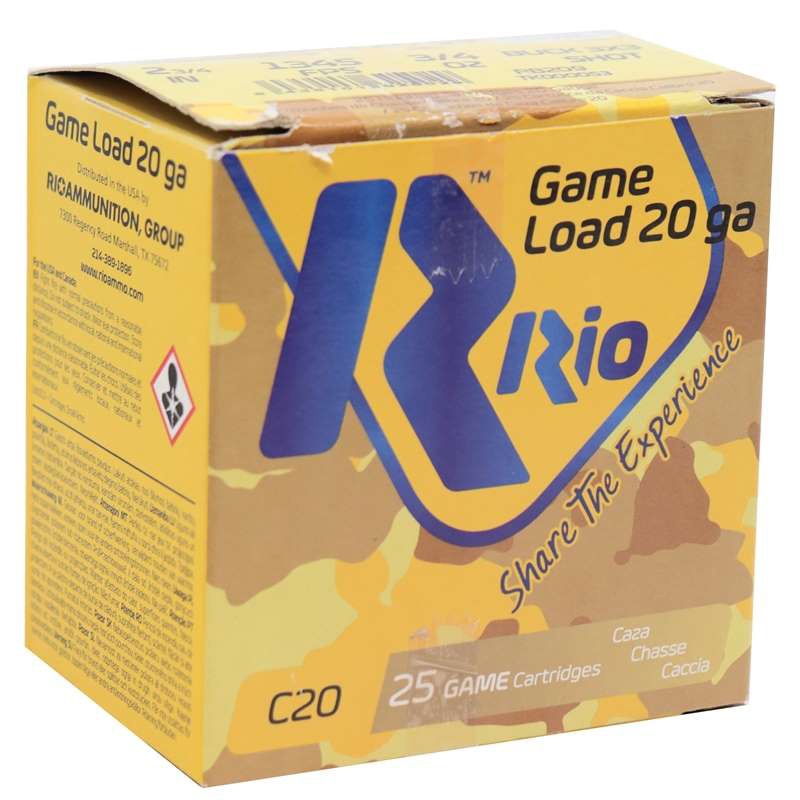
RIO AMMUNITION 20GA AMMO 2 3/4IN 3X3 BUCKSHOT 9 PELLET 25RD BOX
Buckshot · 25rd
$26.99$1.08/rdIn stock
Before you buy
What to know about 20 Gauge
What people buy it for
- Upland bird hunting: quail, dove, grouse, woodcock
- Young, smaller-framed and recoil-sensitive shooters
- Sporting clays and skeet in 20 gauge classes
- Home defense where 12 gauge recoil is more than necessary
- Deer hunting with slugs in shotgun-only areas
Why 20 gauge shells are yellow
It is not a style choice. A 20 gauge shell dropped into a 12 gauge barrel slides past the chamber and lodges in the bore, out of sight, and if a 12 gauge shell is then loaded and fired behind it, the barrel bursts. This has injured and killed people. The industry standardised on yellow hulls for 20 gauge alone so a wrong shell is instantly obvious. Never mix gauges in the same pocket, vest or bag, and if a shotgun goes quiet or feels odd, stop and check the bore.
Smaller payload means pattern density is the limit
20 gauge shells carry less shot than 12 gauge equivalents. Pellets do not lose energy for being fewer, so the effect on any individual bird is unchanged; what shrinks is the density of the pattern at distance, which means the effective range is a little shorter and choke selection matters a little more. Inside sensible ranges, a well-fitted 20 handles upland birds entirely.
2¾ inch and 3 inch
As with 12 gauge, the chamber length is stamped on the barrel and it is a hard limit. A 3 inch chamber takes both; a 2¾ inch chamber must only be fed 2¾ inch shells. 3 inch 20 gauge loads close much of the payload gap to 2¾ inch 12 gauge, at a corresponding cost in recoil, which somewhat defeats the point of choosing a 20 in the first place.
A light gun changes felt recoil
Much of 20 gauge's reputation for comfort comes from lighter payloads, and some of it is given back by the very light guns it is often built into. A featherweight 20 with 3 inch magnum loads is not a gentle thing. If recoil is the reason you chose 20 gauge, keep the loads light as well as the gun.
Questions
Common questions
Why are 20 gauge shells always yellow?
Because a 20 gauge shell will drop through a 12 gauge chamber and lodge in the barrel where you cannot see it, and firing a 12 gauge shell behind it bursts the gun. The industry adopted yellow exclusively for 20 gauge so that a stray shell in a pocket of 12s is obvious at a glance. It is one of the few colour conventions in shooting that exists purely to prevent a specific fatal accident. Respect it, and never mix gauges in one container.
Is 20 gauge powerful enough for hunting?
For upland birds, small game and deer with slugs at sensible ranges, comfortably. The smaller payload thins the pattern at longer distances rather than weakening individual pellets, so the practical effect is a somewhat shorter effective range and a bit more attention to choke and shot size. Plenty of people hunt everything they hunt with a 20 and give up nothing that matters to them.
Is 20 gauge a better first shotgun than 12?
Usually, yes. For a smaller or younger shooter, a properly fitted 20 in a gun that is not too heavy to mount is far more likely to build good habits than a 12 that hurts. Fit matters more than gauge, though: an adult-stocked 20 gauge is not a youth gun. And keep the loads light; 3 inch magnums in a light 20 recoil hard.
Can I shoot 3 inch shells in my 20 gauge?
Only if the barrel is marked for 3 inch. A 2¾ inch chamber must never be fired with 3 inch shells: the crimp has no room to open and pressure rises sharply. The chamber length is stamped on the barrel near the receiver. Check it on any gun you did not buy new yourself.
How much does 20 Gauge cost per round?
20 Gauge runs from $1.08 to $3.45 per round in stock right now. Every price on the page carries its cost per round beside it, so the comparison is one glance rather than arithmetic.
Which brands of 20 Gauge do you stock?
Brenneke, Federal, Hornady, Lightfield, Remington and Rio Ammunition are in stock in 20 Gauge today. Stock changes as the feed runs, so the list on the page is the current one.
What bullet weights does 20 Gauge come in?
The 20 Gauge in stock runs 250, 260, 308, 328, 383, 438 grain. Weight changes how the round feels and where it prints more than most shooters expect, so it is worth matching what you already shoot.
Is 20 Gauge in stock?
11 of the 12 20 Gauge products we list are in stock right now. Out of stock items stay on the page rather than disappearing, so a link you saved still works and you can see what normally sits here.